
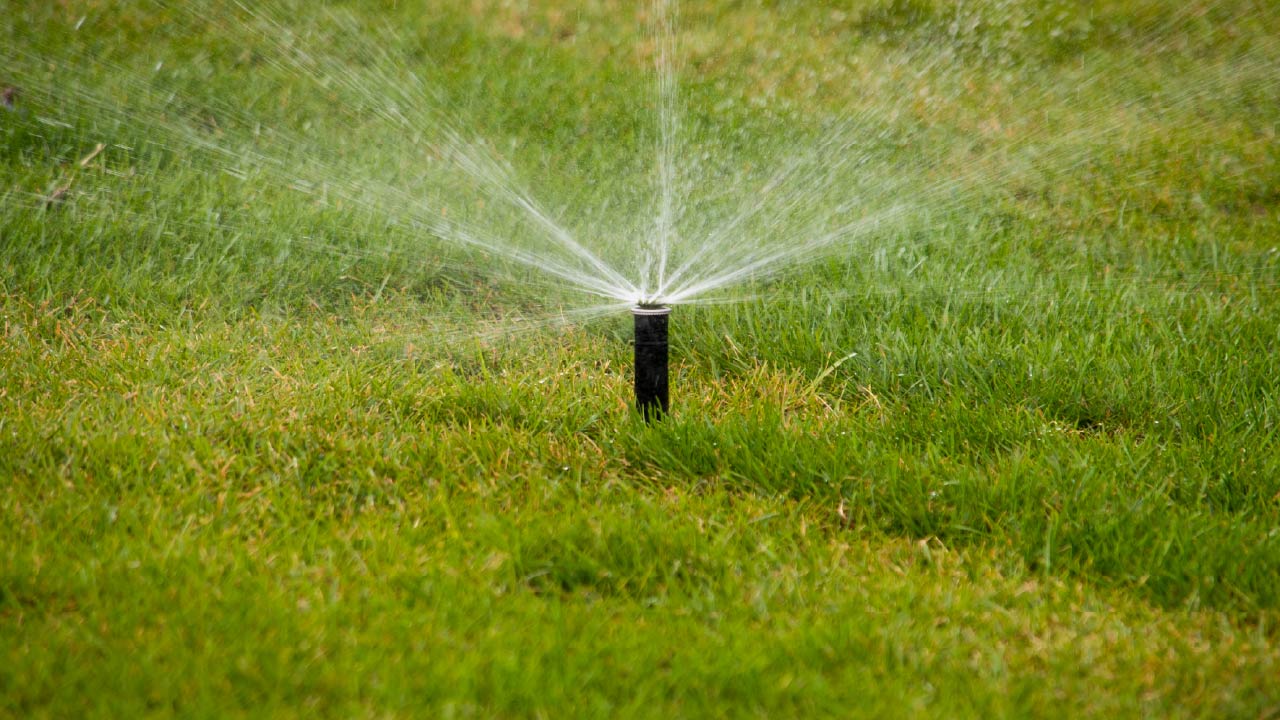
Sprinkler Selection: Top Sprinkler Systems for Home Gardens in 2026
Sep 1st 2026
Your home garden needs the right amount of water in the right place to stay healthy and beautiful. A sprinkler that keeps a wide lawn green may not be suitable for a vegetable bed. That's why choosing a sprinkler system for your home garden in 2026 is more about matching the sprinkler to your landscape. Every plant, lawn, tree, and garden bed has different water needs. Using the wrong sprinkler type wastes water plus it actively works against your plants.
The right garden sprinkler system can protect your plants from inconsistent watering, improve coverage, reduce runoff and overspray, and make routine garden care easier. Modern sprinkler irrigation technology focuses on precision, micro-distribution, smart weather automation, and durable materials designed to prevent water waste and foliage disease. Let's find out which sprinkler types support these features and benefit your landscape.
Here, our irrigation experts explore the top sprinkler types for gardens, standout models, high-efficiency micro-irrigation options, and all essential factors to help you build an optimized garden watering system.
The Main Types of Sprinklers for Home Gardens
Before you buy anything, you need to understand the different sprinkler categories. This allows you to match the right delivery method to specific plant zones, garden shapes, and water pressure requirements.
Impact Sprinklers
An impact sprinkler is a classic sprinkler known for its sound, rugged construction. They use a spring-loaded hammer arm to rotate the head that forces high-velocity water streams out of a single or dual orifice.
Features
- Best for large, open lawns, fruit orchards, sloped yards and medium-to-large garden areas.
- Durable, simple mechanics with few parts to break.
- Adjustable arc on most modern models.
- Provides wind-resistant water droplets.
- Less precise than newer rotor designs, so some models can overspray onto sidewalks or driveways.
- Highly clog-resistant due to large nozzle orifices.
Rotor Gear-Drive Sprinklers
Rotors use an internal gear mechanism to rotate one or more concentrated streams slowly across the yard. They are designed for medium-to-large areas that require long-distance water throw and slow, deep soil absorption. The Hunter PGP Ultra is another excellent gear-drive rotor and one of the most familiar models among irrigation professionals.
Features:
- Excellent for medium-to-large lawns needing uniform, low-drift coverage, sloped areas, and wide landscape areas.
- Quieter and more water-efficient than impact heads.
- Highly flexible and adjustable from a 40° partial arc up to a continuous 360° full circle.
- Typically installed as part of an in-ground zone system.
- Higher upfront installation cost, but big long-term water savings.
Fixed Spray Heads
These pop-up heads emit a fixed, fan-like pattern in a full, half, or quarter-circle spray pattern without moving. They don't have internal rotating gears like rotors. Instead, water flows through a static, fixed-pattern nozzle.
Features:
- Best for small, uniformly shaped lawn areas, narrow side yards, tight corners, and curved flower borders.
- Delivers a large volume of water in a short time frame.
- Popular in in-ground residential sprinkler systems near patios and walkways.
- Higher precipitation rate means they need shorter, more frequent run times to avoid runoff.
- Adjustable arc nozzles that twist to match irregular bed shapes.
Rotor vs Spray Sprinkler Heads: The Best One for Your Landscape?
Oscillating Sprinklers
These sweep a fan-like curtain of water back and forth across a rectangular area. Oscillating sprinklers use an internal water-driven gear or turbine motor.
Features:
- Ideal for square or rectangular lawns, garden strips, narrow side yards, and established flower beds.
- Even, gentle rain-like coverage that's easy on delicate seedlings and new sod.
- Often the most affordable option upfront.
- Design precision perfectly matches rectangular or square plots.
- Can lose a lot of water to wind drift and evaporation since the spray arcs high in the air.
Traveling Sprinklers
A traveling sprinkler is a self-propelled irrigation device designed to water long, continuous areas. These sprinklers slowly move along the hose as they water, covering large or irregularly shaped areas without manual repositioning.
Features
- Great for big, open lawns or large acreage-style properties.
- Reduces the need to manually drag a hose sprinkler around.
- Not ideal for tightly landscaped, dense garden beds, or yards with obstacles.
Drip Irrigation Systems
Drip systems deliver water directly to the soil at the root zone through tubing, emitters, or micro-sprayers. They are the most water-efficient option available, with 90% efficiency compared to 50–70% for overhead spray.
Features
- Best choice for vegetable gardens, raised beds, row crops, flower borders, and container plants.
- Reduces water loss, runoff, and weed growth by watering only the target area, not the space between rows.
- Keeps foliage dry, which reduces powdery mildew and blight risk.
Micro-Sprinklers and Sprayers
Micro-sprinklers and sprayers are between drip emitters and full-size overhead sprinklers. They operate at low pressure and distribute water as fine droplets, soft streams, or small rotating patterns across a limited area. These micro irrigation devices are usually installed on short stakes or risers above the soil. They are ideal for watering small to medium-sized zones.
Features
- Delivers water directly to the plant root zone with minimal runoff or overspray.
- Works smoothly on systems with lower flow rates.
- Best for raised beds, containers, dense flower beds.
The Top Residential Lawn Sprinkler Heads for Your Home
Top 2026 Sprinkler Models for Home Gardens
A home garden includes vegetable beds, shrubs, fruit trees, raised beds, ground covers, and greenhouses. Each often needs a different kind of sprinkler type.
Here are the sprinkler models that consistently top recommendations from landscapers, pro gardeners, and irrigation experts this year.
Gilmour Adjustable Rectangular Oscillating Sprinkler
If you want a simple hose-end sprinkler for a rectangular lawn or garden, the Gilmour Adjustable Oscillating Sprinkler is a suitable choice. Its biggest benefit is adjustable coverage control. You can adjust the sprinkler to focus water toward the left, right, center, or across the full pattern.
The oscillating action produces a gentle, even spray, making it useful for newly seeded lawns, established turf, and rectangular vegetable or garden areas. Gilmour specifically recommends its adjustable-length rectangular sprinkler for newly seeded grass and rectangular-shaped lawns.
Top Features:
- Adjustable rectangular watering pattern
- Coverage of up to about 3,900 sq. ft.
- Separate control over watering direction and coverage
- Gentle spray suitable for new grass
- Sturdy metal construction
- Jet-cleaning feature at the end of the spray tube to help clear clogged spray openings
Gilmour Circular Sprinkler with Base
A Gilmour circular sprinkler is one of the best hose-end sprinklers available for large, mature garden areas. It uses a radial watering pattern, which makes it useful for open lawn areas and garden sections where water can spread without hitting structures or hardscape. It is a smart choice for small, round garden beds, tight corner areas, or spot-watering a section of lawn that a bigger sprinkler overshoots.
The spray diameter adjusts with a simple twist. Its simple design appeals to gardeners who don't need the complexity of an in-ground sprinkler system.
Top Features:
- Circular watering pattern.
- Portable hose-end design, no special fittings or adapters required.
- Useful for open lawns and garden areas.
- Easy to reposition as garden watering needs change.
- Convenient for homeowners who don't want permanent sprinkler installation.
Best for: Small to medium open lawn areas, temporary watering projects, newly planted areas, and gardens where you want to move the sprinkler from one part to another.
Orbita PC Micro Sprinkler
The Orbita PC Micro Sprinkler is one of the best options worth considering for garden applications. The "PC" stands for pressure-compensating. This garden sprinkler delivers a consistent water output whether it's the first or last sprinkler on a long line or sitting on a slope. That makes it highly useful for raised bed rows, terraced gardens, or any layout where water pressure naturally drops off toward the end of the line.
Orbita PC Micro Sprinkler is designed for smaller-scale irrigation rather than trying to throw water across a large lawn.
Best for: Vegetable gardens, shrubs, small planting areas, ground covers, orchards.
Vari-Rotor Sprinkler
The Vari-Rotor Sprinkler is another favorite garden sprinkler for shrubs, groundcover, and transitional areas between a drip zone and a lawn zone. It provides a rotating pattern in a compact format and works where a conventional lawn rotor would be too large.
This slow, low-flow rotating micro-sprinkler sits on a small stake and waters in a full or adjustable partial circle. Since it rotates rather than spraying a fixed pattern, it easily reaches irregularly spaced plants
Best for: Garden beds, ground covers, nursery plants, small planting zones, small, landscaped areas.
Pressure-Compensating Sprinklers
Pressure-compensating sprinklers are the best choice for gardens with elevation changes or longer irrigation runs. They provide more consistent water output despite changes in elevation or row length. They are particularly useful in orchards, vineyards, and frost-protection applications.
If you have a sloped yard, this would be the right choice.
Orbit Heavy-Duty Brass Impact Sprinkler on Tripod
When an area needs a long throw distance and high wind resistance, brass impact sprinklers remain unbeatable. The Orbit Brass Impact Sprinkler features a flow-through design that resists clogging. The impact mechanism provides a strong stream rather than the fine spray produced by many oscillating sprinklers. The elevated tripod is especially useful when you need to spray above taller vegetation, shrubs, or garden plants.
Top features:
- Heavy-duty brass impact sprinkler head
- Adjustable tripod base height
- Partial- to full-circle coverage
- Up to approximately 90 ft of diameter coverage
- Deflectors shield for adjusting spray distance
Best for: large lawns, expansive gardens, newly seeded areas, large vegetable patches, fruit orchards, pasture-like residential properties, and zones where a portable sprinkler needs to cover a large area.
Wing Sprinklers
For smaller garden irrigation projects, Wing Sprinklers offer a simple approach. Also called butterfly or fan sprinklers, these watering devices throw a wide, flat, low-angle spray close to the ground rather than a tall arc. That low-angle spray makes them ideal for dense groundcover, low borders, and beds near fences or walls.
Wing sprinklers are gentle enough for young seedlings and transplants that can't handle a strong direct stream. These are also useful when you need several small sprinkler points rather than one large sprinkler covering the entire garden.
Best for: Small vegetable gardens, raised beds, containers, flower beds, seedlings.
Antelco PC Shrubbler
When a garden has slopes or long lateral pipe runs, standard sprinklers deliver uneven water flow. The Antelco PC Shrubbler is the best choice in such conditions. It maintains a fixed flow rate regardless of pressure fluctuations along the line. This pressure-compensating Shrubbler emits six distinct streams of water in a 360-degree pattern.
Best for: Terraced gardens, container arrays, hanging baskets and raised planters.
The Top 5 Best Water Saving Pop Up Sprinklers
C-Frame Down Sprayer
The Antelco C-Frame Down Sprayer directs its water downward in a 20-to-24-inch stream, delivering moisture right at the base of plants. By watering downward, it reduces evaporation, prevents splash-back on leaves, and keeps pathways dry. Overhead watering often splashes soil onto foliage, multiplying fungal spores like powdery mildew.
Best for: Delicate vegetable crops, raised beds, and containers.
Summer Watering Guide for 2026: Best Tips for a Greener Lawn
How to Choose the Right Sprinkler System for Your Garden
A successful irrigation system comes from matching water delivery methods to soil type, plant watering needs, and yard shape. A sprinkler that performs perfectly at one pressure may perform poorly when installed on a weak residential water line. So, before you buy any model for your garden, answer these questions first.
What's your water pressure?
Pressure is one of the most important factors in sprinkler performance. Impact and rotor sprinklers generally need 25–50 PSI to perform well. Pressure-regulated sprinkler bodies help when system pressure exceeds what the nozzle or sprinkler is designed to handle.
What's the Shape of Your Garden?
For Rectangular Areas: Use rotors or oscillating sprinklers with adjustable coverage zones.
For Irregular or Narrow Yards: Combine micro spray assemblies on stakes or a smart sprayer with a drip system.
For Large Lawns: Use rotor, traveling, or impact sprinklers.
Consider Plant Type
Lawns and Turf grass: They benefit from deep, infrequent watering delivered by oscillating, rotor, or impact heads.
Vegetables and Annuals: Shallow, tender root systems thrive under micro-sprayers, drip systems, or lower-volume micro-sprinklers that deliver soft droplets without compacting the topsoil. Almost all vegetables, shrubs, and flower beds grow well with drip irrigation, which keeps foliage dry and reduces disease problems.
Trees and Shrubs: Deep rooted plants require targeted bubblers or root-zone sprayers that deliver high volume over a tight radius.
Match Precipitation Rates
Don't mix sprinkler types with different precipitation rates in the same zone. A traditional spray head applies water much faster than a rotor. If both run together for the same amount of time, one area can become waterlogged while another remains dry. So, design each zone around sprinklers with compatible precipitation rates.
Consider Wind Conditions
Wind can change spray patterns, leaving some areas dry while water ends up on sidewalks, patios, or other unwanted spots. If you live in a windy area, consider installing wind-resistant sprinklers like rotary nozzles, sprinklers that produce larger droplets, low-angle nozzles, pressure-regulated sprinklers, and micro sprinklers in sheltered garden beds.
Discover Best Sprinklers for Windy Areas: Wind-Resistant Sprinklers
Should You Use Sprinklers or Drip Irrigation in a Home Garden?
For a lawn, sprinklers are the good choice. Sprinklers imitate rainfall and work well for covering large areas. For rows of vegetables, individual plants, raised beds, containers, and densely planted beds, drip irrigation is the more efficient option.
Drip irrigation delivers water directly and slowly around plant roots. You can combine both systems based on vegetation type in your garden.
Best Irrigation Brands for Sprinklers and Drip Systems
The Bottom Line
Design the perfect sprinkler irrigation system with these top models for your garden. When high-quality sprinklers, nozzles, emitters, water pressure, and scheduling work together, they reward you with a healthier garden, fewer dry spots, less runoff, and a more efficient system. For most home gardens, the best approach is rotors for the lawn paired with a smart drip system for vegetable beds, flower borders, and containers. Automate both systems with a smart controller that adjusts watering based on the weather and keeps your garden hydrated.
The most important thing is to choose quality irrigation equipment that fits your garden and performs reliably season after season. DripWorks makes that easier by offering a wide selection of garden and landscape irrigation products together in one place. At DripWorks, we carry sprinkler options for different coverage requirements and irrigation setups.
You can find micro-sprinklers, rotary sprinklers, garden sprinklers, impact sprinklers, pressure-compensating models, timers, and drip irrigation kits at one store to build a more efficient watering system.