
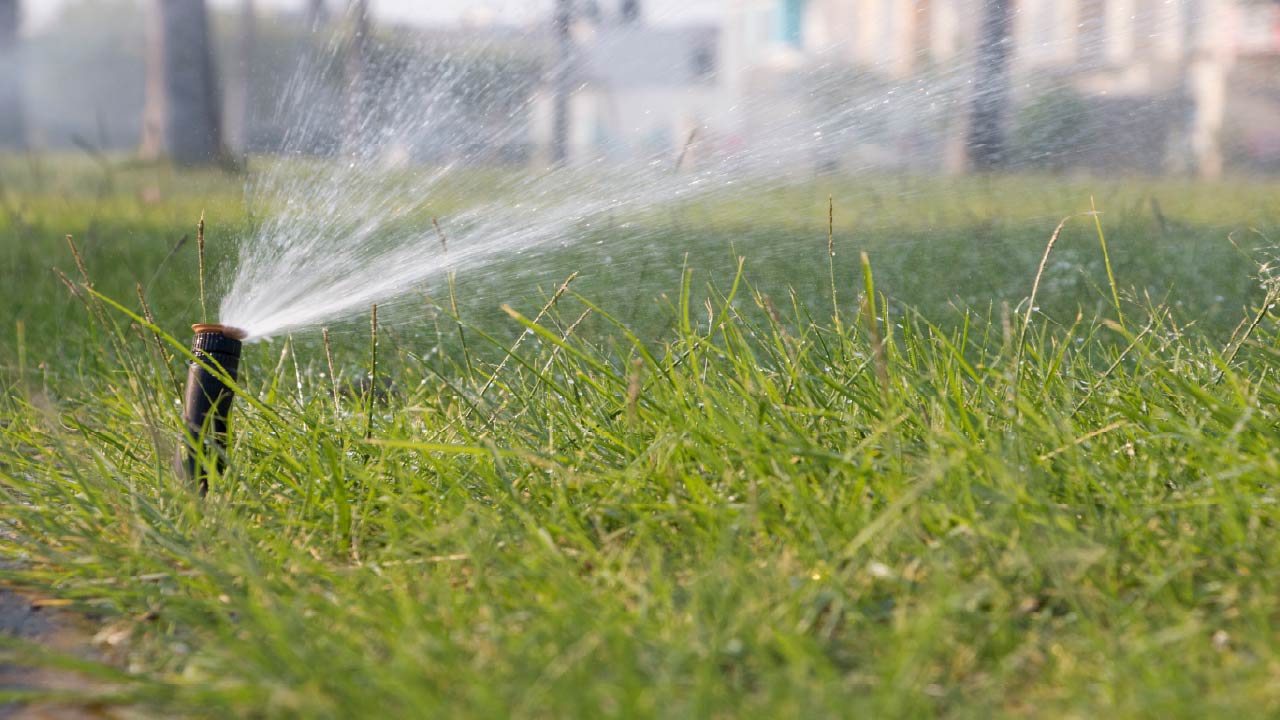
Rotor vs Spray Sprinkler Heads: The Best One for Your Landscape?
Jul 22nd 2026
When choosing a sprinkler head for your irrigation system, sprays and rotors are the two main choices. Rotor and spray heads are designed for very different watering situations. They operate on completely different mechanical principles, cover different square footage, and require distinct system configurations. Using the wrong sprinkler head can lead to dry spots, pooling, uneven growth, runoff, and higher water bills. You need to choose the right sprinkler head to improve irrigation efficiency, create a healthier landscape, and reduce system maintenance costs.
Wondering which sprinkler head is most effective for your grass and plantings? That depends on a lot of things. You'll find the detailed answer to this question by the end of this guide.
In this article, we explain the differences between rotors and spray heads, including how they work, their pros and cons, ideal applications, and how to determine which option is best for your lawn or landscape.
Understanding Sprinkler Heads
Sprinkler heads are the main components of a sprinkler irrigation system distributing water throughout the system. There are many specialized sprinkler types available today, but most residential and commercial irrigation systems rely on two categories: rotor heads and spray heads. Both sprinkler heads are designed to water lawns and landscapes, but they operate very differently.
What Are Spray Heads?
Spray heads are fixed-pattern sprinklers that distribute water in a continuous fan-shaped spray pattern, either half-circle or full circle. The water spray, however large or whatever shape, covers the same ground. Spray heads are available in various radii and patterns, including adjustable-pattern spray heads. The pattern and the radius of the water's distribution are determined by the size and shape of the nozzles.
How Fixed Spray Heads Work
A spray head pops up when water pressure is applied. Water flows through the nozzle and comes out in a fixed pattern. Unlike rotors, there are no moving parts that rotate the stream. When a zone valve opens, the water pressure simply pushes the inner riser upward and forces water through a fixed nozzle.
Water passes through a precise nozzle pattern, such as a 90-degree quarter-circle, a 180-degree half-circle, or a full 360-degree circle, and falls immediately across the area.
Spray heads deliver a high precipitation rate because they cover the entire target area at the same time. They apply a high volume of water over a short period, usually 1.5 to 2.5 inches per hour.
Specifications
- Water Application Style: Fan spray pattern.
- Precipitation Rate: High, about 1.5–2.5 inches per hour.
- Throw Radius: Spray heads throw water up to 5- 15 feet and can reach18 feet with high-efficiency nozzles.
- Operating Pressure Range: Spray heads are optimized at 30 PSI, and operating above 35 PSI causes "misting," where water turns into a fine fog that evaporates or blows away before reaching the turf.
Common Uses of Spray Heads
Spray heads are commonly used in:
- Small residential lawns
- Narrow landscape strips between sidewalks and houses
- Flower beds, shrubs, annuals, ground covers, and perennials
- Tight corners where rotors cannot reach evenly
Pros of Spray Heads
Excellent for Small and Tight Spaces
Spray heads provide complete coverage in compact spaces, narrow side yards, curved beds, lawn areas under 15 feet wide, and tight areas where rotors would overshoot.
Mechanical Simplicity
With no internal gears or drives, fixed spray heads are less prone to mechanical failure from sand or debris in the water supply.
Uniform Coverage
When spray heads are properly installed with head-to-head spacing, they provide even water distribution.
Affordable Initial Cost
Spray heads typically cost less than rotor heads. This makes them attractive for small landscapes and budget-conscious homeowners.
Simple Installation
Most spray heads are straightforward to install and maintain. Also, troubleshooting is generally easier because they contain fewer moving parts.
Cons of Spray Heads
High Risk of Runoff due to Higher Water Application Rate
Spray heads apply water much faster than rotors. So, heavy clay soils or sloped landscapes cannot absorb water quickly enough, leading to immediate pooling and soil erosion.
Wind Vulnerability
The fine, mist-like spray pattern can be disrupted by moderate winds, leading to uneven coverage.
Limited Throw Distance
Most spray heads cover short distances, 4-18 feet. Larger spaces will require additional sprinkler heads.
What Are Rotor Heads?
Rotor heads are mechanical, gear-driven sprinklers designed to cover large, open landscapes. Instead of spraying an entire area at once, a rotor distributes water into one or more dense, high-velocity rotating streams that rotate back and forth across a set arc. They spray a large area in a back-and-forth motion, either a full or partial circle.
Rotor heads slowly rotate while releasing streams of water. This rotating motion allows water to travel much farther than a standard spray head. release water slowly, allowing the soil to absorb each drop. Also, you'll need fewer rotors to cover the same area.
How Rotor Heads Work
The rotor sprinkler slowly moves across a preset arc while distributing water. When water enters the base of the rotor, it passes through internal gears or turbines, which rotate the nozzle. This causes the top nozzle turret to rotate smoothly and release water. Rotor heads distribute water as a single stream that turns as the head rotates through a cycle. The arc can be adjusted from 40 degrees to a full 360 degrees.
Specifications
- Application Style: Rotating single or multi-stream pattern.
- Precipitation Rate: Low, 0.5–0.8 inches per hour.
- Throw Radius: Rotors usually throw water up to 25 to 50+ feet. Large commercial turf rotors can also exceed 70 feet.
- Operating Pressure Range: Rotors are designed to work at 45 to 65 PSI. Low pressure prevents the head from rotating or achieving its full radius.
Pros of Rotor Heads
Superior Efficiency over Distance
Large open fields, expansive backyards, and commercial parks require fewer total heads, pipes, and valves when built with rotors.
Ideal for Large Areas
Rotor heads can throw water much farther than spray heads, making them the perfect choice for large spaces.
Excellent Soil Absorption
Rotor heads apply water more slowly. The slow delivery of water matches the natural infiltration rate of most soils, making rotors ideal for slopes and heavy clay without causing runoff.
Improved Water Conservation
Rotors apply water slowly, so less water is lost to runoff, and more water is saved. Many municipalities encourage homeowners to use rotor technology for water-saving irrigation systems.
Wind Resistance
Rotors produce a thick, heavy stream of water that cuts through wind more effectively than the fine mist of a spray head.
Cons of Rotor Heads
Not Suitable for Small Spaces
Using a rotor in an area narrower than 20 feet may result in over spraying hardscapes, fences, and building foundations.
Higher Initial Cost
Rotor heads generally cost a little more than spray heads. The internal gear mechanisms increase manufacturing costs.
Slower Coverage
Rotors move slowly, so they often require longer watering cycles.
Complex Mechanics due to Additional Moving Parts
Additional mechanical components mean more maintenance. The internal gear train can become clogged or damaged over time if exposed to heavy silt, well water, or physical traffic from lawnmowers. However, modern rotor heads are highly efficient when properly maintained.
Best Uses of Rotor Heads
Rotor heads are used in:
- Large lawns over 15 feet wide
- Parks, athletic fields, commercial landscapes
- Large residential properties
- Sloped yards where slow application stops runoff
- Homes with strong water pressure for full rotation
- Areas needing deep watering for healthy grass
Rotor vs Spray Heads: Key Differences
The biggest difference between rotor and spray heads is how they distribute water. Here are the other main differences between the two sprinkler heads.
Precipitation Rate
Precipitation rate refers to how quickly water is applied to the landscape.
Spray Heads
Average precipitation rate is around 1.5–2.5 inches per hour.
Rotor Heads
Average precipitation rate is approximately 0.4–0.8 inches per hour.
This means spray heads can apply water three to four times faster than rotors.
Water Efficiency Comparison
Water conservation has become a priority for modern gardeners and landscapers. Therefore, many irrigation professionals prefer rotor heads because they:
- Reduce runoff
- Improve infiltration
- Minimize overspray
- Lower water waste
In drought-prone regions or areas facing water restrictions, rotor heads are a more sustainable irrigation solution for lawns. However, spray heads are highly efficient to use in the small spaces they were designed to irrigate.
Pressure Requirements
Sprinkler irrigation system performance depends on the operating pressure range of sprinkler heads.
Spray Heads
Typical operating range: 20–30 PSI
Many spray nozzles perform best around 30 PSI.
Rotor Heads
Typical operating range: 30–70 PSI
Most modern rotors perform best between 40–55 PSI.
Common Rotor Sprinkler Models
Below are popular rotor models widely used by irrigation professionals. All of these rotors are available at the DripWorks store.
Popular examples include:
- Hunter PGP Ultra
- Rain Bird 5000 Series
- Toro T5 RapidSet
- Hunter I-20
Common Spray Head Models
Popular spray head models include:
Can Rotor and Spray Heads Be Mixed on the Same Zone?
One of the most common irrigation mistakes is mixing rotor and spray heads on the same valve zone. You should never do it. This is an absolute rule that professionals follow. Why?
Spray heads apply water roughly three times faster than rotor heads, and mixing them creates an impossible balancing act:
- If you set the zone runtime to meet the spray heads' requirements (for 15 minutes), the turf under the rotors will be severely underwatered and develop brown, dead patches.
- If you set the zone run time to meet the rotors' watering needs (for 45 minutes) the area covered by the spray heads will receive nearly three times the water it needs, drowning the plants, wasting thousands of gallons, and turning the soil into mud.
Multi-Stream Rotary Nozzles
For older irrigation systems experiencing low pressure, or for landscapes with radii between 15 to 25 feet, a hybrid solution exists: Multi-Stream Rotary Nozzles, often called MP Rotators or rotary nozzles. You can replace old, inefficient fixed spray nozzles with rotary nozzles to reduce water consumption by up to 30%.
These nozzles twist directly onto a standard fixed spray pop-up body but operate like miniature rotors. Instead of a solid fan of water, they emit multiple finger-like streams that rotate smoothly across the landscape.
Popular examples of rotary nozzles include:
When to Choose Fixed Spray Heads
Spray heads are usually the better option when:
- Lawn sections and front yards are small.
- Areas are narrow.
- Garden beds include flowers, groundcovers, and shrubs.
- Irrigation zones have irregular shapes and frequent corners.
- The installation budget is limited.
- Water pressure is relatively low.
When to Select Rotor Heads
Rotor heads are usually the better option when:
- You have an expansive grassy landscape, a front lawn over 30 feet, a backyard play area, and commercial spaces.
- The Landscape has a slope or a hillside.
- The area is windy which often experiences daytime breezes.
- Water conservation is the main priority.
Tip: Save Water with SMAR Irrigation Technology
EPA estimates that 50% of irrigation water is wasted due to inefficient irrigation techniques and outdated components. Modern irrigation components such as pressure regulators, filters, smart controllers, and check valves should be added to a sprinkler irrigation system to create a high-efficiency water-conserving system.
Summer Watering Guide for 2026: Best Tips for a Greener Lawn
The Bottom Line
Now you know the complete difference between the two sprinkler types. Spray heads are perfect for small, compact areas where precise water coverage is required. They are easy to install, affordable, and ideal for flower beds, narrow strips, and small lawns. However, rotors shine in larger turf areas where water efficiency, reduced runoff, and longer throw distances are important.
For most professionally designed irrigation systems, the best solution is often a combination of both. Both types of heads are necessary for designing efficient irrigation systems. Carefully evaluate your property's dimensions, soil composition, and water pressure profiles, then design a water-smart irrigation layout to keep your property vibrant all season long.
Visit DripWorks for all your irrigation needs, whether spray heads, rotary nozzles, or rotors. From pop-up sprays and rotors to pressure regulators, nozzles, and check valves, plus a range of smart irrigation products.