
Best Sprinklers for Windy Areas: Wind-Resistant Sprinklers
Jul 29th 2026
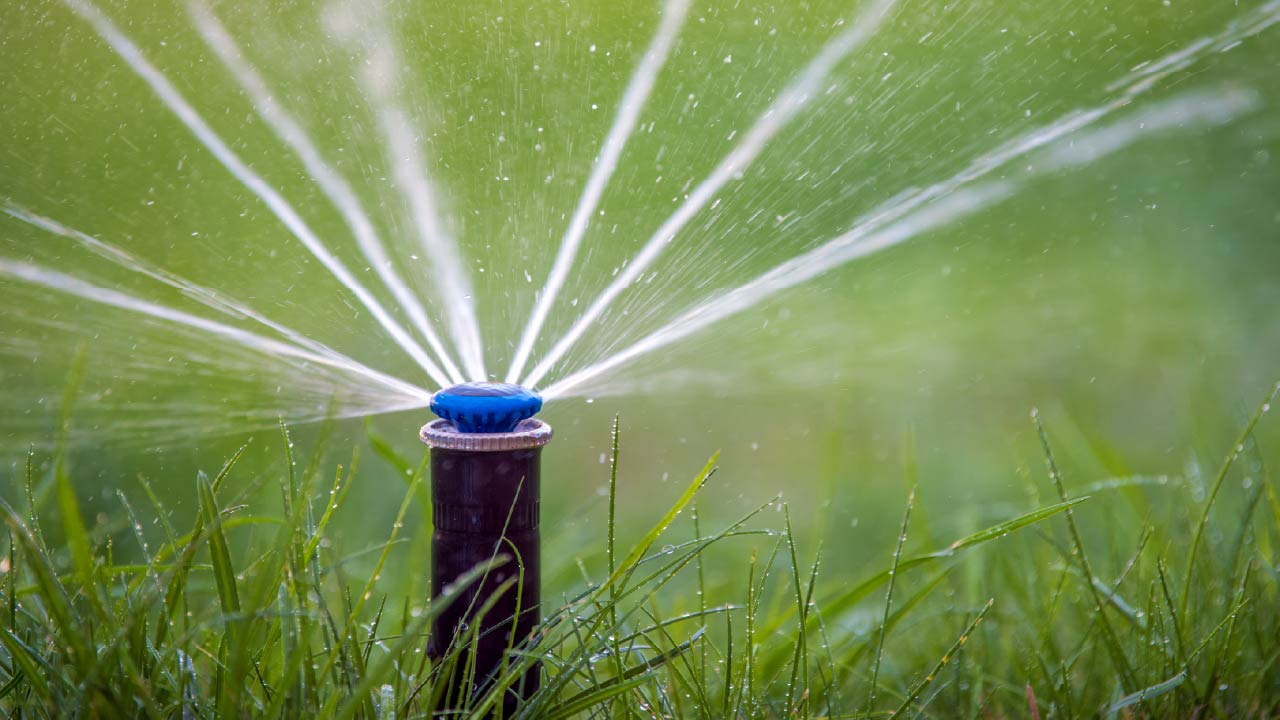
If you live in a windy area, you may have seen sprinkler spray drift onto the driveway, patio furniture, or a neighbor's fence instead of your lawn. Wind can disrupt even efficient irrigation systems, and even a light breeze can carry water droplets off target. The result is wasted water, dry patches, uneven growth, soggy sidewalks, higher water bills, and a landscape that suffers from inconsistent watering.
Wind-related irrigation problems can be fixed by choosing the right sprinklers designed for windy climates, avoiding irrigation systems that spray water into the air, and a little smart planning. The right sprinkler head can maintain a more accurate spray pattern, reduce misting, and deliver water exactly where your landscape needs it. What are the right sprinklers for windy regions?
Here we explore the best wind-resistant sprinkler types and recommend the top sprinkler models from leading brands like Hunter and Rain Bird. We will share practical landscape watering tips to help homeowners and landscapers get the most from their irrigation systems in windy climates.
What Makes a Sprinkler "Wind Resistant"?
Not all sprinklers perform equally when it comes to battling the breeze. The best wind-tolerant sprinklers generally offer the following characteristics.
- Larger water droplets: Instead of fine mist, heavier droplets fall faster directly onto the target zone rather than floating away as mist.
- Rotor-style delivery: A single rotating stream or multiple heavy streams are produced rather than a wide fan of mist. Streams of water rotate steadily across the landscape.
- Low-angle trajectory nozzles: The closer the water stream stays to the ground, the less surface area it exposes to wind drift. Low-angle nozzles keep water closer to the ground, reducing drift.
- Matched precipitation rates: It ensures uniform watering even when you have to run mixed nozzle types.
- Pressure regulation: Excess pressure creates a fine, wind-prone mist, so built-in pressure-regulated sprinkler heads are essential to maintain optimal operating pressure, producing larger droplets and minimizing wind drift.
Best Sprinkler Types for Windy Climates
Let's look at the top sprinkler categories that perform best when wind becomes a challenge.
Rotor Sprinklers
If there's one type of sprinkler head that consistently outperforms the others in windy conditions, it's the rotor. Rotor sprinklers deliver water through one or several rotating streams instead of spraying a wide, misty fan of water like traditional spray heads. The stream is more concentrated and travels in a slower, more controlled arc, so it's far less susceptible to wind.
Rotors are also great for large residential lawns and commercial properties. Unlike fixed spray heads, they are built to cover large distances. Their wider range makes them ideal for medium to large landscapes.
Best Rotor Sprinkler Models for Wind Resistance
Here are the best-performing, wind-resistant rotor models from leading irrigation brands.
Hunter PGP Ultra Rotor and PGP-ADJ Rotor
The Hunter PGP series is the standard for residential and light commercial rotor irrigation. The Hunter PGP Ultra is specifically designed to minimize water drift in windy conditions, with a precise rotating action that helps it maintain its trajectory even in strong breezes. It also comes with adjustable nozzles so you can dial in your spray pattern for specific zones.
Hunter PGP-ADJ 4" Pop-Up Rotor
If you have a medium-sized lawn, the Hunter PGJ-04 is worth a try. It features top-of-head arc adjustment from 40 to 360 degrees and a 4-inch pop-up height, which is suited to most turf areas. This rotor sprinkler also comes with a water-lubricated gear drive that keeps operation smooth and quiet over years of use.
Hunter I-20 Rotor
This is another excellent choice for landscapes. The Hunter I-20 Rotor with Check Valve and Pressure-Regulated Body is designed to reduce wind effects and deliver water consistently without excessive drift. It features adjustable spray patterns to fine-tune coverage. It delivers water streams in larger droplets that resist wind drift and can save up to 25% water compared to unregulated rotors running at high pressure.
Rain Bird 5000 Series Rotor
Rain Bird's 5000 series include low-angle nozzles that produce larger, wind-resistant droplets. These rotors are built for high efficiency and uniform coverage even in windy conditions. Its rotor design offers better wind resistance than traditional spray heads and also an adjustable radius for tighter control.
Toro T5P-RS - 5" Pop-up Rotor
Toro's gear-driven rotors are also a great choice for windy climates. It features an adjustable arc system that allows users to set the arc from 40° to 360° with no tools required and an Airfoil Technology nozzle to create a low-pressure zone. The 10° low-angle nozzles are specifically designed for challenging windy conditions, areas under trees or roof overhangs, or any area where a lower stream trajectory is required to water the turf without being deflected or over-spraying adjacent surfaces.
Discover The Top 5 Best Water Saving Pop Up Sprinklers
High-efficiency Rotary Nozzles
Rotary nozzles are one of the smartest upgrades for spray heads. If you already have a spray-head system installed and don't want to replace the entire body, Rotary nozzles can fit onto standard pop-up spray bodies. This makes them one of the easiest retrofits for existing systems.
Rotary nozzles emit multiple wind-resistant streams that slowly rotate rather than blasting water all at once in a fine spray. They give you the water-saving benefits of a rotor with a retrofit-friendly design.
Everything You Need to Know About Sprinkler Nozzles
Hunter MP Rotator Series
The Hunter MP Rotator is the ideal choice for wind-prone areas. Its multi-stream, multi-trajectory technology makes it stand out, producing thick droplets in multiple streams that resist wind drift better than traditional spray heads.
An MP rotator divides water into multiple smaller streams, and each stream is more sensitive to wind than a single-stream rotor. Therefore, MP Rotators work best in moderate wind conditions rather than consistently high-wind zones, and proper spacing is non-negotiable.
Rotary nozzles are available in multiple radius options, so they are best for homeowners looking to improve wind performance without replacing their entire irrigation system. Pair the nozzles with pressure-regulated bodies like the Hunter Pro-Spray PRS40 to keep inlet pressure at a steady 40 PSI, preventing misting.
Rain Bird R-VAN Rotary Nozzles
Rain Bird's R-VAN nozzles feature rotating stream technology that delivers better water distribution in the form of larger droplets with less waste. For a true windy climate, the R-VAN series is the best one. Yards in windy regions specifically benefit from rotary nozzles, low-angle spray, and large water droplets, and the R-VAN is designed around exactly that principle.
The R-VAN18 produces large, thick, wind-resistant water droplets that cut through wind and stay within the target zone. It's also a retrofit and can easily fit standard Rain Bird 1804, 1806, and 1812 spray bodies.
K-Rain RN100-ADJ Rotary Nozzle
This fully adjustable rotary nozzle is perfect for tighter or irregularly shaped areas, small-to-medium lawns, corners, and narrow side yards where wind tends to funnel and intensify. They perform better in wind because the streams are heavier and directional than a fine mist.
It's a versatile rotary nozzle that covers the full range from 80 to 360 degrees and produces multiple rotating streams across a 13- to 15-foot radius.
Drip Irrigation and Micro-sprinklers
If your landscape has vegetable garden beds, flower beds, shrub borders, trees, dense groundcovers, or any planting area, you should avoid overhead turf coverage with sprinklers in a windy region. Drip irrigation is the single best wind solution for these planting areas because essentially no water is blown around in the first place. Micro-irrigation and low-profile target watering keep water at ground level.
Areas with full sun or high winds experience faster evaporation, so rotor heads and drip systems reduce waste in these conditions, whereas spray heads should be avoided entirely in these zones.
Subsurface and Surface Drip Irrigation
Drip irrigation is a wind-proof watering method because the tubing delivers water directly into the soil at the plant base. Wind has 0% impact on drip emitter distribution. It is the most water-efficient method for windy gardens and flower beds.
Drip irrigation can reduce water consumption by up to 60% compared to traditional overhead sprinklers. Also, it produces up to 90% better crop yield thanks to more precise, consistent watering.
For flower beds, shrubs, raised beds, and vegetable gardens in your landscape, get DripWorks' complete drip irrigation kits to easily install the complete system and eliminate wind-related watering problems.
Micro-Jet Sprayers on Low Stakes
When low-volume overhead coverage is required for dense groundcovers or seedbeds, use micro sprayers for precise, efficient watering. Adjustable micro jet sprayers fitted with support stakes will elevate your irrigation and keep the water canopy under wind gusts.
10 Reasons Why You Should Consider Drip Irrigation for Your Farm and Garden
Choose the Right Sprinkler for Your Landscape Type
Every zone in your landscape does not need the same watering solution. Here's a breakdown for matching sprinkler type to your landscape needs in windy climates.
- Large open lawns: Full-size gear-drive rotors such as Hunter PGP Ultra, Rain Bird 5000 Series.
- Medium residential lawns: Compact rotors such as Hunter PGJ-04 pop-up rotor or rotary nozzles, RainBird R-VAN nozzles, Hunter MP Rotator.
- Narrow Side Yards and Tight Corners: Adjustable rotary nozzles such as the K-Rain RN100-ADJ fully adjustable rotary nozzle.
- Slopes and Low-pressure Zones: Stream rotors.
- Garden beds, shrubs, and trees: Drip irrigation or micro-sprinklers.
- Areas Near Hardscape Surfaces: Low-angle nozzles paired with tight arc adjustment to avoid overspray.
Discover: The Top 7 Lawn Sprinklers for Thriving Grass in 2026
Expert Tips for Watering Landscapes in Windy Areas
Even the best sprinkler head can't fully overcome poor system design or bad watering timing. Follow these strategies to upgrade your irrigation system and maximize its efficiency.
Water During the Calm Hours: In most regions, wind velocity drops during early morning hours, typically between 4:00 AM and 8:00 AM. Early morning also has the lowest evaporation, making it the ideal irrigation window.
Lower Your System Pressure: Excess pressure is one of the biggest causes of wind drift, as it produces ultra-fine water droplets in mist form, which float away in even the slightest breeze. Install a pressure regulator at your valve manifold to ensure system pressure stays within optimal limits.
Choose Low-angle nozzles: A lower trajectory means less time for water to hang in the air, and less hang time means less opportunity for wind to grab the droplets.
Add Smart Controllers and Wind Sensors: Modern smart controllers use real-time local weather data to skip scheduled water cycles when local wind speeds exceed a pre-set point. For extra precision, install a wired or wireless wind sensor.
Ensure Proper Head Spacing: Sprinklers placed with head-to-head coverage ensure uniform coverage. If wind pushes the stream away, the overlapping design pattern will eliminate dry patches.
Implement "Cycle and Soak" Method: Wind-resistant sprinklers like MP Rotators apply water at a slower precipitation rate, so run times need to be longer to deliver adequate water volume. To avoid water pooling or running off into the street, break the total run time into multiple shorter cycles separated by a short rest period.
Inspect and re-adjust Arcs Seasonally: Wind patterns shift with the seasons in many regions, so adjust the sprinkler arcs and controller settings accordingly.
The Bottom Line
Now you know how to efficiently water your windy landscape. Living in a windy area doesn't mean you have to settle for a brown lawn or high utility bills from water waste. Replace outdated, high-misting spray heads with low-trajectory, heavy-droplet solutions such as Hunter MP Rotators, low-angle rotor nozzles, and drip components. These efficient irrigation devices can ensure every drop of water reaches the soil where your plants need it most. The best model for you isn't the one that's the best-selling; it's just the one that serves all your needs at the most reasonable price.
DripWorks carries high-quality sprinkler products and drip irrigation setups that perform well in challenging windy environments. From Hunter PGP Ultra Rotors, Hunter MP Rotator Nozzles, and pressure-regulated spray bodies, you'll find reliable solutions from leading brands trusted by irrigation professionals. Get the right irrigation equipment, build a water-saving sprinkler system, and your landscape will finally get the consistent, even watering it deserves, even on windy days.