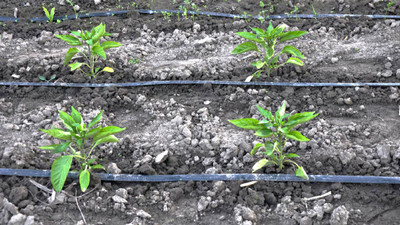
Commercial-Grade Reliability for Every Garden
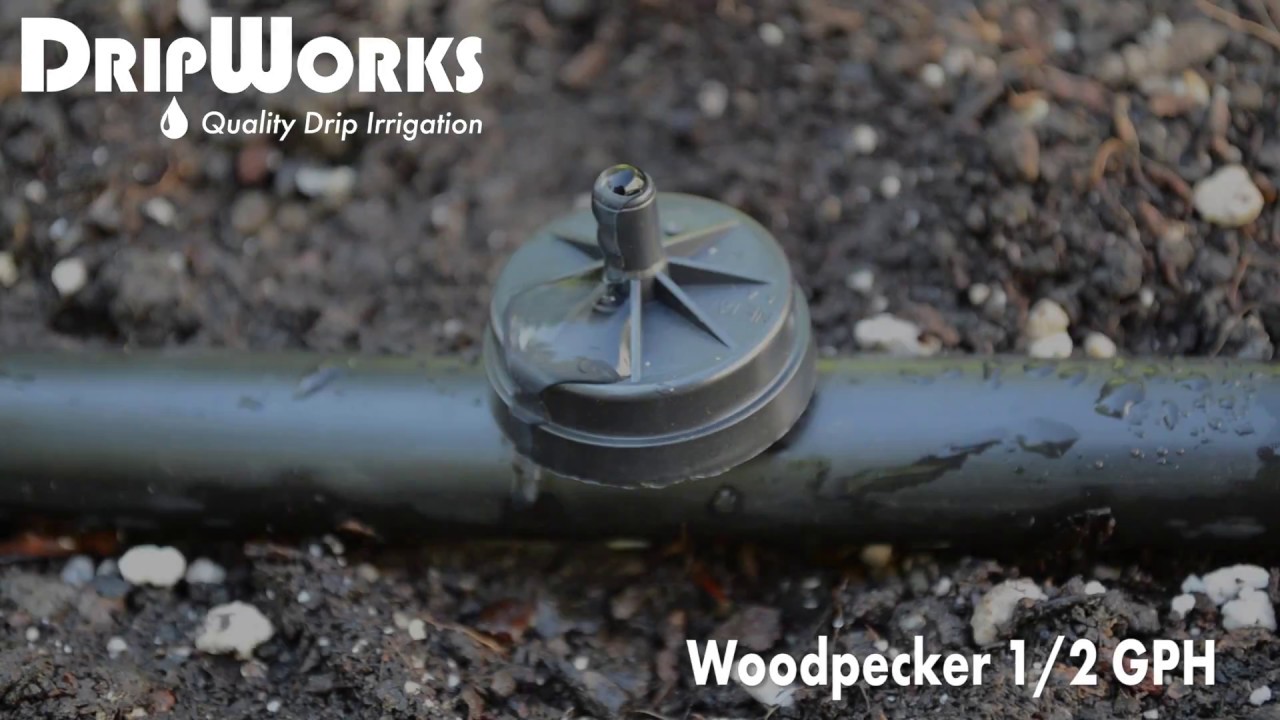
If you are looking for emitters that deliver unparalleled clog resistance and long-lasting durability, look no further than the Netafim Woodpecker Emitters. Widely considered the gold standard in agricultural irrigation, these heavy-duty, pressure-compensating (PC) drippers are heavily favored by professional grape growers navigating the rugged terrain of Northern California vineyards. Now, that same commercial reliability is available for your home garden, orchard, or greenhouse.
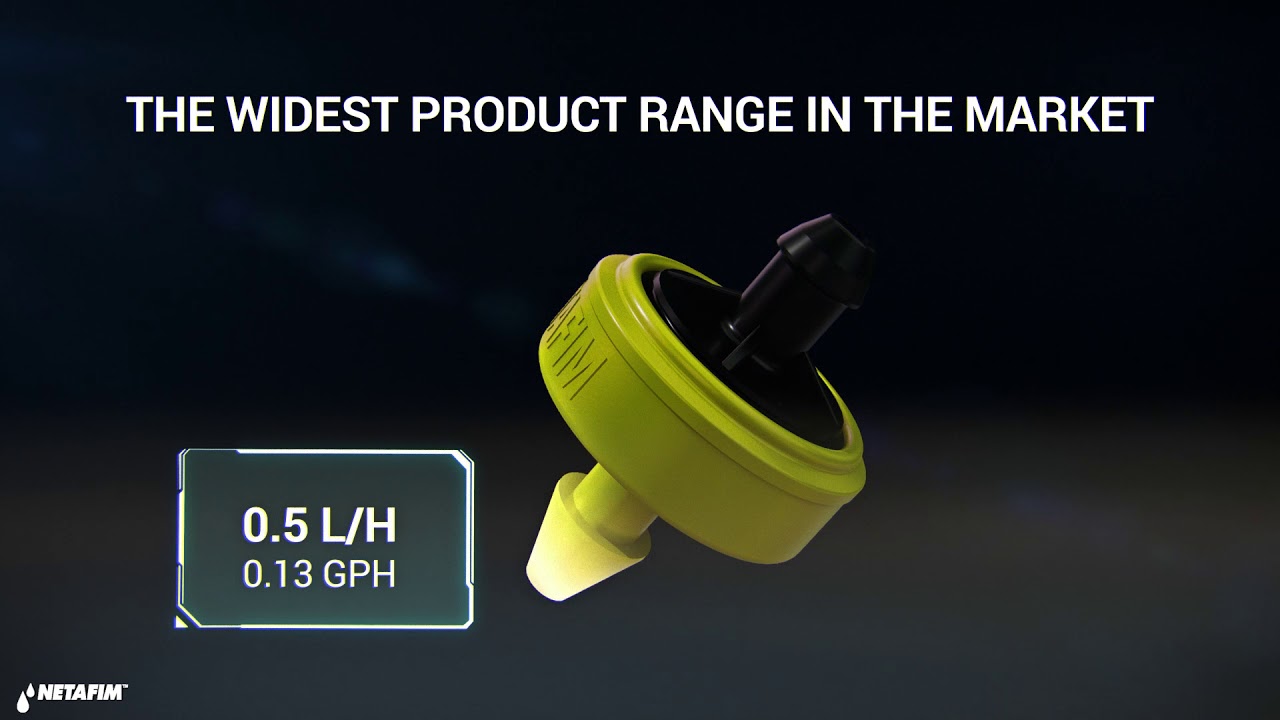
The secret to the Woodpecker's success lies inside its housing. It features the industry's widest flow path and the largest EPDM rubber diaphragm available. Combined with a continuous self-flushing system that clears debris during operation, these emitters practically eliminate plugging. Whether punched directly into 1/2" mainline tubing or placed at the end of micro tubing, the patented pressure differential system ensures perfectly uniform watering from the first plant to the last.
Why Choose Netafim Woodpecker Emitters?
- Continuous Self-Flushing: Automatically flushes out dirt and large particles during operation to prevent clogging, ensuring a highly reliable system.
- Massive Flow Path: Engineered with the industry's widest cross-section and largest EPDM rubber diaphragm to handle poor water quality.
- Extreme Pressure Compensation: Maintains an exact, uniform flow rate across an incredibly wide pressure range of 7 to 58 PSI.
- Vineyard Proven: Trusted by commercial farmers worldwide to deliver precise water and nutrients in rugged, uneven environments.
- Versatile Placement: Features 1/4" inlets and outlets, allowing for direct-to-mainline punching or precise placement at the end of 1/4" tubing.
Technical Specifications
Detailed specifications for system planning.
| Specification |
Details |
| Product Type |
Pressure Compensating (PC) Drip Emitter |
| Inlet Connection |
1/4" Barb |
| Outlet Connection |
1/4" Nipple/Barb |
| Operating Pressure Range |
7 to 58 PSI |
| Filtration Requirement |
120 Mesh Minimum Recommended |
| Internal Diaphragm |
EPDM Rubber |
How to Install: A Step-by-Step Guide
A quick guide to installing your Netafim emitters.
Step 1: Punch the Hole
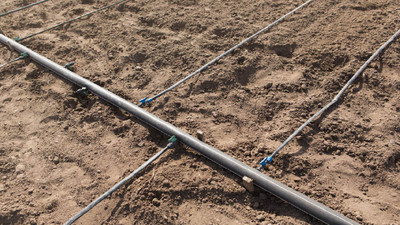
Using a standard irrigation hole punch, create a clean hole directly into your 1/2" or 3/4" mainline tubing.
Step 2: Insert the Emitter
Push the barbed inlet (the slightly narrower, pointed end) of the Woodpecker emitter firmly into the punched hole until it snaps securely into place.
Step 3: Attach Micro Tubing (Optional)
If your plant is further away from the mainline, push a piece of 1/4" micro tubing onto the top outlet barb to extend the water precisely to the base of the plant.
Frequently Asked Questions
Why are Netafim Woodpecker emitters so popular in commercial vineyards?
They feature the industry's largest EPDM rubber diaphragm and a continuous self-flushing mechanism, making them incredibly resistant to clogging even with poor water quality or heavy fertilizers.
Vineyards require absolute reliability because clogged emitters can result in massive crop losses. Netafim engineered these to be a install-and-forget solution.
What size tubing connects to the Netafim Woodpecker emitter?
These emitters feature 1/4-inch barbs. You can punch them directly into 1/2-inch or 3/4-inch mainline tubing, or push them onto the end of 1/4-inch micro tubing.
Always use a dedicated irrigation hole punch (like a pocket punch or key punch) to ensure a perfect, leak-free seal around the emitter barb.
What is the operating pressure range for the Netafim Woodpecker emitters?
The Netafim Woodpecker operates perfectly between 7 and 58 PSI. The pressure-compensating design ensures the exact same water output anywhere within this range, regardless of elevation changes.
This ultra-wide pressure tolerance is another reason they are favored on steep hillsides where pressure fluctuates greatly from the top of the hill to the bottom.
As I start my system this spring, do I need to clean the Netafim Woodpecker emitters?
No manual cleaning is required. The Netafim Woodpecker features a continuous self-flushing design that automatically clears debris during operation, making spring startup incredibly easy.
During your spring system check, simply turn the water on and walk your lines to verify that rodents or winter freezes haven't damaged the plastic housing. Otherwise, the internal mechanism clears itself.
✔ Compatibility Check
Please note the requirements for this component:
- Filtration is required: A minimum of a 120 mesh water filter is recommended to prolong the life of these emitters.
- Pressure limits: This emitter operates between 7 and 58 PSI. A pressure regulator may be required depending on your municipal water pressure.
- Hole Punch required: To install directly into 1/2" or 3/4" mainline, you must use an irrigation hole punch.
Complete Your System
Ensure your installation goes smoothly with these recommended products:
- 1/2" Mainline Tubing: The standard water delivery line that these emitters punch directly into.
- Pocket Punch: The essential tool for creating perfectly sized, clean holes in your mainline tubing.
- 1/4" Micro Tubing: Connect this to the emitter's outlet to direct water precisely to your plants.
- System Filters: Prevent clogging by installing a 120-mesh or 150-mesh filter at your water source.
Downloads
Relevant Tips & Guides