
Cannabis
When to Harvest Your Cannabis Guide
Oct 2nd 2026
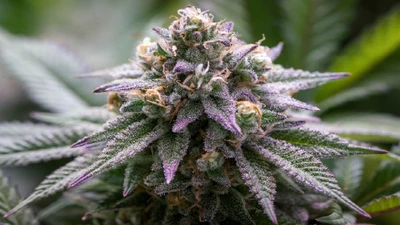
After months of dedication, the moment you've been waiting for is finally here: your cannabis plants
…
See More


The Senninger 1" Pressure Limit Valve (30 PSI) completely changes the way you design a drip irrigation head assembly. Unlike standard pressure regulators that will eventually leak or burst if left under continuous mainline pressure, this specialized 1" limit valve is engineered to safely operate under constant pressure. This means you can install a single 30 PSI limit valve directly onto your main water line upstream of your automated irrigation valves, effectively protecting your entire multi-zone manifold with just one unit.
Featuring heavy-duty 1" Female Pipe Threads (FPT) on both the inlet and outlet, it integrates easily and securely into high-capacity rigid PVC plumbing. This specific model provides a reliable, preset output of 30 PSI, which is the perfect industry standard for running 1/2" poly tubing, punch-in emitters, and micro-sprinklers. Crucial Note: Because the sensitive internal mechanisms of this valve are designed exclusively for clean water, an irrigation filter MUST be installed upstream (before) this limit valve to prevent fine debris from damaging the diaphragm.
Detailed specifications for system planning.
| Specification | Details |
|---|---|
| Product Type | Pressure Limit Valve (PRLV) |
| Inlet / Outlet Size | 1" Female Pipe Thread (FPT) |
| Regulated Output Pressure | 30 PSI Preset |
| Constant Pressure Rated | Yes (Can be installed securely before valves or timers) |
| Filtration Requirement | Filter MUST be installed upstream (before) the limit valve |
| Brand | Senninger |
Build your constant-pressure head assembly safely and correctly.
Step 1: Install the Filter FIRST
It is absolutely critical that an irrigation filter is installed on your mainline before the Senninger Limit Valve. This valve's internal mechanism will fail if grit or sand enters it.
Step 2: Prep the Threads
Because this unit utilizes 1" Female Pipe Threads (FPT), you must apply 3 to 4 wraps of Teflon tape to the 1" Male PVC fittings you will be threading into the inlet and outlet. Do not use liquid pipe dope.
Step 3: Connect the Limit Valve
Thread the 1" inlet of the Limit Valve directly into the PVC fitting coming from your filter. Ensure the directional flow arrow points downstream toward your valve manifold.
Step 4: Connect to Your Valves
Thread a 1" PVC fitting into the outlet of the Limit Valve to transition into your multi-zone valve manifold. All automated valves located downstream of this single limit valve will now safely receive exactly 30 PSI of regulated pressure.
What is the difference between a Limit Valve and a standard Pressure Regulator?
A standard pressure regulator is designed to hold pressure only while water is flowing. If left under constant pressure 24/7 (before an automated valve), it will eventually leak or burst.
A Limit Valve is engineered with internal mechanisms that safely hold back static mainline pressure indefinitely. This allows you to place one limit valve before your manifold to regulate the entire system, rather than buying a separate standard regulator for every single zone.
Why does the filter have to be installed before the Limit Valve?
To maintain its ability to hold back constant static pressure, the Senninger Limit Valve uses very sensitive internal diaphragms. If small particles of sand, grit, or debris get inside the unit, it will prevent the valve from closing completely, destroying its ability to regulate pressure.
Always install a high-quality filter upstream of the PRLV.
Is 30 PSI the right pressure for my system?
30 PSI is the ideal, standard operating pressure for the vast majority of drip irrigation systems that utilize 1/2" poly tubing, punch-in emitters, and micro-sprinklers.
If you are using ultra-thin-walled Drip Tape (like 8 mil or 15 mil), you will need to step the pressure down further, as 30 PSI may cause the thin tape to rupture.
How should I winterize my Senninger Limit Valve?
Before freezing temperatures arrive, you must completely blow out or drain all water from your irrigation head assembly.
Any water left trapped inside the regulator's body will expand as it turns to ice, which will permanently destroy the internal diaphragm and crack the plastic housing. If you cannot blow out the lines, unthread the unit and store it indoors.
Please note the strict requirements for this constant-pressure unit:
Ensure your multi-zone head assembly is protected and ready to run with these recommended products:
Oct 2nd 2026
Oct 1st 2026
Sep 30th 2026
Sep 29th 2026