
Smart Irrigation Controllers vs. Traditional Timers
Oct 22nd 2026
A good irrigation system delivers the right amount of water at the right time and frequency, and automation makes that possible. Automating your irrigation system with timers and smart controllers protects your plants, reduces labor, and optimizes water usage. However, choosing the right equipment is a crucial step. It's a decision that affects your water bills, plant health, drought compliance, and how much time you spend handling dials instead of gardening.
With rising water costs, environmental concerns, and unpredictable climate patterns affecting many regions, homeowners are turning to smart irrigation controllers to control their outdoor water use. But that does not automatically make a smart controller the right choice for every garden. A small raised-bed garden with one irrigation zone may need only a simple battery timer.
When comparing smart controllers vs. traditional timers, you should choose the system that fits your landscape, irrigation design, water source, and the level of control you need. Let's discuss how these two systems differ, which option is best for your garden, and what to consider before you buy.
What Is a Traditional Irrigation Timer?
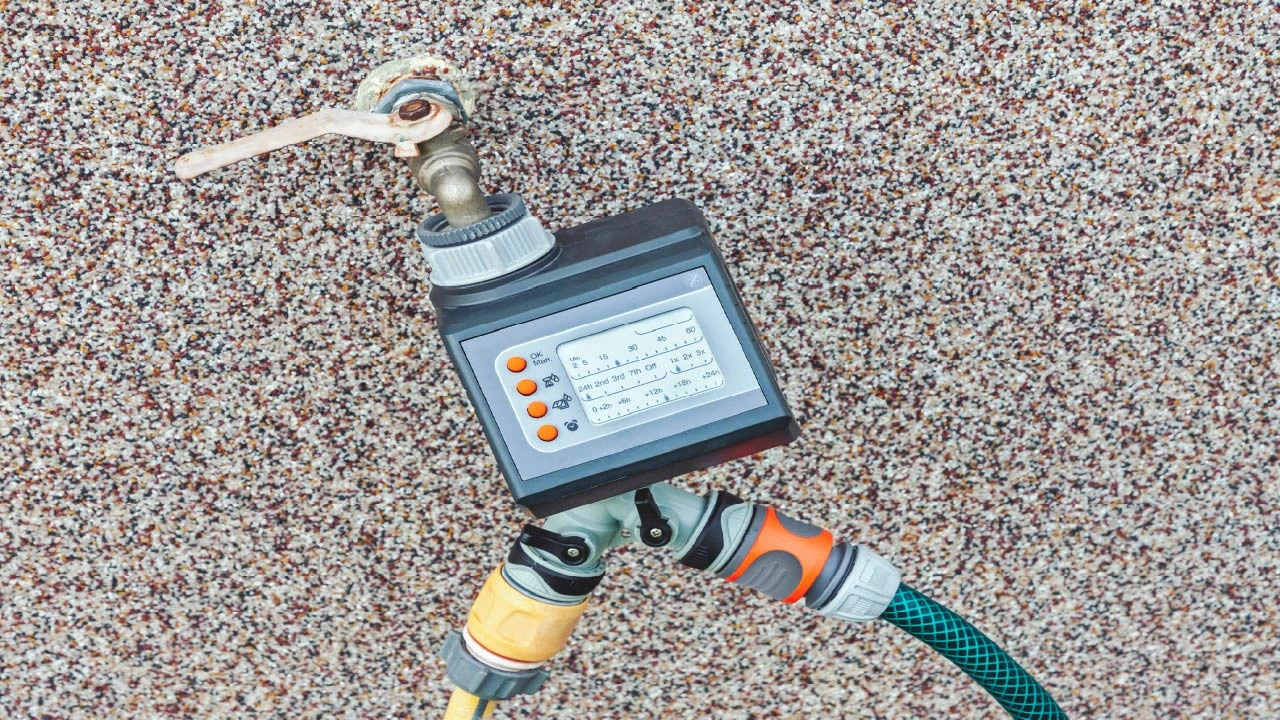
A traditional irrigation timer automates watering based on a schedule the user programs. This timer is often called a standard controller, clock, or tap timer. It operates on fixed, user-defined schedules. Depending on the model, you can manually select watering days, start times, run times, watering cycles, rain delays, and seasonal adjustments.
When the scheduled time arrives, the timer sends an electrical signal to the irrigation valve and opens it. Water then moves through the drip tubing, sprinklers, or other irrigation components. A traditional timer isn't necessarily mechanical or outdated. Modern electronic irrigation timers can be quite advanced.
Key Features of Traditional Timers
- Manual programming: You set start times, run durations, and days of the week directly on the unit.
- No internet or app required: It works independently, with no Wi-Fi or smartphone needed.
- Battery or plug-in-powered: Depending on the model, traditional timers can run on batteries or standard household power.
- Fixed schedules: Once set, the timer repeats the same watering pattern until you change it yourself.
- Simple, durable design: Fewer components mean fewer things that can break or need updates.
Benefits of Traditional Timers
- Cost-Effective: They usually cost less than smart controllers.
- Reliability: They work without requiring an internet connection or Wi-Fi coverage.
- Ease of Operation: Simple setup without app installations, passwords, or cloud accounts.
Limitations of Traditional Timers
- Manual Adjustments: You must change the schedule yourself when weather or plant water needs change.
- Limited Remote Control: Adjustments require physical interaction with the device.
What Is a Smart Irrigation Controller?
A smart irrigation controller does the same basic job of turning water on and off, but they offer greater control and automation. These controllers connect to Wi-Fi, sync with a smartphone app, and often pull in real-time weather data to adjust watering schedules automatically.
Depending on the model, a smart controller may connect to Wi-Fi, Bluetooth, weather services, rain sensors, flow sensors, smartphone apps, and other irrigation-management systems.
Instead of only following a schedule such as "water for 20 minutes every Monday and Friday", a smart controller may adjust irrigation based on changing conditions. If it detects rain or weather data indicates significant rainfall, the controller may delay or reduce watering.
Key Features of Smart Controllers
- Weather-based scheduling: Automatically adjusts watering based on rain, humidity, temperature, and evapotranspiration rates.
- Smartphone app control: You can start, stop, or reprogram your system from anywhere.
- Zone-specific programming: Different watering schedules for lawns, vegetable beds, flower borders, and drip lines.
- Soil moisture sensor compatibility: Some models integrate with sensors to water only when the soil needs it.
- Water usage reports: Track how much water each zone consumes over time.
- Remote alerts: Give notifications for leaks, valve failures or freezing temperatures that pause watering.
Primary Benefits of Smart Controllers
- Significant Water Savings: They can reduce outdoor water usage by 20% to 50% by eliminating overwatering.
- Better Plant Health: They deliver water based on actual environmental needs, minimizing risks of root rot, fungal diseases, and nutrient leaching.
- Remote Management: Control your system from anywhere. It is best for property managers, travelers, or growers who manage remote sites.
- Rebate Eligibility: Many U.S. water utilities offer EPA WaterSense rebates that reduce overall costs.
Limitations of Smart Controllers
- Higher Upfront Cost: Smart controllers usually cost more than basic timers.
- Needs a Connection: They require a stable Wi-Fi signal or network connection for features such as remote access and weather-based updates.
- More setup: Getting the most from a smart controller can take some time because you may need to enter details about your plants, soil, sun exposure, and irrigation zones.
Smart Controllers vs Traditional Timers: The Key Differences
Let's compare both options across the factors that matter most to gardeners and landscapers.
Water Efficiency
Traditional timers run on a fixed schedule regardless of weather. If it rained yesterday, your timer doesn't know that, and it'll water anyway unless you manually skip a cycle.
Smart controllers use local weather data and evapotranspiration calculations to automatically skip or shorten watering cycles.
According to the EPA's WaterSense program, homes that use WaterSense-labeled smart controllers can save an average of 7,600 gallons of water annually.
Ease of Use
With a traditional timer, you need to be at the controller to change the schedule. Smart controllers let you adjust schedules from your phone, whether you're at work, on vacation, or just too lazy to walk outside in the rain.
Upfront Cost
Traditional timers are usually cheaper. A basic hose-end or digital timer may cost around $35 to $150. Smart controllers range from $80 to $300+ depending on the number of zones and features.
If you have a small backyard garden with one or two zones, a basic timer is all you need. On larger properties or commercial landscaping, smart controllers are the best choice. The long-term water savings from installing smart controllers will pay the higher upfront cost within a season or two.
Installation and Setup
Traditional timers are usually quick to set up. Connect the timer, set the watering schedule, and you're ready to go.
However, smart controllers take a little more work at first. You may need to connect the unit to Wi-Fi, pair it with an app, and enter information about your zones and landscape. Once everything is set up, making changes is usually much easier.
Reliability Without Power or Internet
If your Wi-Fi goes down, most smart controllers keep following the last-saved schedule, but they lose "smart" features like remote access and online weather data until they reconnect.
Traditional timers, especially battery-operated ones, don't have this issue. They keep running exactly as they are programmed without Wi-Fi or internet access.
Scalability for Landscaping Businesses
If you're a landscaper managing multiple properties, smart controllers let you monitor and adjust multiple systems from a single dashboard.
Traditional timers simply don't offer that kind of centralized control. With them, changing schedules usually means visiting each property individually.
Bluetooth Timers
Bluetooth timers sit somewhere between traditional and fully connected smart irrigation controllers. You can program a Bluetooth timer from a smartphone, making scheduling easier than using buttons or a small LCD display. The catch is that you usually need to be close to the timer for the connection to work. That makes it different from Wi-Fi.
The main difference is simple:
Bluetooth: Lets you program the timer locally from your phone.
Wi-Fi: Allows remote access through an internet connection.
DripWorks has Bluetooth versions of Galcon timers as well as the Wi-Fi-capable Orbit B-Hyve.
For a homeowner who wants easier scheduling but does not need to check the irrigation system while away from home, Bluetooth can be a useful option.
Drip Irrigation Installation: 8 Things to Know Before You Start
How to Make the Right Choice for Your Garden or Landscape
The better option genuinely depends on how your irrigation system is set up and how much control you want. A backyard gardener with a couple of raised beds and a tight budget will benefit from a traditional timer. A landscaping business managing many properties will see a much faster return on investment from smart controllers.
Choose a Traditional Timer
A traditional timer can be a good fit when your watering needs are simple. Consider a traditional timer if:
- You have a small garden, raised beds, or container plants with simple watering needs.
- You need basic automation for a drip system.
- You're on a tight budget and don't need advanced scheduling.
- Your property doesn't have reliable Wi-Fi coverage.
- You prefer adjusting the timer directly rather than using an app.
- You need irrigation for a temporary setup, such as a summer vegetable garden.
Choose a Smart Controller
Smart controllers make the most sense when precision, water savings, and remote management matters. Consider a smart controller if:
- You manage a larger yard, multiple garden zones, or a mix of plant types with different water needs.
- You live in a drought-prone region with watering restrictions.
- You're a professional landscaper managing multiple properties.
- You want detailed water usage data to track efficiency or reduce bills.
- You have reliable home Wi-Fi and are comfortable with an app-based setup.
- You want to integrate irrigation with a broader smart home or smart garden system.
Consider a Hybrid Approach
There is no rule saying every zone must use the same type of controller. Many gardeners use smart controllers for larger lawn and landscape zones while keeping simple timers for isolated drip lines, raised beds or container gardens. That approach can provide extra control where it matters without adding unnecessary cost to every part of the irrigation system.
Consider a Bluetooth timer if:
You want smartphone-based programming but don't need remote control from outside the property.
Installation and Best Practices
A little preparation during installation can make your irrigation system easier to manage throughout the season. Here are some tips to get the most out of your irrigation automation.
Test Water Pressure and Flow Rate: Measure static PSI and flow rate in gallons per minute (GPM) before programming duration settings.
Hydrozone: Combine plants with similar water needs in the same zone to increase controller efficiency.
Protect Battery Compartments: Use waterproof grease on seals and replace batteries at the start of each growing season.
Check Wi-Fi Before Mounting the Controllers: Test signal strength at the installation site before securing wall anchors.
Install Backflow Preventers and Pressure Regulators: These components help protect the water supply and prevent excessive pressure from damaging the system.
Best Irrigation System Types for Your Yard
The Bottom Line
The choice between smart controllers and traditional timers comes down to how much control and automation you need. Traditional timers are a reliable, straightforward, and budget-friendly choice for smaller setups. Smart controllers make sense when you want features such as weather-based adjustments, phone access and more detailed control.
Both play essential roles in modern irrigation management. The best option matches your system size, water source, landscape, plant needs, available power, connectivity, and management style. Whichever you choose, the goal is the same. You'll get healthier plants, less wasted water, and less time spent worrying about whether you remembered to turn the hose off.
DripWorks carries a wide selection of irrigation timers and controllers for every setup, from simple hose-end timers to multi-station AC and DC controllers. This makes it easier to choose the level of automation that fits your irrigation system without paying for features you don't need.