
Best Irrigation System Types for Your Yard
Sep 9th 2026
The right irrigation system can make keeping your yard green and healthy much easier. A well-designed landscape can save you time, protect your plants, lower your water bill, and, honestly, save your sanity. Beyond boosting curb appeal, a healthy landscape offers a peaceful outdoor retreat for your family, pets, and entertainment. But choosing the best yard irrigation system isn't as simple as buying a sprinkler and connecting it to the hose. A small vegetable garden has very different watering needs than a large lawn, and flower beds, trees, slopes, containers, and landscapes all require different watering approaches.
The best irrigation system for your garden depends on your landscape layout, plant types, soil, climate, water pressure, available water supply, budget, what you are growing, and how much maintenance you're willing to do. With the right irrigation system, you can achieve the precise coverage you want while saving you time, water, and money.
Let's explore the best irrigation options available to homeowners and how to choose, design, install, and maintain a system that fits your landscape.
How to Choose the Right Irrigation System for Your Yard
Before buying equipment, take a full look at your yard. Plants, grass, and garden beds all have different watering needs, and getting it wrong causes problems. Overwatering leads to shallow root systems, fungal disease, and wasted water. On the other hand, underwatering stresses plants, invites pests, and leaves your lawn patchy and dull.
The best approach is to create hydrozones and group areas by similar watering needs. EPA WaterSense recommends grouping similar plants together and considering plant type, irrigation type, and sun or shade exposure when creating irrigation zones.
Before you pick a system for each zone, first understand every type of irrigation system.
The Main Types of Irrigation Systems
Here are the main categories of irrigation systems for yards and gardens. Some yards benefit from a single system type, and some use a combination like drip lines for garden beds and rotor sprinklers for the lawn.
Sprinkler Systems
Sprinkler systems are a popular irrigation option for homeowners with lawns. These systems use a network of underground tubing to carry water from the main supply to sprinklers that pop up and spray water across the grass. They work well for turf grass because they mimic rainfall and cover wide areas efficiently. The downside is that sprinklers can waste water through evaporation, wind drift, and overspray onto sidewalks or driveways if not properly installed.
Best for: Lawns, large grass areas, ground covers, large landscape beds, and areas where plants have similar watering needs.
You can use different sprinkler heads depending on your lawn's size and shape, including spray heads for smaller areas and rotors for larger spaces. Here are the main sprinkler types to consider for your yard.
- Fixed Spray Heads: Spray sprinklers are best for covering smaller, uniform lawn areas like narrow strips of lawn, side yards, or small front lawns. They spray a set pattern and are best for areas under 15 feet in radius.
- Rotors: Rotor heads rotate slowly and produce a long stream of water, making them ideal for medium to large lawns. They can provide longer-distance coverage than many spray heads and are useful for areas where you need fewer sprinkler heads to cover a large area.
- Impact Sprinklers: These sprinklers use a mechanical arm to distribute water. You can recognize them by their unique clicking sound, and they can provide strong coverage. Impact sprinklers are more common in larger gardens and landscapes.
Drip Irrigation Systems
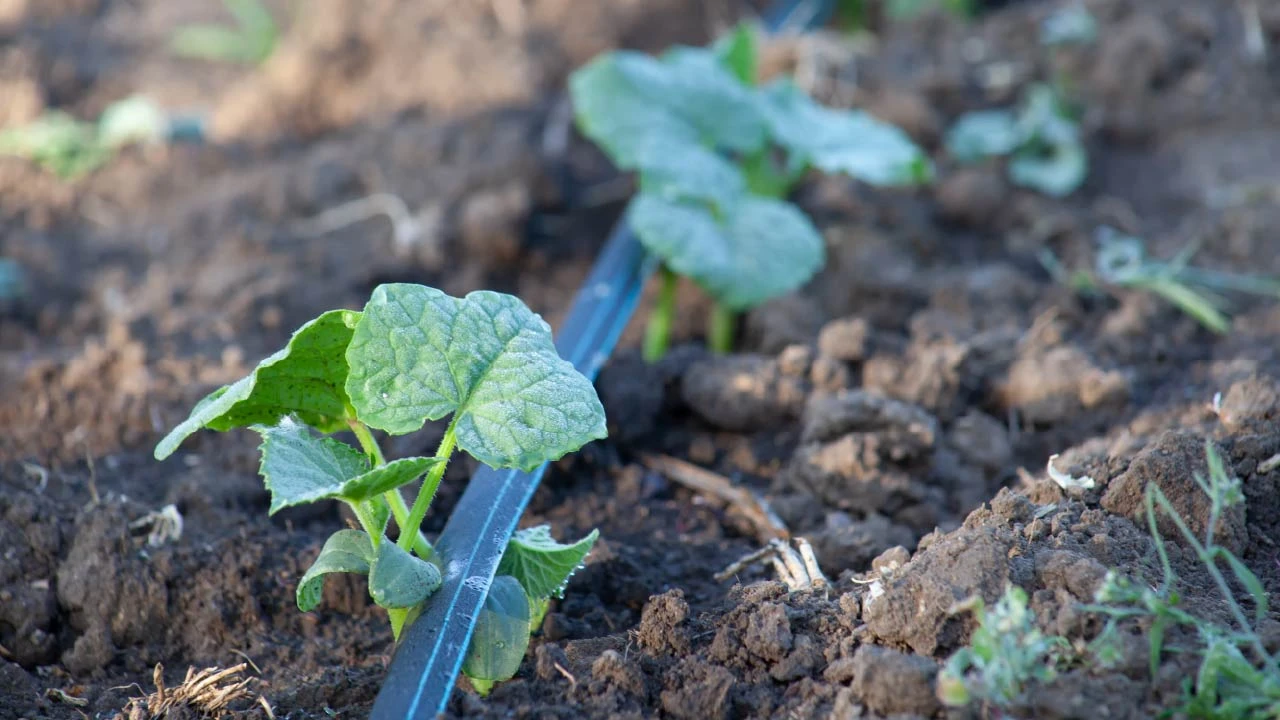
Drip irrigation is the most water-efficient irrigation choice when your priority is getting water directly to plants' roots rather than spraying an entire area. This targeted system delivers water slowly and directly to the base of each plant through the network of drip tubing and emitters. Instead of spraying water into the air, it drips it right where roots need it.
Drip systems are a favorite among gardeners because of their precision, but they're not a good choice for large open lawns. They're best for garden beds, borders, and rows, not broad turf coverage.
Best for: Vegetable gardens, flower beds, shrubs, containers, hanging baskets, greenhouse plants, raised garden beds, and trees.
Benefits of Drip System
- Reduces water waste by up to 30-50% compared to sprinklers.
- Helps limit weed growth because it waters only where plants need it.
- Keeps foliage dry and reduces disease risk.
- Easy to adjust, so you can give different plants the amount of water they need.
The Best Drip Irrigation Systems for Raised Beds, Gardens, and Row Crops
Soaker Hoses
Soaker hoses are a simple, budget-friendly option for homeowners who don't need a permanent irrigation system. A porous hose drips water along its entire length when connected to a spigot. Water slowly seeps through the hose and moistens the soil around plants. It is inexpensive and easy to install without professional help. However, it is less precise than drip emitters, so water distribution can be uneven on slopes or long runs
Best for: small garden beds, foundation plantings, temporary seasonal gardens, and small vegetable patches.
This is a solid choice if you want better watering without investing in a full irrigation system yet.
Micro-Sprinklers and Micro-Spray Systems
Micro sprinklers are small overhead sprayers designed for small landscape beds or ground covers. They provide more coverage than individual drip emitters without delivering water over as wide an area as traditional sprinklers. Depending on the model, these small sprinklers can spray a fine mist or fan pattern.
Best for: Raised garden beds, container gardens, potted plants, groundcovers, mixed perennial beds.
Underground Automatic Irrigation Systems
If you have a larger lawn or want automatic watering, an underground sprinkler system is worth the investment. The pipes are installed in trenches, and a connected timer turns the system on and off at preset intervals.
In-ground sprinkler systems include a main water connection, backflow prevention, a shutoff valve, a filter, pressure regulation, sprinkler heads, a controller, automatic valves, and, where applicable, rain or soil-moisture sensing technology. Once installed, the system should last for up to 20 years or more.
When properly designed, the system can divide your landscape into multiple zones and water each area independently.
Sprinkler Selection: Top Sprinkler Systems for Home Gardens in 2026
Now that you know the main irrigation options, let's look at how to choose the one that best fits your yard.
Consider Your Landscape Layout
A yard usually has a mix of zones. Look at what you are watering.
- Large open lawn areas: Use rotor or spray sprinkler heads
- Garden beds, vegetable rows, raised beds, shrubs: Use drip irrigation
- Small containers or raised beds: Micro-spray
- Slopes or uneven terrain: Use drip irrigation system or low-flow rotor nozzles
You can set up a hybrid system controlled by the same timer or smart controller, like sprinklers for the grass and drip lines for the flower beds.
Assess Your Soil Type
Soil composition greatly affects how water moves through your yard, how quickly water is absorbed, and how long it's retained.
- Sandy soil drains quickly and needs shorter, more frequent watering cycles. They benefit from drip irrigation.
- Clay soil absorbs water slowly and holds it longer, so it's prone to run off if watered too fast. Running sprinklers for too long can cause runoff or puddling. Drip or low-flow sprinklers are best for this.
- Loamy soil is the ideal soil mix, and it provides a good balance between drainage and moisture retention. It can handle most systems well with balanced absorption.
If you're not sure what soil your garden has, do a simple squeeze test. Grab a handful of moist soil and check if it holds its shape or crumbles. This gives you a rough idea, or you can send a soil sample to your local agricultural extension office to know your soil type.
Check Your Water Pressure and Flow Rate
First, determine your home's water supply capacity, then choose irrigation components. Your available water pressure and flow determine how many sprinkler heads or emitters can run effectively in a zone.
Before installing any system, confirm your home's water pressure (most systems need 30-50 PSI) and flow rate. Low pressure can cause uneven sprinkler coverage, while very high pressure can cause misting and water waste. You can measure the system's water pressure using this pressure gauge.
Consider Your Climate and Rainfall Patterns
Gardeners in drier states like Arizona, Nevada, and parts of California need more efficient, low-waste systems like drip irrigation, automated with smart controllers.
In wetter regions like the Pacific Northwest or the Southeast, a simpler sprinkler setup paired with rain sensors may be enough for your landscape.
Don't Mix Incompatible Sprinklers in the Same Zone
Different sprinkler types can have different precipitation rates. Never install spray and rotors on the same zone. Running spray heads and rotors together in the same zone can result in uneven watering because one will apply water much faster than the other.
A well-designed sprinkler system should also aim for head-to-head coverage, where the water from one sprinkler reaches the next sprinkler head. This approach provides the most uniform coverage.
Choose the Right Timer or Irrigation Controller
The controller runs your irrigation system on a programmed schedule. This is convenient, but it doesn't know whether your landscape needs water.
Weather-based and soil-moisture-based smart controllers offer a smarter approach. These systems use local weather data and landscape conditions to adjust irrigation. They can adjust for changes that a fixed timer doesn't recognize.
Upgrading to a Smart Irrigation Controller is the single most effective way to eliminate wasted water and reduce utility bills. Smart controllers regularly reduce household outdoor water usage by 20% to 50%. They will pay for themselves within 1 to 2 watering seasons. Additionally, many local water municipalities offer purchase rebates that cover a significant portion of the controller's cost.
Set a Budget
Irrigation systems vary widely in upfront and ongoing maintenance costs. A simple hose-end sprinkler may only require a small investment while a professionally installed underground system for a large yard can cost thousands of dollars. Component type and quality, brand, yard size, number of zones, and installation requirements can all affect the final price.
You may see irrigation system prices in these ranges.
- Soaker hoses: $10-$100, DIY installation
- Drip irrigation kits: $100-$500 for a garden-sized setup
- In-ground sprinkler systems: $2,500-$5,000+ for a full-yard professional installation, depending on yard size
- Smart controllers: $100-$400+, when added to an existing system
Keep in mind that these figures are estimates and common price ranges, not fixed prices. Actual costs can vary widely depending on the brand and specific products you choose.
Professional installation costs more upfront but often pays off through more coverage, proper zoning, and fewer costly mistakes like broken pipes or overwatered areas.
If you're working with an existing system, upgrading the controller or replacing inefficient heads will provide a better return than completely rebuilding the system.
Efficient Gardening: Homeowner's Guide to Drip Irrigation
Should You DIY System Installation or Hire a Professional
Whether to install the system by yourself or hire a professional depends on the project scope and your comfort level with basic tools and layout planning. Some homeowners can DIY drip irrigation, soaker hoses, and small-scale systems. However, installing an underground sprinkler system is more complicated and requires professional help.
DIY is a good choice when:
- You're installing drip irrigation or soaker hoses in garden beds.
- You have a small yard and a simple layout.
- You are comfortable with using basic tools and following manufacturer instructions.
- You want to keep costs low and don't mind a weekend project.
Hiring a professional is suitable when:
- You need to install an in-ground sprinkler system with trenching and zoning.
- Your yard has complex slopes, multiple zones, or large square footage.
- You want a system designed for optimal water efficiency and code compliance.
- You're adding irrigation as part of a larger landscaping renovation.
Consider Water Efficiency When Choosing Irrigation Equipment
An irrigation system shouldn't simply deliver more water. It should deliver the right amount of water in the right place.
Here are the most effective water-saving strategies:
- Use garden drip irrigation for planting beds and raised beds.
- Choose high-efficiency sprinkler heads and nozzles.
- Consider installing a pressure regulator to prevent pressure problems.
- Install a smart controller.
- Fix leaks promptly and replace damaged components.
- Avoid overspray onto sidewalks and driveways.
- Adjust watering schedules seasonally.
- Group plants with similar water requirements in one zone.
- Choose drought-tolerant and native plants.
- Check the irrigation system for leaks, clogged emitters, or broken sprinkler heads seasonally.
Irrigation System Installation Mistakes to Avoid
A good irrigation system isn't only about buying quality components. If the layout is wrong or the system isn't set up for your yard, even the best sprinkler heads, pipes, and controllers won't deliver the results you're looking for.
Here are some common mistakes to watch out for when installing or upgrading an irrigation system.
Watering the sidewalk
Sprinklers should be installed in the correct position to target plants, not pavement. Misaligned sprinklers waste water and reduce landscape coverage.
Putting too many sprinklers on one zone
Too many heads can drop pressure and leave some sprinklers with weak streams and uneven coverage. If a zone isn't performing well, it may need fewer heads or a different layout.
Ignoring soil type
Your soil plays a bigger role in irrigation than you might expect. A watering schedule that works in sandy soil may cause runoff in clay. Consider your soil type when deciding how long and how often each zone should run.
Using one zone for everything
Grass, shrubs, flowers, and vegetables have different water requirements. Putting them in one zone makes it difficult to give each area the right amount of water.
Whenever possible, separate areas with different watering needs.
Ignoring pressure regulation
If the system pressure is too high, it can create misting and uneven coverage instead of an even spray. Check the pressure requirements of your irrigation components and use pressure regulation where needed. Pressure regulation can help sprinkler nozzles work more efficiently under high-pressure conditions.
Setting the controller once and forgetting it
Your landscape's water requirements change throughout the year because weather, rainfall, temperature, and plant water needs change. So, check your controller and adjust the watering schedule as conditions change.
Neglecting filters in drip systems
Small drip emitters can clog when water contains sediment or debris. So, install a high-quality drip irrigation filter and clean it regularly.
Overwatering
More water isn't necessarily healthier. If the soil stays constantly wet, roots may struggle to get enough oxygen, and some plants can become more susceptible to disease and other problems.
So, What Is the Best Irrigation System for Your Yard?
No single irrigation system works perfectly for every yard. The right watering system depends on your garden's size and layout, the plants you're growing, and how much watering effort you can put in. You can use one irrigation method or combine different systems in multiple zones to find the best fit for your garden.
Combining multiple irrigation methods is often the most practical approach for most yards.
For lawns: Use pop-up spray heads or rotors depending on the size and shape of the area.
For vegetable gardens: Use dripline, emitter tubing, drip tape, or individual drip emitters.
For flower beds: Use drip irrigation or micro-sprinklers.
For shrubs: Choose a drip system or micro-sprinklers.
For trees: Use appropriately placed drip emitters, tree emitters, dripline, tree watering stakes, or other low-flow irrigation designed to wet the root zone.
For small yards: A hose-end sprinkler, soaker hose, or simple drip system may be the right choice.
For large landscapes: Consider a professionally designed, zoned automatic combination system with a smart controller.
Important Tip: Winterize the System Before First Freeze
If your area experiences freezing winters, you must remove water from the irrigation system before temperatures drop. Any left inside underground pipes, valves, or sprinkler heads will freeze and expand, cracking pipes, damaging plastic components, and breaking valves. A proper fall blowout helps protect the system from costly freeze damage.
The Bottom Line
The best irrigation system matches how your yard needs and uses water. A well-functioning irrigation system makes yard care easier and more enjoyable. You can choose one system or mix and match to find the best combination for your garden. A thriving lawn will benefit from a zoned sprinkler system, while your vegetable garden and flower beds will likely do best with drip irrigation. Adding a smart controller, regardless of which system you choose, is one of the easiest upgrades to save both water and money.
Lastly, remember that irrigation is something you manage year-round. Inspect the system regularly, correct leaks, adjust watering schedules, clean components, and pay attention to what your plants and soil are telling you. A little planning upfront means a healthier, greener yard and far less time spent standing there with a garden hose.
DripWorks stocks a complete selection of irrigation products for yards, gardens, lawns, and landscapes, making it easy to find everything you need in one place. Whether you're installing a new irrigation system, expanding your garden, or upgrading an existing irrigation setup, select quality irrigation products designed to help you water your landscape more efficiently.