
Drip Irrigation Tubing: 1/4-Inch vs ¼ Soaker Dripline vs Emitter Tubing vs 1/2-Inch
Nov 25th 2026
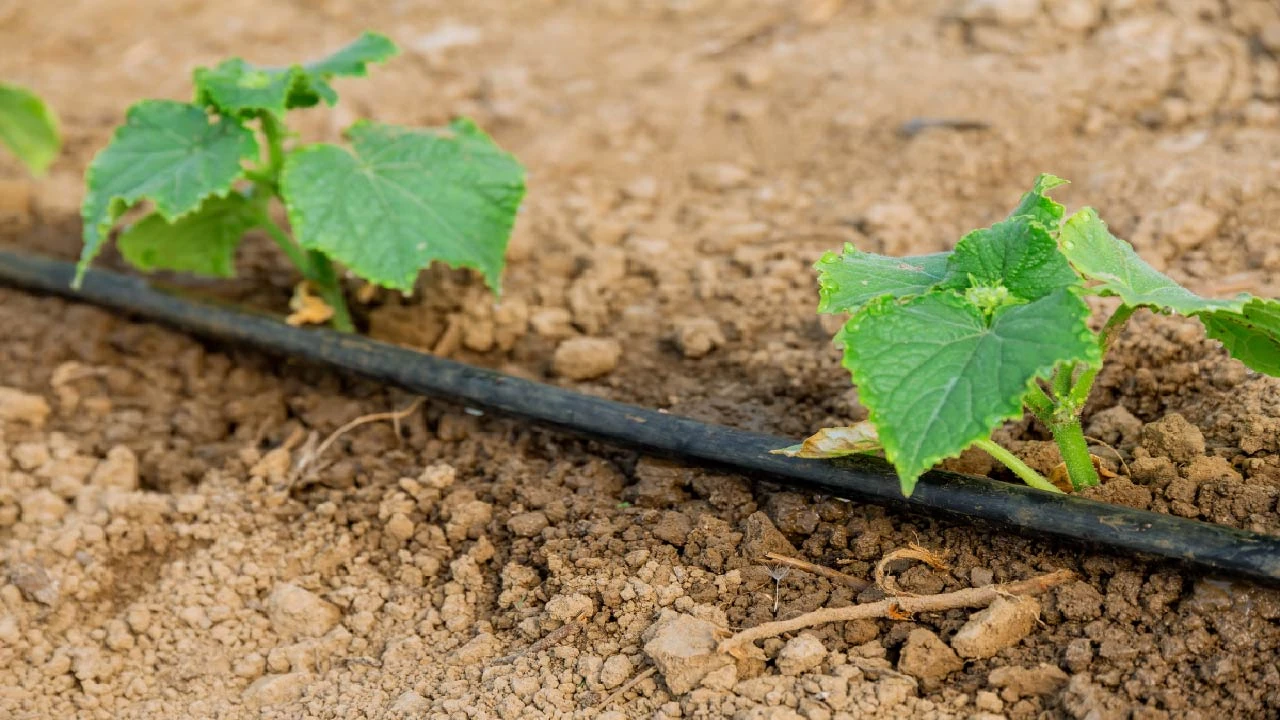
Drip irrigation is the only smart way to keep plants and trees healthy and happy. It uses 20%- 50% less water than traditional sprinklers, lowering your water bill and helping the planet. Since drip irrigation uses a small amount of water, slowly and precisely, there is very little water waste due to evaporation or groundwater runoff, which is best for both the environment and your wallet. You might already know how this system works. A drip irrigation system uses different types of tubing to deliver water straight to plants' roots. Walk through a vegetable garden, greenhouse, or yard, and you may find several types of irrigation tubing running through.
Three common drip tubing options are 1/4-inch drip tubing, 1/2-inch drip tubing, and 1/2-inch emitter tubing. A 1/2-inch larger tubing carries water from the main source, smaller tubing directs it to individual plants, and emitter tubing releases water through built-in emitters along the line. Pick the wrong one, and you'll end up with dry tomato plants at the end of the row and soggy soil at the beginning. Each one of the three has a specific job. Once you know that role, designing a garden drip irrigation system becomes a simple, satisfying project.
In this guide, we'll break down the differences between three drip irrigation tubing types, explain where each type works best, and explore the best tubing options available for home gardeners, growers, and landscaping professionals.
1/4" Drip Tubing
1/4-inch tubing, also known as micro tubing, is a small tubing used in drip irrigation setups. It's thin and flexible, and it's designed to carry water from a larger mainline to individual plants or containers. When you're watering a few patio pots, a compact raised bed or a row of closely planted vegetables, 1/4-inch tubing can be the right choice. Its smaller diameter makes it easy to bend around plants, thread through tight spaces, and extend water from a larger supply line to individual growing areas.
However, there's an important distinction you should know: plain 1/4-inch micro tubing and 1/4-inch soaker dripline are not the same product. Plain micro tubing carries water to a separate emitter or sprayer. The soaker dripline has emitters already installed along the tubing, so water comes out at regular intervals.
Best Uses for 1/4-inch Tubing
- Potted plants, hanging baskets, and patio containers
- Individual shrubs, trees, or specimen plants spaced far apart
- Raised bed corners and tight spots where larger tubing is difficult to bend
- Greenhouse and indoor plant watering
1/4-inch Micro Tubing
This tubing works as a branch line in a garden drip system. You can connect it to a larger mainline and then deliver water toward individual plants using compatible fittings and emitters.
It's useful for:
- Patio pots and hanging baskets.
- Individual shrubs and ornamental plants.
- Container gardens with plants at different distances.
- Small planting areas with irregular layouts.
- Connecting emitters to plants that sit away from the main irrigation line.
1/4-inch soaker dripline
If you want to water several plants along a short row, 1/4-inch soaker dripline is a better option than plain micro tubing.
DripWorks offers flexible, best-quality 1/4-inch soaker dripline with preinstalled emitters spaced every 6, 9, or 12 inches. You can easily use it to water raised beds, container arrangements, flower borders, and smaller vegetable gardens.
Here's how to choose the right spacing for your plants.
- 6-inch spacing: Suits closely planted crops such as lettuce, radishes and some herbs.
- 9-inch spacing: Good for mixed vegetable beds and moderately dense plantings.
- 12-inch spacing: Great choice for crops with more space between plants like tomatoes and cucumbers.
When should you choose 1/4-inch tubing?
Choose it when flexibility matters more than covering a long distance. It's a good fit for compact gardens, window boxes, containers, and short planting rows, especially when you want to deliver water precisely without installing a large network of tubing.
How to Install Drip Irrigation for Containers and Hanging Baskets
1/2" Drip Tubing
1/2-inch tubing acts as the main distribution line in home and small-farm drip irrigation systems. It has no built-in emitters. It carries water from your faucet assembly to planting beds, individual emitters, micro tubing, or emitter tubing. It is stronger than 1/4-inch micro tubing and can support a much larger irrigation layout.
½ poly drip tubing runs along the edges of beds, up a slope, or across a lawn border. From there, you create holes with a hole punch tool and insert fittings, emitters, or 1/4-inch branch lines.
Best Uses for 1/2-inch Main Tubing
- Main supply lines in a garden drip system
- Feeding multiple 1/4-inch microtubes and emitters
- Supplying shrubs, hedges, and foundation plantings with individual emitters
- Crossing long distances between garden zones
- Running to raised beds and then connecting to dripline or emitters
When should you choose 1/2-inch mainline tubing?
Use it when you need to move water across a garden or landscape and distribute it to several branches. It offers a flexible foundation for both simple home irrigation systems and more complicated installations.
Pro tip: Lay your tubing out in the sun for 20 to 30 minutes before installation. Warm tubing becomes more flexible, making it easier to straighten, bend, and connect to fittings.
1/2" Emitter Tubing
The ½ PC emitter tubing is like the better version of 1/4" soaker dripline for large setups. This is 1/2-inch polyethylene tubing with pre-installed pressure-compensating emitters inside the tube wall at designated spacing, commonly 9, 12, 18, or 24 inches apart. When water flows through, each emitter releases a slow, steady drip. Pressure compensating means every emitter on the line will provide the same amount of water, regardless of pressure changes.
This versatile tubing does two jobs: carrying water and releasing it at regular intervals. Because the emitters are already in place, you don't have to punch individual holes and install separate emitters along the entire row. This can save a lot of installation time when you're watering long beds, orchards, or several rows of plants.
What makes pressure-compensating emitters useful?
Water pressure can change as it travels through tubing across large distances. Elevation changes, long runs, and the number of connected outlets can all affect how much water reaches different areas of a system.
Pressure-compensating (PC) emitters deliver a consistent flow within their specified operating pressure range. This improves uniformity when a garden isn't perfectly level or when the tubing runs across a sloping landscape.
You can lay emitter tubing straight along a row of vegetables, snake it through a flower bed, or run it in parallel lines under mulch. There's no punching, no inserting, and no individual emitter placement. You just have to unroll it, connect it, and let it do the work.
Best Uses for Emitter Tubing
- Vegetable gardens
- Long Raised beds with closely spaced plants
- Flower beds and perennial borders
- Hedgerows, berry rows, and vineyards
- Groundcover and shrub beds in a landscape drip irrigation system
- Anywhere you want even, consistent watering along a row
Choose the Right Emitter Spacing and Flow Rate
- 9-inch spacing: Good for dense plantings like carrots, lettuce, onions, and sandy soil
- 12-inch spacing: The most popular choice for vegetables, flowers, and general beds
- 18-inch spacing: Best for larger plants such as tomatoes, peppers, and shrubs
- 24-inch spacing: Use for trees, large shrubs, and clay soils where water spreads more widely
When should you choose 1/2-inch emitter tubing?
Choose it when you need a ready-made watering line for multiple plants in a row or across a larger planting area. It's particularly useful when there are long runs, uneven terrain or a short installation time.
Design a Drip Irrigation System for Your Landscape
How to Choose the Right Drip Irrigation Tubing for Your Garden
The right drip tubing depends on your planting layout, water supply, and how much control you need over individual plants. Before buying a roll, consider these factors.
Match the Tubing to Your Planting Area
Start by looking at your garden's shape. If you have a small raised bed filled with lettuce, herbs, and radishes, 1/4-inch soaker dripline is best for the simplest installation.
For a patio garden with containers of different sizes, use plain 1/4-inch micro tubing and separate emitters for more flexibility.
For multiple beds or a larger landscape, use 1/2-inch mainline tubing to supply water to different zones. If the plants are arranged in long rows, then lay out 1/2-inch emitter tubing to reduce installation time.
Consider Plant Spacing and Root Zones
A closely planted vegetable bed needs a different emitter spacing arrangement from a row of established shrubs.
For plants that are spaced widely, use individual emitters positioned near each root zone rather than emitter tubing with emitter spacing that doesn't align with the plants.
Remember that roots extend beyond the base of a plant. The aim is to water an appropriate area of soil, not simply to place one emitter against each stem.
Calculate Your Total Water Demand
Before choosing a tubing size, add up the flow rates of the emitters. 40 emitters rated at 1 GPH each require a combined flow of 40 GPH. Forty emitters rated at 0.5 GPH each require 20 GPH. These figures represent the combined emitter demand, not an exact flow you'll receive at the plants.
Long runs, elevation changes, slopes, and excessive water demand can cause uneven watering. If your system layout requires more flow than the tubing can comfortably deliver, consider a larger supply line or divide the system into zones.
Check Tubing and Fitting Compatibility
A "½ inch" label doesn't guarantee that two products will fit together. Sizes can differ between manufacturers, so it's important to check the actual inside and outside diameters before you buy
Also, check your tubing dimensions and the compatibility of the selected fittings before ordering.
Always Install a Filter and Pressure Regulator
Residential water pressure can be higher than what many drip irrigation components are designed to handle. Connecting high residential tap pressure directly to a low-pressure garden drip system will blow 1/4-inch fittings apart and split the tubing.
To prevent these problems, always install a 20-30 PSI pressure regulator and a 150-mesh filter directly onto your faucet before attaching your mainline tubing.
Drip Irrigation Filter: Why You Need One and How to Choose the Right One for Your System
How to Keep Your Drip System Running for Years
A good garden drip system is low-maintenance, not no-maintenance. Ten minutes of seasonal care can add years to your tubing. Practice these habits to ensure your system works for years.
- Check for leaks, clogs, or dry spots at the start of each season.
- Flush the ends of lines every few months.
- Clean or replace filters regularly.
- Drain the system and store above-ground tubing before hard freezes or blow out lines in cold climates.
- Cover exposed tubing with mulch to extend its life and reduce UV wear.
The Bottom Line
Choosing the right drip irrigation tubing depends on how you want to deliver water to your plants. It doesn't have to be complicated. Find the right drip tubing for each area of your garden at a reputable irrigation store, and you can install a professional-quality system that saves time during installation and delivers reliable, water-efficient performance for years.
Use a solid 1/2-inch distribution mainline to transport high volumes of water across your yard, run 1/2-inch emitter tubing for fast, uniform watering of vegetable rows and raised beds, and 1/4-inch micro-tubing to water containers, and window boxes. Add a filter, regulator, and timer, and you have a drip irrigation system that conserves water, protects your plants, and frees up your weekends.
Investing in premium irrigation equipment from DripWorks ensures high UV resistance, uniform pressure compensation, and leak-free fitting integration for years to come.