
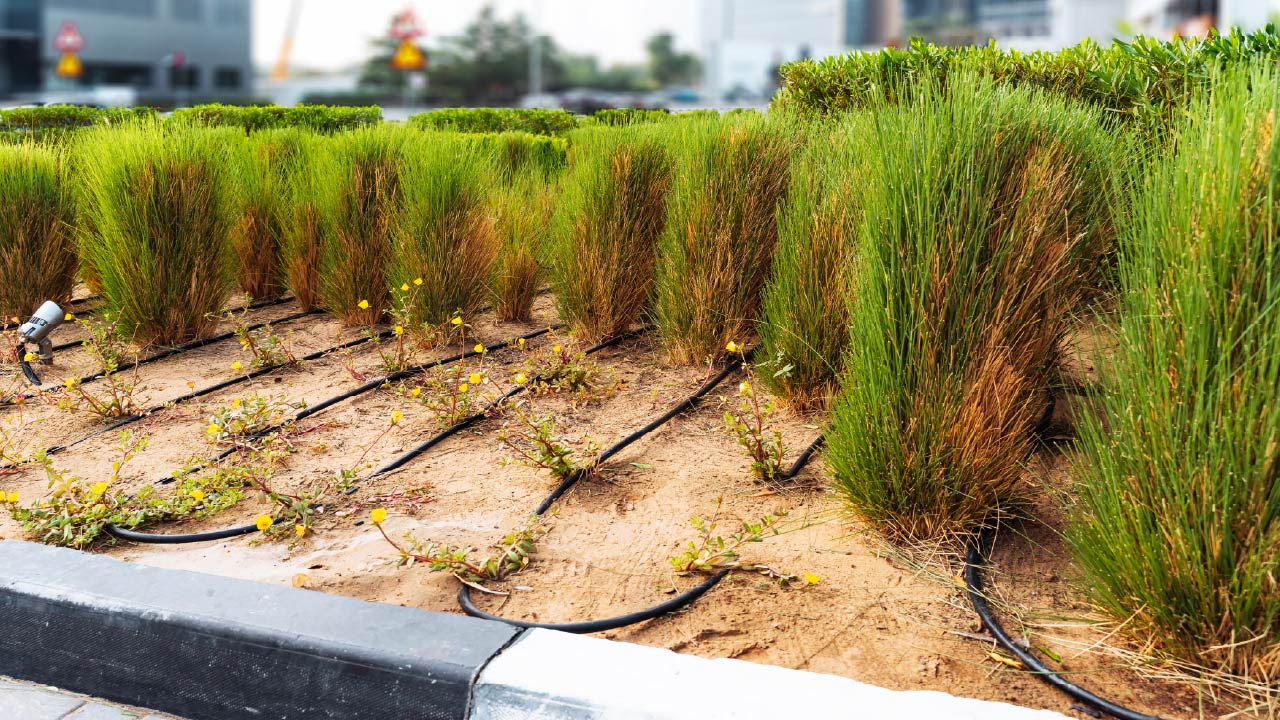
Drip Irrigation: How to Install a Closed-Loop Drip System
Jun 30th 2026
The closed-loop drip irrigation system is the most effective drip layout available today for gardens, raised beds, orchards, and commercial landscapes. This design highly improves water distribution, maintains more balanced pressure throughout the irrigation zone, and reduces problems commonly found in standard drip layouts.
Standard drip irrigation layouts are usually designed as single linear runs that terminate at an end cap on each line and frequently experience pressure drop. The plants at the beginning of the line receive a steady stream of water, while those at the end suffer from reduced pressure and lower water output. A closed-loop drip irrigation system solves this problem entirely by allowing water to flow from multiple directions. It connects the tubing back into itself to create a continuous circulation path and ensure every emitter delivers the same volume of water.
If you're new to this drip network, we're here to help you. In this guide, you'll learn what a closed-loop drip system is, why it works better than many traditional drip setups, and how to install this system step by step.
What Is a Closed-Loop Drip Irrigation System?
A closed-loop drip irrigation system is a drip layout in which the main tubing forms a loop rather than ending.
In a standard drip system, water enters the tubing from the source and travels down a line until it hits a dead end and gradually loses pressure as it travels farther down the line. As a result, emitters located near the end often deliver less water than those closer to the source.
A closed-loop system solves this issue by reconnecting the tubing back into itself. The tubing reconnects to itself, so pressure becomes balanced. Water can then travel in two directions at once, helping stabilize pressure across the entire irrigation zone. This creates much more consistent watering, especially in larger landscapes and long planting rows.
Best Places to Use Closed-Loop Drip Irrigation
Closed-loop systems are especially effective for:
- Medium size planting beds
- Raised vegetable gardens
- Commercial landscapes
- Sloped landscapes
- Orchards and vineyards
- Greenhouses
- Foundation landscaping
Why the Closed-loop Drip System Works Better
In long tubing runs of a standard drip layout, friction slowly reduces water pressure. The farther water travels, the weaker the pressure becomes. This causes uneven watering and stressed plants. A closed-loop system reduces those losses.
Water can approach each emitter from two directions, so the pressure across the tubing loop equalizes. The difference becomes noticeable in installations exceeding 100 feet.
Advantages of a Closed-Loop Grid
Now let's look at the benefits of this drip system its layout is used in many standard drip layouts.
- Balanced Water Pressure: By eliminating dead ends, water pressure stabilizes throughout the entire loop. Water can reach emitters from both directions, which prevents the plants at the end of a line from
- More Uniform Watering: Plants receive more consistent moisture regardless of where they are located in the loop.
- Maximized Emitter Uniformity: If you use pressure-compensating (PC) emitters in a closed-loop system, they will stay within their ideal operating pressure range (typically 15 to 45 PSI) to maintain highly precise flow rates.
- Water Delivery from Both Sides: If one section of the tubing becomes kinked, water can travel from the other side of the loop to the emitters.
- Less Sediment Accumulation: Traditional lines with dead ends can trap fine sediment, sand, and debris. Closed loops keep water moving, reducing stagnant areas where debris settles.
- Better Performance on Slopes: Elevation changes do not affect pressure in looped systems.
- Easier Expansion: You can easily add new planting areas or irrigation lines in the future without affecting water distribution throughout the system.
10 Reasons Why You Should Consider Drip Irrigation for Your Farm and Garden
Step-by-Step Process to Install a Closed-Loop Drip System
Before starting installation, gather all the necessary drip irrigation components. Make sure to buy a high-quality drip irrigation setup from a reputable irrigation store to reduce future maintenance problems.
Components Needed for Installation
½ Poly Tubing: This is the main lateral loop line that will carry water throughout the irrigation zone. Choose a high-quality one.
Distribution Lines: 1/4-inch vinyl or micro-tubing is used to connect the main 1/2-inch loop and individual plants.
Drip Emitters: Emitters drip water flow directly to plants. Common emitter sizes range from 0.5 to 2GPH.
Pressure-Compensating (PC) Emitters: These emitters maintain an optimal flow rate regardless of pressure fluctuations by elevation changes or obstructions along the line. They are essential for uneven terrain or large loops.
Pressure Regulator: Drip systems operate best at lower pressure than sprinkler systems. A preset 20-30 PSI regulator is ideal for standard 1/2-inch poly tubing and emitter systems.
Filter: It prevents dirt, sand, and debris from clogging emitters. Drip emitters have tiny orifices that clog easily. A high-quality mesh or disc filter catches sediment before it enters your lines.
Backflow Preventer: Many municipalities require backflow prevention devices to protect drinking water supplies. It prevents contaminated irrigation water from flowing back into your drinking water supply.
Connectors and Fittings: You'll likely need tees, elbows, and couplers.
Hole Punch Tool: Used to create a hole in the main line to insert emitters into the tubing.
Tubing Stakes: These secure the tubing in place and prevent it from moving.
Smart Irrigation Timer: It automates your drip system. Smart timers automate irrigation schedules and can adjust watering based on weather conditions.
Automate Garden Watering with a Drip Irrigation Timer
Now let's walk through the installation process.
Step 1: Create a Design and Prepare Site
The first thing you should do is draw out a map of your garden and mark out the area you want to irrigate. Highlight your garden beds, raised beds, pots, slopes, water source, and any trees you want watered.
Highlight the area where your main loop line will be placed. The loop should run the outer edge of your planting area, surrounding the root systems of plants you want to irrigate.
Pro Tip: Roll your 1/2-inch poly tubing out onto the ground or driveway and let it sit in the sun for 30 to 45 minutes before starting. Warm tubing becomes more flexible, making the layout process much easier.
Step 2: Calculate Water Demand
The next step is to calculate the total load of your system. Count the total number of drip emitters in the zone, then multiply by their individual flow rates.
25 emitters × 1 GPH = 25 GPH total system capacity
This step is to ensure your water source can support the system. Don't exceed the maximum capacity of your lines.
Step 3: Assemble the System and Connect to Source
Attach the drip system to your water source, such as an outdoor faucet or irrigation valve manifold, in the following order.
- Attach the backflow preventer directly to the source.
- Install an automated irrigation timer.
- Attach the filter.
- Thread on the pressure regulator.
- Finish with a 1/2-inch tubing adapter for a secure connection from the water source to your poly tubing.
Step 4: Lay Out the Main Tubing
Run your 1/2-inch poly tubing out to the edge of the garden bed. Place it around the entire perimeter of your planting zone until the tubing reconnects near the starting point.
Step 5: Close the Loop
Don't cap the end of the line instead, use a coupler or tee fitting to reconnect the tubing to the main line. Once connected, the system becomes a complete closed loop. At this point, water can move freely in both directions, so pressure will be balanced throughout the zone. This is the feature that separates closed-loop systems from traditional drip layouts.
Step 6: Secure the Tubing
Use landscape staples or hold-downs every few feet to secure the tubing firmly. They keep tubing neatly in place and prevent it from being moved.
Step 7: Install Branch Lines and Emitters
When your main loop is created and stable, you can now run water directly to rows or individual plants.
For Row Crops or Dense Plantings
You can skip individual emitters and install 1/2-inch inline emitter tubing directly into your closed loop, running parallel lines across the interior of the loop.
For Targeted Landscaping
Use a hole punch tool to create clean holes in the tubing near each plant. Insert the emitters securely into the holes. Insert a 1/4-inch barbed adapter into the hole, run a short length of 1/4-inch micro-tubing to the base of the plant, and add an emitter.
Step 8: Flush the System
Before closing the loop with a tee, flush the tubing thoroughly. Run water through the lines for 2 to 3 minutes to clear any dirt, sediment, or plastic debris introduced during installation. Then, close the loop.
Step 9: Test the Entire System
Once the loop is closed, turn on the irrigation system and inspect the system carefully. Check for leaks, kinked tubing, weak flow, or uneven watering.
Step 10: Apply Mulch
After testing is complete, spread mulch on the exposed tubing and around the planting beds. Wood chips, bark mulch, straw, and shredded leaves all work well.
Mulch provides several benefits:
- Reduces evaporation
- Protect tubing from UV rays
- Suppresses weeds
- Improves soil moisture retention
Note: Do not bury emitters too deeply under mulch.
Drip Irrigation Installation: 8 Things to Know Before You Start
Winterize a Closed-Loop Drip System
In colder regions, winterization of the irrigation system is extremely important. Southern states may require minimal winterization, but northern regions often need complete system drainage before winter arrives. Frozen water left inside can crack tubing, fittings, filters, and valves.
Here is a winterization checklist.
- Shut off the water supply.
- Open flush valves.
- Drain all the water from the tubing.
- Blow out lines with compressed air if necessary.
- Remove timers in freezing climates.
- Store components indoors in a dry area.
- Remove batteries from timers.
The Bottom Line
A closed-loop drip irrigation system is the best upgrade you can make to your landscape or garden irrigation setup. This system balances line pressure, delivers more consistent irrigation throughout the planting area, and maintains maximum emitter uniformity. With an automatic closed-loop drip system, you can ensure that every plant receives the exact amount of water and nutrients it requires for optimal growth.
Invest in high-quality, drip components and maintain a consistent seasonal maintenance routine to keep your closed-loop drip system running at peak performance for years to come.