
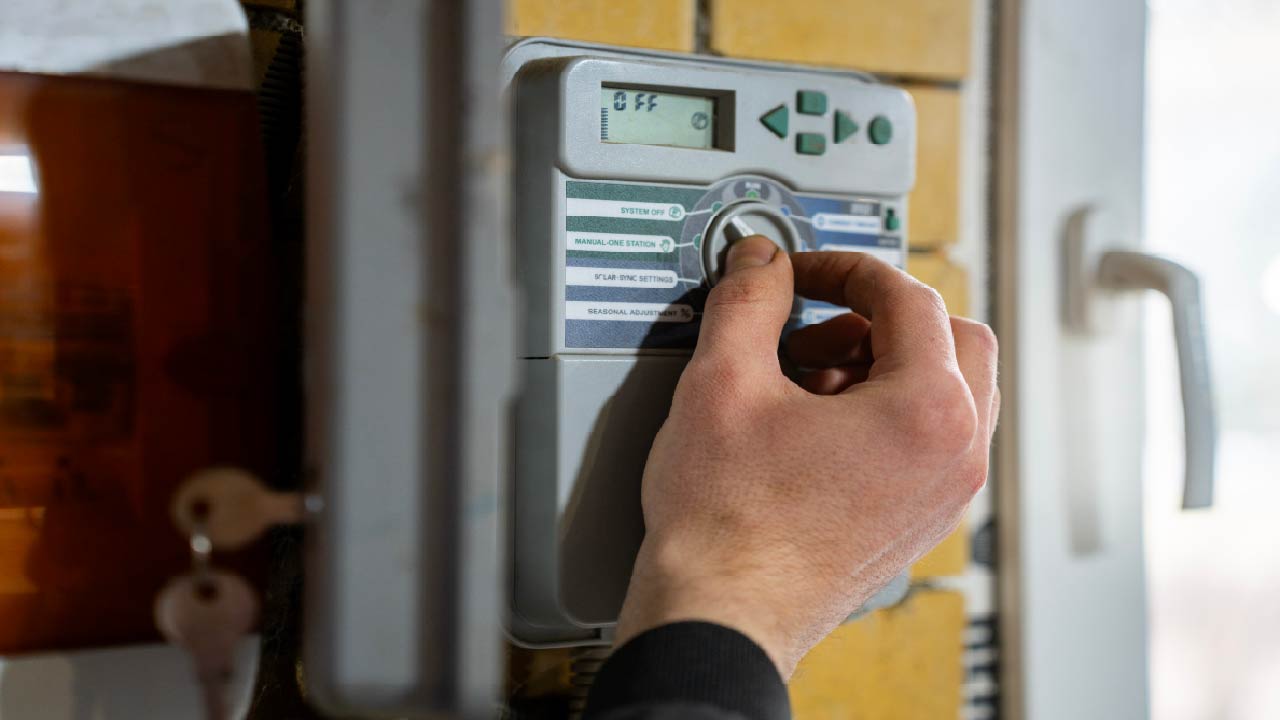
Automate Garden Watering with a Drip Irrigation Timer
Jun 3rd 2026
Drip irrigation has already transformed the way gardeners, landscapers, and farmers water their plants. When you add a timer to automate your drip irrigation setup, you take its efficiency, convenience, and plant health to a completely new level. Automating your drip irrigation with a timer changes everything. Whether you have a backyard vegetable garden, raised beds, greenhouse crops, fruit trees, or a small farm, automating your drip irrigation system can benefit you in several ways. It will save you time, reduce water waste, optimize water delivery, and help plants thrive with consistent watering. Beyond that, it protects your landscape investment during hot summers.
In this article, our irrigation experts cover everything you need to know about choosing and setting up an automated drip irrigation system, including the benefits, functions, and best practices of timers.
Why Automate Drip Irrigation with Irrigation Timers?
Automating the system solves many common watering problems. Here are the main reasons gardeners should use irrigation timers to automate the drip systems.
Saves a lot of Time
One of the biggest advantages is convenience and time saving. You no longer need to remember to water every day. For busy homeowners, commercial growers, and gardeners who are often away from home, this is a major benefit.
The timer:
- Starts and stops watering automatically
- Water your plants while you travel
- Eliminates daily manual adjustments
Maximize Water Conservation and Drop Your Utility Bills
Standard overhead sprinklers lose 30% to 50% of their water to evaporation and wind drift before a single drop even hits the soil. A drip line fixes this issue, but adding a timer further enhances water conservation. Automated drip irrigation uses significantly less water than sprinklers or hand watering, which also reduces your water bills.
Timers conserve even more water by:
- Avoiding overwatering
- Running during cooler hours
- Stopping watering during rainfall
- Delivering precise amounts of water directly to plants' roots
Provides Consistent Watering
Plants thrive when soil moisture remains stable, and roots receive consistent hydration. Manual watering often leads to overwatering one day and underwatering the next, resulting in irregular moisture levels. A timer delivers consistent watering, helping plants grow more evenly and reducing stress.
Healthier Plant Growth
Slow, consistent watering via automated drip irrigation promotes strong root development, improved nutrient absorption, healthier foliage, increased fruit production, and reduced fungal diseases. Plants watered correctly are also more resistant to stress and disease.
Makes Vacation Watering Easy
Gardeners often struggle to water their beloved plants while they're away from home. With a timer, your garden will stay hydrated during trips, plants will receive regular watering, and you can enjoy your vacation without worrying about your garden. This alone makes irrigation timers worthwhile for many homeowners.
How Drip Irrigation Timers Work
A timer acts like an automatic switch between the water source and your drip irrigation system. Here is the basic process of the timer working.
- You connect the timer to the faucet or irrigation valve.
- Program the watering schedules on the timer.
- The timer will open the valve at scheduled times.
- Water flows through your drip system.
- The timer will automatically shut off the water after a preset duration.
The system repeats the schedule daily or according to the programmed frequency.
Types of Drip Irrigation Timers
Not all irrigation timers are the same. Before buying a timer, you need to understand the different types available on the market. Then choose the right type based on your garden size, water source, and automation needs.
Battery-Powered Hose-End Timers
These single or multi-outlet units thread directly onto an outdoor faucet or hose bib. They are easy to install as they run on batteries. Hose-end timers are perfect for automating irrigation for raised garden beds, backyard vegetable plots, and smaller landscape zones.
Pros
- Highly affordable
- Easy and quick to install
- Requires no electrical wiring
Cons
- Internal motorized valves can restrict high-volume water flow
- Batteries require replacement annually.
Solar-Powered Timers
These timers are eco-friendly options, perfect for community gardens, gardens in remote areas, or areas where electricity is not available or changing batteries is inconvenient. With a small integrated photovoltaic panel, solar-powered timers keep a built-in battery pack charged using ambient sunlight.
Pros
- Sustainable choice
- Requires no power or battery
- Independent power supply.
Cons
- Requires clear, unshaded southern or western exposure to stay powered
- Slightly more expensive than basic battery models
AC-Powered Inline Controllers
AC controllers are the landscapers' and seasoned gardeners' choice. Often called traditional irrigation controllers, these systems mount in a garage or exterior weather-proof box. They connect via low-voltage wires to inline electromagnetic valves installed in underground valve boxes.
Pros
- Extremely durable
- Low maintenance
- Can run massive commercial or multi-zone residential zones simultaneously
Cons
- Higher upfront cost
- Requires wiring from the controller to every valve location.
Smart Wi-Fi and Bluetooth Timers
These are modern timers for high-efficiency water management that connect to Wi-Fi or Bluetooth. These timers can be controlled via a dedicated app on your smartphone or tablet. Many smart timers use cloud-based smart watering features that pull data from local weather stations to automatically adjust your schedule.
Pros
- Remote control from anywhere in the world
- Weather-based watering adjustments according to rain, high wind, or freezing conditions.
- Handles multiple zones
- Soil moisture integrations
Cons
- Requires a stable, home Wi-Fi signal or a close Bluetooth connection to program
- High upfront cost
- Requires wiring from the controller to every valve location.
Functions of Drip Irrigation Timers
Here are all the useful timer functions that improve irrigation.
Start Time: The exact time of day the internal valve opens and watering starts. Note that this is not the same as run time. A single program can have multiple start times per day. This feature determines when watering begins, either early morning, before sunrise, or late evening.
Tip: Morning watering is usually the best time because it reduces evaporation.
Run Time (Duration): This determines how long the system waters or how long the valve remains open during a cycle. For drip systems, this is measured in minutes or hours.
Frequency (Interval): This is how often the system runs in a week.
Common schedules include:
- Daily
- Every other day
- Twice per week
Rain Delay: A setting that allows you to pause all automated irrigation cycles for a set timeframe (usually 24 hours to 7 days) after an unexpected rain.
This function helps prevent overwatering and saves a lot of water, as well as your money on water bills.
Manual Bypass: A physical button or app feature that allows you to deliver water through the lines immediately for testing or extra watering without erasing or interrupting your saved schedules.
How to Automate Your Drip Irrigation System
Automating a drip irrigation system is easier than many gardeners expect.
However, you cannot simply screw a timer directly to your spigot and attach a main tubing. A functional, leak-free, long-lasting automated drip valve requires a specific sequence of components to protect both your household water supply and the components of your drip line. Installing components in the proper order ensures safe and efficient operation.
Typical Component Order
The correct order is:
Plan Your Irrigation Layout
Make your garden irrigation layout by considering your garden size, raised bed locations, plants' watering needs, and the number of irrigation zones. Group plants with similar watering requirements together.
Choose the Timer
Select a timer based on your garden size, budget, number of irrigation zones, ease of programming, smart features, and power source.
Small garden: Single-zone timer
Large garden: Multi-station AC timer
Install the Components in Sequence
Assemble all your components, stacking down from the faucet in this sequence:
Step 1: The Spigot and Optional Y-Splitter
Install a solid brass Y-splitter directly on your hose bib first. This allows you to dedicate one side to your automated timer while keeping the other side open for standard utility hoses.
Step 2: Backflow Preventer
Attach the backflow preventer. This brass or heavy-duty backflow prevention assembly allows water to flow only in one direction. If a sudden municipal water pressure drop occurs, it prevents contaminated water sitting inside your garden drip lines from siphoning backward into your clean household drinking water supply. Check your city's local codes before installing.
Step 3: Timer
The timer goes right beneath the backflow device. Keep the timer display facing outward at an accessible angle so you can easily change the batteries or check the screen.
Step 4: Fine Mesh Filter
The slightest particle of fine sand or well sediment in irrigation water can clog the drip emitters. Now install a minimum 120-mesh disc or screen filter directly below the timer to catch debris before it enters your drip tubing.
Step 5: Pressure Regulator
Household pressure typically ranges from 40 to 70 pounds per square inch (PSI). Drip lines are highly sensitive and designed to run at much lower pressures (between 15 and 25 PSI). So, add a pressure regulator to the assembly. Without a pressure regulator, your automated timer will blast high-pressure water directly down the line, popping your emitter fittings and blowing connections.
Step 6: Tubing Adapter
This is the final piece. This fitting features standard female hose threads on top to couple with your pressure regulator, and a compression or perma-lock fitting on the bottom to securely grip your 1/2 or 3/4 main irrigation lines.
Attach the Drip Tubing
Roll out your ½ poly main line across your garden beds or garden rows. Pin the tubing flat against the soil using landscape staples placed every 3 to 4 feet. Run smaller 1/4-inch micro tubing directly to the base of each plant and insert pressure-compensating button emitters directly into the line.
Program the Watering Schedule
Set start time, duration, watering frequency, and zone schedules on the timer.
Set Watering Days: Depending on the climate and time of year, you might only need to water 2 to 3 times a week rather than daily.
Set the settings to Auto: Turn the dial to "Auto" or "Run" so the timer operates on your saved schedule.
Test the System
Turn your faucet on. Your timer will act as the valve that controls the water. Test the system manually to ensure water flows freely through all emitters and that there are no leaks, uneven flow, or pressure problems. Make corrections before automation.
Read More: Drip Irrigation Installation for Beginners: Easy DIY Setup Guide
Maintain and Winterize Your Timer
An automated drip system can easily last for a decade or more if you perform regular preventative maintenance. If you live in a region where winter temperatures drop below freezing, you must winterize your irrigation setup to prevent internal components from cracking. How to do this? Here are the steps.
- Completely disconnect your automated timer from your outdoor spigot before your first hard frost.
- Open the battery tray, remove the batteries entirely to prevent corrosion over winter, and remove any residual water trapped inside the internal valve mechanisms.
- Store your timer in a dry, secure location, such as a basement, garden shed, or garage workshop.
- Uncap the low ends of your outdoor tubing to drain standing water from all lines, to prevent damage when freezing occurs.
Is Automating Drip Irrigation Worth It?
The benefits of a timer include water savings, improved yields, lower water bills, healthier plants, and reduced labor. Even a simple battery-powered timer can significantly improve your drip irrigation efficiency.
The Bottom Line
Automating your drip irrigation with a timer is the smartest upgrade you can make to your garden or landscape. Whether you have just a few raised beds or manage a large farm, automation simplifies watering, improves plant health, and conserves water.
Once the timer is properly installed, an automated drip irrigation system can provide years of efficient watering for vegetables, flowers, trees, and crops. You can enjoy healthier plants and a more productive garden. This ensures your crops receive consistent watering every day.