
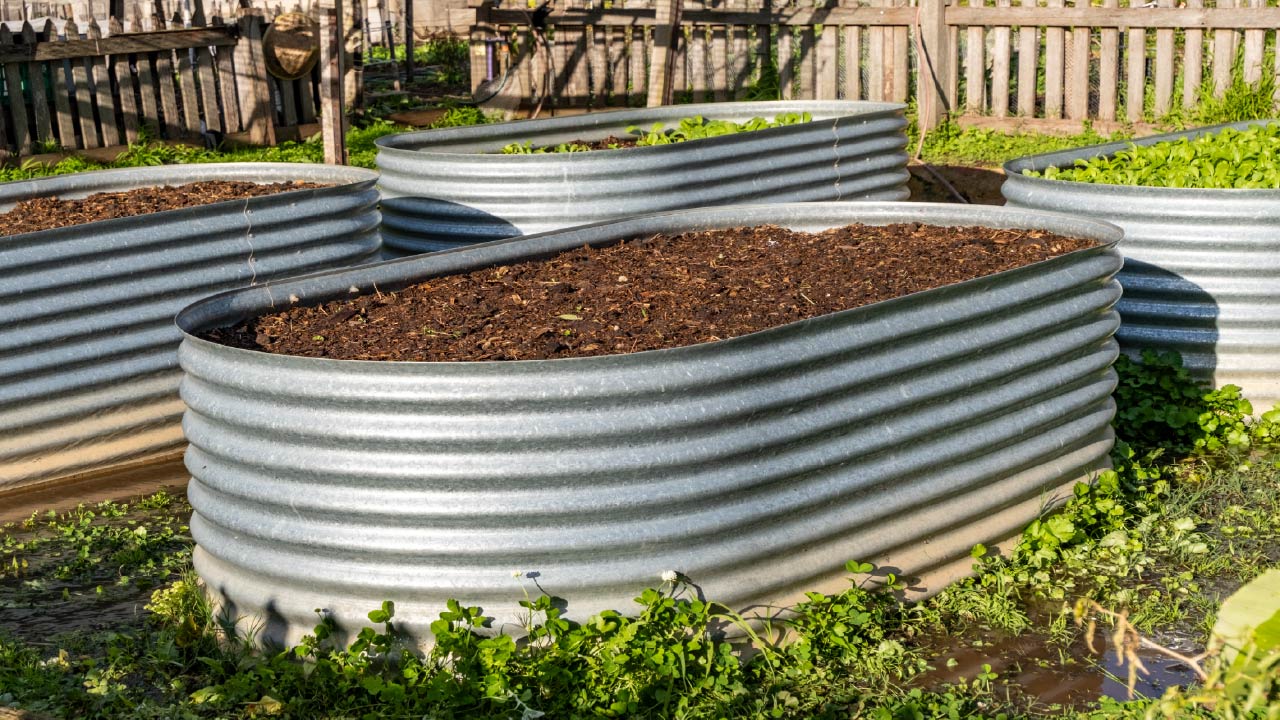
Top 5 Drip Irrigation Systems for Raised Garden Beds
Aug 10th 2026
A drip irrigation system is the most efficient and sustainable solution for watering raised garden beds. It delivers water directly to the plant's root zone, which means less evaporation, fewer weeds, better soil health, and healthier plants that aren't stressed by under- or overwatering.
Raised beds offer superior soil drainage, easier pest management, less back strain, and higher yields per square foot. But they dry out faster than in-ground gardens, so you need to water your raised bed plants smartly using smart drip products. However, not every drip product is ideal for raised beds because these elevated beds have tight spacing, mixed plantings, and a soil mix that behaves differently than open ground.
In this guide, we share the best 5 drip irrigation systems for watering raised garden beds, explain how they work, and show you how to water your raised garden with each system.
1. Drip Tape Irrigation System
Ideal for: Medium to large, raised garden beds with row crops.
Drip tape is thin-walled, flattened tubing with built-in emitters spaced along its length, and it's one of the most efficient irrigation products available. It distributes water uniformly across long planting rows while using very little water. It lays flat when unpressurized and expands into a round shape when water flows through it. This drip tubing is best suited to water large metal raised beds where you're growing in rows.
If your raised beds are dedicated to row vegetable planting such as carrots, lettuce, onions, spinach, beans, or peppers planted in neat rows, Aqua-Azul Drip Tape is one of the best irrigation solutions. It gives you the best coverage for the lowest cost per square foot.
Key features
Pre-built Emitters: Emitters built directly into the tape at regular intervals (8", 12", or 24" spacing).
Cost efficiency: Low cost per foot, making it an economical choice for larger raised beds or multiple beds.
Easy to Install: Lightweight and easy to roll out along planting rows.
Flow Rate: Available in different flow rates and wall thicknesses depending on how many seasons you want it to last. It also delivers high uniformity across long runs with low water volume.
How to Install Drip Tape System for Raised Garden Beds
- Attach a pressure regulator and filter at the spigot.
- Connect the drip tape to your mainline tubing.
- Lay one line beside each planting row down the length of the bed. Space each line 6 to 12 inches apart depending on your soil type
- Secure with landscape staples.
- Cap the ends of each drip tape line.
- Test the system before planting.
Tip: Drip tape operates best at low pressure (10–15 PSI). So always install a pressure regulator and a filter on your faucet connection to prevent bursting the lines or clogging the tiny emitter pathways.
Top Drip Tape Irrigation Brands for Your Farm and Garden
2. 1/4" Soaker Drip Line System
Ideal for: Small raised beds, herbs, flowers, and compact vegetable gardens.
1/4" Soaker drip line is a flexible micro-tubing featuring installed drip emitters which are spaced inside the line at fixed intervals, typically 6 or 12 inches. A soaker line gently releases water throughout its length, making it ideal for densely planted beds.
If drip tape is designed for big rows, the 1/4" soaker drip line is purpose-built for small raised beds, container gardens, and tight spaces where a full drip tape setup is not ideal.
Key features
Compact: 1/4" diameter tubing that's easy to snake around plants.
Porous Design: Water weeps slowly along its entire length
Flexibility: Flexible enough to curve around irregular bed shapes or individual containers.
Easy to Handle: Simple to cut and rearrange as your planting layout changes.
Why It is Best for Raised Beds
For small 4'x4' square foot gardens, raised planters, or beds filled with non-linear planting layouts, 1/4" soaker drip line is ideal. You can curve it around large tomato plants, weave it through brassicas, or loop it through container beds without kinking. It is perfect for herb gardens, flower beds, small vegetable gardens, flower beds and square-foot raised bed gardening.
How to Water Your Raised Beds Using 1/4" Soaker Drip Line
The tubing is so flexible, you can weave it directly through the bed in an S-pattern or loop it around individual plants like tomatoes or peppers in a small mixed bed.
- Run a main 1/2" poly tubing along the inside perimeter of your bed.
- Use a hole punch to create a hole in the 1/2" tubing and insert a 1/4" barbed adapter.
- Attach the 1/4" soaker drip line and route it directly near the base of your plants.
- Use tubing hold-down stakes every 12–18 inches to prevent the line from curling out of place.
- Cap the end of each 1/4" line using a 1/4" goof plug.
- Ensure the length of dripline does not exceed 15–20 feet to avoid pressure drop at the far ends. 1/4" line has a limited 15-30 feet maximum run length, so it works best as a distribution line off a larger 1/2" mainline, rather than trying to run it the full length of a big garden.
Note: Small, raised beds typically require short watering cycles because water spreads efficiently through the soil volume.
3. 1/2" Emitter Tubing
Ideal for: Medium and large raised beds with mixed vegetables.
If your raised beds contain tomatoes, peppers, cucumbers, squash, herbs, flowers, and other crops growing together, 1/2-inch emitter tubing offers excellent versatility. The tubing contains built-in pressure-compensating emitters present at regular intervals that provide consistent watering directly to plant roots.
1/2" drip emitter tubing is ideal for medium-to-large, raised garden beds with a mix of plant types and spacing. Additionally, this drip tubing system is more rigid than 1/4" line, so you can lay it in straight rows, loops, or a grid pattern. It will hold its shape all season without you having to re-stake everything.
Key Features
Durability: Sturdier 1/2" diameter tubing that lasts multiple seasons and resists damage from gardening tools, pets, and UV rays.
Pressure Compensation: Emitters deliver an exact flow rate regardless of elevation changes or pressure fluctuations along the line. Provides consistent flow even on uneven or sloped beds.
Longer Maximum Runs: Can run up to 250+ feet without losing pressure, making it a great option for long beds.
Clog Resistance: Internal turbulent flow paths reduce mineral and debris buildup.
Why 1/2" Emitter Tubing is the Best Choice for Raised Beds
If you have multiple medium-to-large metal raised beds such as 4'x8' or 4'x12' beds, 1/2" Emitter Tubing serves as both the distribution mainline and the water delivery system. It eliminates the need to punch dozens of small holes and creates a clean, professional drip layout that lasts for years.
How to Water Raised Beds Using 1/2" Emitter Tubing
- Arrange the tubing in parallel runs around 12 inches apart across the width of the bed to deliver even soil moisture throughout the bed.
- Connect to your main supply line.
- Secure with tubing stakes to prevent movement.
4. Netafim 17mm 12in Spacing TLCV9-1201
Ideal for: Medium to large, raised beds and gardeners seeking watering uniformity.
The Netafim TLCV9-1201 is a 17mm dripline with pressure-compensating, anti-siphon emitters that are spaced every 12 inches. Its pressure-compensating technology delivers professional-level irrigation performance for raised beds and helps maintain consistent flow across the irrigation line.
Moreover, this professional dripline features a built-in Check Valve (CV) that holds back up to 4.6 feet of elevation. This is the best drip irrigation system if you're growing a mix of vegetables that need very specific, uniform watering. Also, if your raised beds sit at different heights, and you're tired of some plants getting flooded while others go dry, use Netafim TLCV9-1201 tubing.
Every emitter delivers the exact same flow regardless of pressure fluctuation, so you get highly uniform watering across the entire bed, even if you're running multiple beds off the same line at different distances from the spigot.
Key features
PC Emitters: Advanced pressure-compensating emitters that deliver the same flow rate regardless of elevation changes or distance from the water source.
Anti-siphon Technology: Prevents dirty water or soil from going back into the emitter and causing clogging.
Check Valve (CV) Feature: Holds back up to 4.6 feet of water head pressure when the system shuts off. This prevents low-point drainage.
Continuous Self-Flushing: Flushes debris continuously during operation, not just at startup or shutdown.
Flexibility and Durability: Made from high-grade polyethylene that resists kinks and damage.
Why It Is the Best Choice for Raised Beds
Raised beds on slopes often experience drainage issues or a siphoning effect when the water turns off. Water drains out of the lowest emitter, flooding one area while leaving higher areas underwatered.
Techline CV in Netafim tubing eliminates low-emitter drainage. It is ideal for permanent raised beds growing perennials, fruit bushes, root crops, or multi-tiered planter setups.
How to Water Raised Beds Using Netafim 17mm TLCV
- Connect the 17mm Netafim tubing directly to a 1/2" or 3/4" supply line using specialized 17mm barb fittings.
- Lay multiple parallel lines down the length of the raised bed with consistent spacing.
- Secure the line down to the soil using hold down stakes.
- Thanks to the Check Valve (CV), all emitters turn on simultaneously the moment the valve opens and shuts off at the same time when it closes.
5. C-Frame Down Spray
Ideal for: Any size raised bed with widely spaced plants, larger, sprawling plants (squash, tomatoes, cucumbers), and tightly clustered ones (flowers, herbs).
The C-Frame Down Spray is an individual, adjustable micro-sprayer assembly. Consider it the customizable, plant-by-plant option. It mounts onto a rigid stake and sprays water downward in a full 360-degree circle.
C-Frame Down Spray assemblies are especially useful when plants are spaced farther apart or when each plant requires its own watering zone. This micro sprayer is perfect for watering tomatoes, peppers, eggplants, ornamental raised beds, and mixed landscapes.
Key Features:
Downward Spray: It features a 45-degree downward spray angle that delivers water toward the soil. This minimizes wind drift and foliage wetting.
Flow and Radius: Provides water at 5 to 10 GPH and covers a 20-to-24-inch diameter circle based on water pressure.
Shut-Off Clip: Includes a built-in clip to shut off flow to individual stakes.
Minimal Soil Disturbance: Waters evenly with minimal surface disturbance, reduces run-off and eliminates over-spray.
Compatibility: Compatible with standard 1/4" distribution tubing, so it integrates easily with other drip components.
Why It Works for Raised Beds
If you are broad-seeding crops like radishes, tomatoes, greens, spinach, carrots, or dense wildflower covers, individual emitters leave dry patches between seeds. The C-Frame Down Spray covers whole bed surface areas evenly without disturbing soil seed beds. This sprayer works well for any size bed. It's useful for beds with mixed or ornamental plantings, where different plants have very different water needs.
How to Water Raised Beds Using C-Frame Down Sprays
- Run a 1/2" poly tubing line down the center of your raised bed.
- Insert stakes into the soil and space them roughly 18–24 inches apart down the bed center.
- Punch a hole in the 1/2" line and insert the 1/4" barb transfer fitting attached to the micro-sprinkler assembly.
- Adjust stake height so the head sits 6 to 10 inches above the soil level or plant canopy. Adjust spacing to ensure the spray pattern overlaps slightly without wasting water outside the bed.
Watering Tip
Adjust the spray head to provide a tighter pattern for small seedlings and wider for larger established plants. This flexibility makes it a favorite for raised bed gardeners who like to rearrange their raised beds seasonally.
How to Choose the Right System for Your Raised Bed
With five best options, the right decision comes down to your raised bed size, your planting style, crop selection, and how much water efficiency you want. Whatever system you choose, install an irrigation controller to automate your raised garden watering and ensure your plants keep receiving water even when you're away.
- Choose Drip Tape if you're growing in long rows across a medium-to-large bed and want the most economical option.
- Choose 1/4" Soaker Drip Line for small beds, containers, herbs, flowers, and tight spaces.
- Choose 1/2" Emitter Tubing if you want a durable, semi-permanent system for medium-to-large, raised beds with a mix of crops.
- Choose Netafim TLCV9-1201 if you want consistent performance, precision and clog resistance, especially for larger installations or uneven terrain.
- Choose the C-Frame Down Spray for mixed or ornamental plantings, gardens with wider plant spacing, and if you want overhead watering.
How to Improve a Drip Irrigation System with Easy Upgrades and Tips
The Bottom Line
The right irrigation choice depends on your garden layout, crops, and long-term gardening goals. Many experienced raised bed gardeners combine two or three of these systems, and you can do the same. For example, you can use 1/2" emitter tubing as a mainline through a large metal raised bed, with C-Frame Down Sprays branching off to handle a few individual plants. Watering your raised garden beds with a dedicated automated drip system saves water, protects plant health, delivers consistent moisture, and frees up your time, allowing you to enjoy an abundant harvest every season. It will be the smartest investment you can make for your raised garden.
From economical Drip Tape for row crops to versatile C-Frame Down Spray, DripWorks offers reliable irrigation solutions for every raised garden bed setup. Explore the full range of DripWorks raised garden drip irrigation products to build an efficient watering system that keeps your raised beds productive while conserving water season after season.