
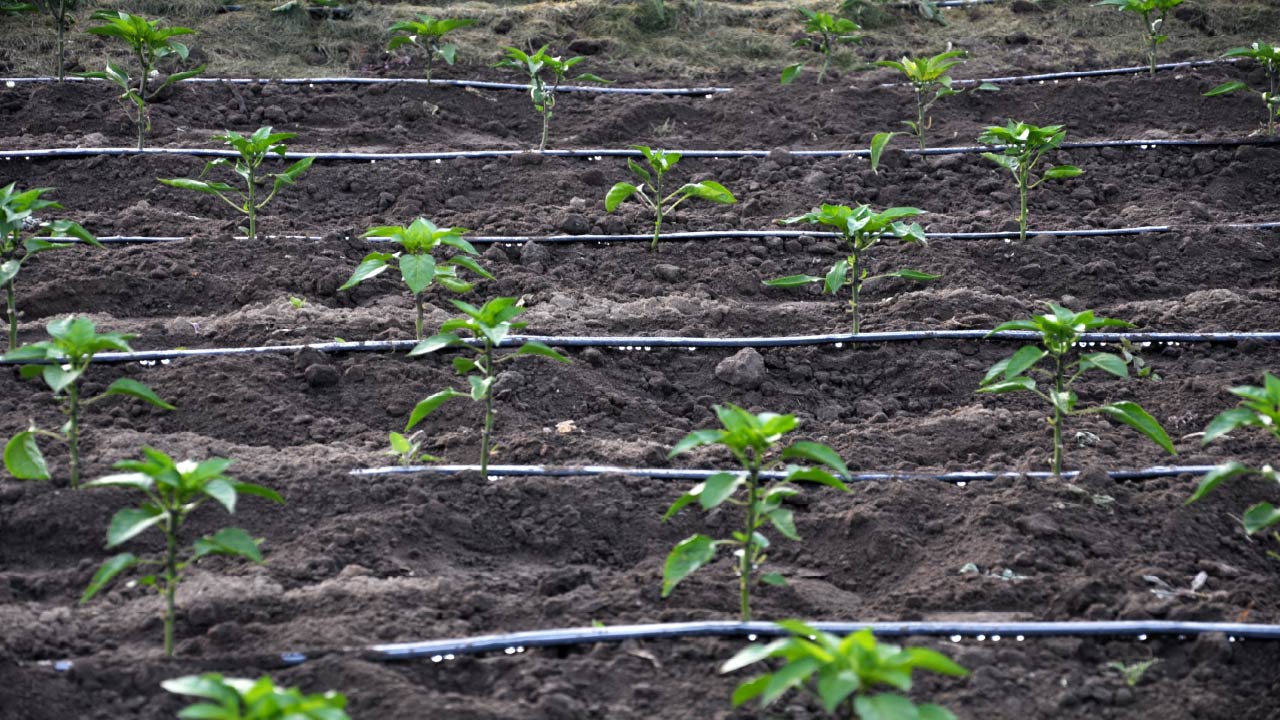
How to Improve a Drip Irrigation System with Easy Upgrades and Tips
Jul 13th 2026
A drip irrigation system is a modern and highly efficient way to water a garden, landscape, raised beds, orchards, or vegetable plots. When functioning perfectly, it delivers precise watering directly to the plant's root zone, greatly reducing water loss to evaporation and runoff. However, even the best drip systems require periodic improvements. Over time, emitters clog, tubing deteriorates, water pressure changes, and gardens evolve. Plants mature, new beds are added, and what once worked perfectly may no longer provide uniform irrigation.
If your plants are showing uneven growth patterns or you notice soft spots in your tubing, your system needs an upgrade. Improving an existing drip system doesn't mean digging everything up and starting from scratch. You only need to make a few improvements to improve the efficiency of your drip system.
In this guide, our experts will show you the best ways to improve your existing drip irrigation system and transform it into a high-efficiency, precision irrigation system without having to start from scratch.
Why Improve Your Existing Drip Irrigation System?
Drip irrigation is relatively low maintenance, but every irrigation system experiences wear and tear.
Several factors can decrease system performance, such as
- Mineral buildup inside emitters.
- Dirt and sediment in the tubing.
- UV exposure weakens plastic components.
- Tree roots moving the irrigation lines.
- Changes in plant water requirements.
- Pressure fluctuations throughout the system.
- Damaged fittings from lawn equipment or animals.
These issues can lead to uneven watering, stressed plants, higher water bills, and shorter equipment lifespan, necessitating system improvements.
Perform a Complete System Inspection
First and foremost, evaluate your current drip system. A thorough inspection will reveal simple issues that are inexpensive to fix.
Walk through every irrigation zone of your landscape while the system is running. Look carefully for damaged tubing, cracked fittings, dry spots, soggy areas, missing emitters, and kinked tubing. Also, inspect every connection at the start and end of each drip line.
Upgrade to Pressure-Compensating (PC) Emitters
One of the most common issues in aging home drip setups is uneven water distribution. If the plants at the beginning of your line are thriving while those at the far end are stunted or dehydrated, your system is suffering from a pressure drop along the run.
If your landscape has slopes or long tubing runs, upgrade your system to pressure-compensating emitters to improve watering consistency. Unlike basic emitters, these PC emitters deliver the same flow rates regardless of elevation or pressure changes. PC emitters use an internal flexible silicone diaphragm that regulates water flow, ensuring a constant flow rate regardless of inlet pressure.
Uniform Water Delivery: Whether your plant is 5 feet or 100 feet from the water source, it receives the same amount of water.
Elevation Management: If your garden includes slopes, raised beds, or terraced areas, basic emitters will flood the bottom of the hill and run dry at the top. PC emitters deliver water uniformly across varying elevations.
Predictable Scheduling: When every dripper delivers precisely 0.5, 1.0, or 2.0 GPH, you can calculate exactly how many inches of water your garden gets.
Balance System Water Pressure
Water pressure is one of the main factors that affects drip irrigation performance. Many homeowners connect drip tubing directly to household water pressure, which often exceeds 50-80 PSI. Excessive pressure can damage system components.
Most drip irrigation components operate best between 15 and 30 PSI. To improve pressure management throughout a drip system, install a pressure regulator at a faucet. A pressure regulator ensures the entire system works within its designed range. If your pressure regulator is several years old, replacing it is a worthwhile investment. It will offer several benefits, such as consistent water delivery, longer tubing lifespan, uniform emitter performance, and less maintenance.
Upgrade Your Water Filtration
One of the most overlooked improvements for any drip irrigation system is installing a better filter. Without proper filtration, your emitters can easily become clogged. Drip emitters have very small water openings, which can be blocked by even tiny particles of sand, rust, algae, or organic debris.
Depending on your water source, your irrigation water may contain contaminants like rust, well sediment, algae, dirt particles, and fine sand. If your water comes from a well, pond, or rainwater-harvesting tank, standard mesh-screen filters may clog quickly. Upgrade your filtration to a heavy-duty screen and disc filter. Disc filters are perfect at capturing organic matter and algae without instantly dropping your system's overall water pressure.
Flush Your Drip Lines Regularly
Sediment can also accumulate inside the drip tubing over months or years. This buildup reduces flow and eventually clogs emitters. To prevent this, flush your system once a month for better water flow.
How to Flush Drip Tubing
- Turn off the irrigation system.
- Remove or open end caps from the tubing.
- Turn the water on for a short period.
- Allow water to flow until it runs clear.
- Reinstall end caps.
- Test the system again.
Organize and Secure Your Tubing
Loose and unsecured tubing can shift during mowing, develop kinks, get damaged from the sun, disconnect from emitters, and move away from roots.
Use landscape staples, hold downs, or garden stakes to secure drip lines every few feet. This will keep the tubing neatly in place and prevent it from moving. Keeping tubing neatly arranged also makes seasonal maintenance much easier.
Install Drip Lines for Large Planting Areas
If you're using individual emitters for every plant in your garden beds, you should consider whether certain parts of your garden would benefit from drip lines instead.
Drip lines have emitters built directly into the tubing at consistent intervals. These lines are ideal for watering vegetable gardens, raised beds, flower beds, ground covers, and shrubs.
Unlike manually installing separate emitters in tubing, drip lines provide even water distribution across an entire planting area with pre-installed emitters.
Divide Your Garden into Separate Irrigation Zones
Different plants in your landscape require different amounts of water. A vegetable garden may need frequent irrigation during summer, while native shrubs or succulents thrive with much less watering.
Create separate irrigation zones for each planting to tailor watering to each plant's needs rather than treating the entire landscape the same way.
Consider separating irrigation zones for raised beds, vegetable gardens, flower gardens, shrubs and trees, container plants, and fruit trees.
Learn How to Plan Drip Irrigation Zones for Different Plant Water Needs
Automate with Smart Irrigation Controllers
If your system is still running on a basic timer or without any timer, you are missing out on significant water savings and automation. Traditional timers water according to a fixed schedule, regardless of changing weather conditions. Modern smart irrigation controllers adjust your watering schedule automatically based on environmental factors such as temperature, rainfall, seasonal changes, and, in some cases, local weather forecasts.
Automate Garden Watering with a Drip Irrigation Timer
Expand Your System Carefully
Many gardens evolve over time. If you have added new flower beds, fruit trees, containers, and raised beds to your garden, they require additional irrigation. But before expanding your existing drip system, consider its capacity.
Plan system expansion carefully to maintain consistent water delivery throughout the system and also prevent pressure loss at the farthest emitters.
Determine these things.
- Can the water supply support additional drip tubing?
- Is water pressure still adequate?
- Will the existing pressure regulator handle the increased demand?
- Does the filter have sufficient flow capacity?
- Are existing irrigation zones already working near their limits?
Replace Old Tubing and Fittings
Poly drip tubing is durable, but it still doesn't last forever. After years of exposure to sunlight, temperature changes, and physical wear, tubing may become brittle or develop small cracks.
Replace your tubing if you notice repeated leaks, cracks in tubing, loose fittings, brittle plastic, sun damage, or frequent repairs.
Additionally, replace worn connectors, tees, elbows, couplers, and end cap fittings when they can't create a secure seal. Updating aging components before they fail is the right way to prevent larger problems during the peak growing season.
Adjust Water Delivery to Plant Needs
A drip irrigation system should evolve with your landscape. One of the biggest opportunities to improve an existing drip system is to ensure each plant receives the right amount of water.
As landscapes mature, watering requirements change. A young shrub that once needed a single emitter may now require multiple emitters placed around its large root zone. Likewise, drought-tolerant plants can often thrive with less frequent irrigation than vegetables or flowering annuals.
So instead of using the same emitter flow rate in all planting areas, evaluate each plant individually. Adjust water delivery based on plant type to prevent both underwatering and overwatering while making your irrigation system more efficient.
Perform Seasonal Maintenance
A well-designed drip irrigation system requires routine maintenance to work efficiently year after year. Do all these tasks on the checklist from each season. A few hours of seasonal maintenance can prevent costly repairs and ensure the best performance for years.
Spring Maintenance Checklist
Before the growing season begins:
- Inspect all tubing for winter damage.
- Flush every irrigation line.
- Clean or replace filters.
- Test pressure regulators.
- Replace clogged emitters.
- Repair damaged fittings.
- Replace the timer battery.
- Adjust timer settings.
- Check for uniform watering.
Mid-Season Inspection
During peak summer:
- Look for clogged emitters.
- Remove weeds covering tubing.
- Adjust emitters for growing plants.
- Repair accidental mower or trimmer damage.
- Inspect mulch coverage.
Fall Maintenance
At the end of the season:
- Flush the entire system.
- Remove debris from filters.
- Drain water if freezing temperatures are expected.
- Disconnect timers.
- Store removable components indoors.
- Cover exposed tubing where appropriate.
- Plan for the system expansion in the upcoming growing season.
Summer Watering Guide for 2026: Best Tips for a Greener Lawn
When to Replace the Entire Drip Irrigation System?
Not every old system needs a complete replacement. In most cases, you only need to replace filters, tubing, emitters, or fittings to restore system performance.
However, a full replacement is the better option if:
- Most of the tubing has become brittle.
- Frequent leaks occur throughout the system.
- The system layout no longer matches your landscape.
- Water pressure problems remain despite repairs.
- Most components are old.
- Frequent maintenance has become more expensive than rebuilding the system.
The Bottom Line
Improving an existing drip irrigation system doesn't require starting from scratch. Most upgrades are simple and can make a noticeable difference in watering efficiency, plant health, and long-term system maintenance. Upgrading your drip system is an investment that will pay off immediately with healthier root systems, reduced weed pressure, lower water bills, and a beautiful landscape.
Whether you need a ready-to-install drip irrigation kit, separate drip irrigation components, or an advanced irrigation controller, DripWorks has the solution for your garden, landscape, and farm. At the DripWorks store, we provide high-quality drip irrigation kits and automation systems that streamline water management, ensuring your crops receive the right amount of moisture directly at the root zone.