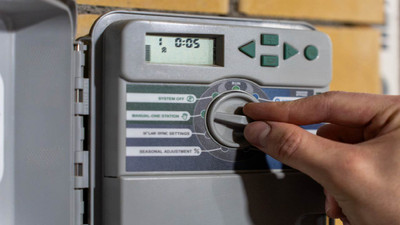
Quickly Restore Your Battery-Operated Valve
The Galcon DC Solenoid (2-Wire) is the exact OEM replacement part designed to bring your unresponsive battery-operated irrigation zones back to life. If your Galcon DC Valve is failing to open or close when prompted by the timer, the internal electronic solenoid is usually the culprit.
Instead of cutting out PVC pipe and replacing the entire valve manifold, this 2-way magnetic latching solenoid allows you to perform a fast, tool-free repair. Simply unscrew the old unit and thread this replacement directly onto the existing valve body. Built with a rugged, nylon-reinforced housing and durable EPDM seals, it provides a reliable, waterproof pulse connection when wired to any compatible DC battery controller.
Why Choose the Galcon 2-Wire DC Solenoid?
- No-Plumbing Repair: Saves massive amounts of labor by allowing you to fix a broken valve without digging up or cutting the underground mainline.
- Magnetic Latching Efficiency: Operates via a quick pulse of energy from a battery controller, preserving battery life for seasons of use.
- Durable Construction: Features a heavy-duty nylon-reinforced plastic housing and internal EPDM seals to survive damp, dirty valve box conditions.
- Direct OEM Fit: Ensures a perfect, leak-free seat on existing Galcon DC inline valve bodies.
Technical Specifications
Detailed specifications for system repair.
| Specification |
Details |
| Power Type |
6-18 Volt DC Latching Pulse |
| Valve Compatibility |
Designed specifically for Galcon DC Valves |
| Wiring |
2-Wire configuration (Red / Black leads) |
| Operating Pressure |
10 to 145 PSI |
| Internal Seals |
EPDM and Buna-N O-Rings |
How to Install: Replacement Guide
Follow these steps to successfully replace your faulty solenoid.
Step 1: Shut Off Water Supply
Turn off the main water line feeding the valve manifold to ensure there is no active pressure before you remove the old component.
Step 2: Remove the Old Solenoid
Disconnect the old wire splices. Firmly grasp the old solenoid on top of the valve and twist it counter-clockwise to unscrew it completely from the valve body.
Step 3: Install the New Solenoid
Check that the rubber O-ring is seated properly at the base. Thread the new Galcon DC solenoid clockwise onto the valve port and hand-tighten until snug (do not use wrenches).
Step 4: Splice the Wires
Using waterproof silicone-filled wire nuts, splice the red wire to the positive terminal/station wire on your DC controller, and the black wire to the negative/common wire.
Frequently Asked Questions
Will this solenoid work with my standard plug-in 24V AC controller?
No, this is a DC latching solenoid designed strictly for battery-operated timers. Standard hardwired AC controllers will send a continuous current that will immediately fry this DC solenoid.
Do I need to dig up my entire valve if it won't open?
Usually, no. If a valve fails to actuate, it is almost always the electronic solenoid that has failed. Replacing just this top component is a fast, plumbing-free way to fix the issue.
How do I wire the red and black leads?
The red wire is the positive lead and connects to the specific station output on your DC timer. The black wire is the negative lead and connects to the timer's common port.
Why is it important to replace malfunctioning solenoids now, in mid-May?
Fixing unresponsive zones right now ensures your automated battery system is fully functional before the summer heat hits. If a solenoid sticks closed during an impending heatwave, remote plants will rapidly suffer from severe dehydration.
✔ Compatibility Check
Before purchasing, please verify your power and equipment requirements:
- Power Type: This is a DC (Direct Current) latching solenoid. It WILL NOT WORK with standard 24V AC timers.
- Controller Needed: Must be wired to a 2-wire, battery-operated DC irrigation controller.
- Valve Body: Specifically designed to fit Galcon-brand DC inline valve bodies.
Complete Your System
Ensure a professional, durable repair with these essential components:
- Galcon DC Valves: Browse complete valve assemblies if the internal diaphragm of your old valve is also damaged.
- Waterproof Wire Nuts: Absolutely required for splicing the delicate solenoid wires inside a damp underground valve box without causing a short.
- Battery-Operated Controllers: Upgrade or replace the DC timer controlling your newly repaired solenoid.
Relevant Tips & Guides