
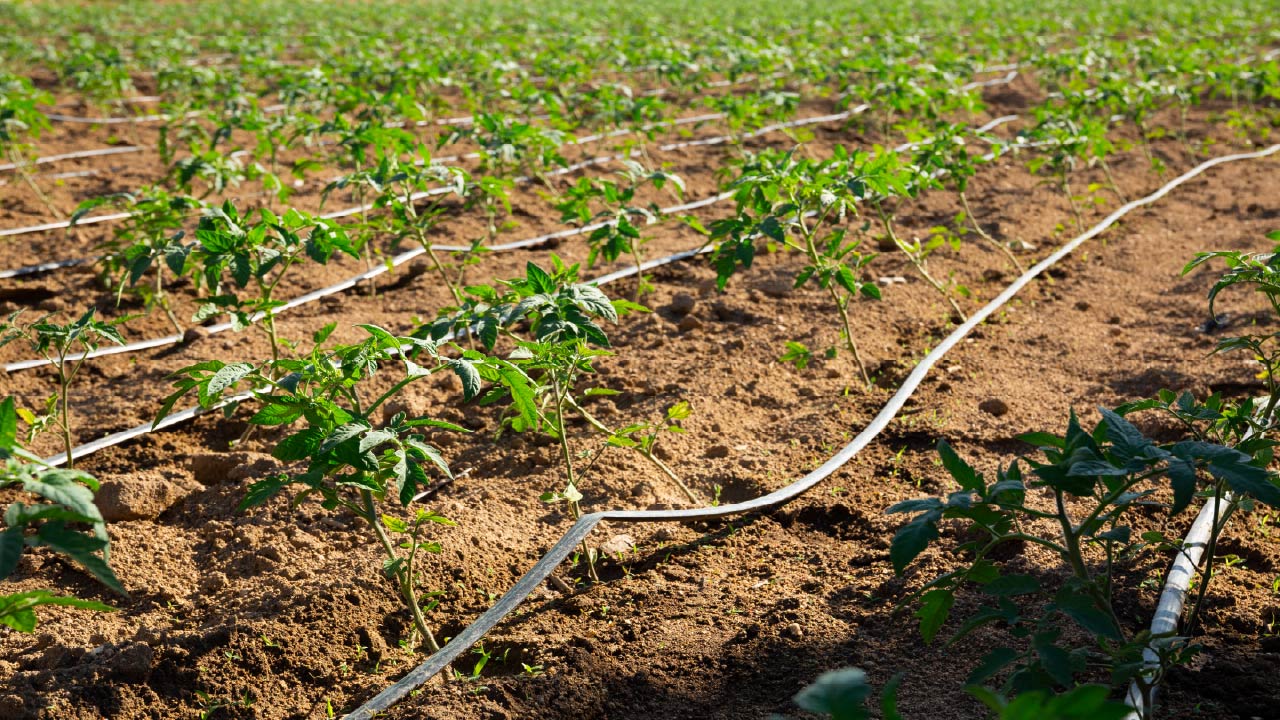
How Long to Run Drip Irrigation for a Vegetable Garden
Aug 6th 2026
Your drip timer clicks on, but how long should you let it run? Twenty minutes? One hour? It can feel like a guessing game and getting it wrong may leave your vegetables thirsty or sitting in soggy soil. Don't worry, there isn't one perfect runtime for every garden. The best setting depends on your plants, your drip system, and the season.
A drip irrigation schedule should not stay the same all year. How long you should run your drip irrigation system changes with the seasons, your soil type, your plants, and even the weather forecast. A vegetable garden in cool spring weather may need little supplemental watering, while the same garden can require a lot more water during a hot, dry July. Young seedlings have different water requirements than mature tomatoes, cucumbers, peppers, and squash. A drip irrigation schedule that keeps tomatoes thriving in July will drown young lettuce seedlings in April or rot garlic cloves in October.
So, the question remains that how much to water your garden with drip irrigation every season? Let's find out the answer to this question and also know how to adjust your watering schedule as growing conditions change so your vegetables get exactly what they need.
Drip Irrigation Basic Formula for a Vegetable Garden
Most vegetable gardens need 1 to 1.5 inches of water per week during the growing season, either from rainfall or irrigation. Then you can adjust according to weather, soil, and crop requirements. During extreme heat or rapid plant growth, vegetables may need more.
Your ideal drip irrigation runtime depends on:
- Emitter flow rate: Check your emitter's GPH rating (commonly 0.5, 1, or 2 GPH).
- Emitter spacing and number of emitters
- Length of dripline
- Soil type (sandy, loamy, or clay)
- Plant type and root depth
- Weather conditions and season
- Container, raised beds, vs. in-ground beds
How to Calculate Your Drip Irrigation Runtime
Deciding how long to run the system is not simple. If you want a more accurate answer than just setting your timer for 30 minutes, first determine how much water your system is delivering. Note that two drip systems can have completely different water outputs even when they run for the same amount of time.
- Check your emitter's GPH rating (commonly 0.5, 1, or 2 GPH). Standard drip emitters or drip line emitters usually deliver 0.5 GPH, 1.0 GPH, or 2.0 GPH.
- Estimate the square footage of your bed or the number of emitters per plant.
- If you have 20 emitters and each is rated at 1 GPH, gallons per hour.
- Together, those emitters deliver approximately 20 gallons per hour.
- If you run them for 30 minutes, the system applies approximately 10 gallons.
- The same calculation works with different emitter flow rates. For example, 20 emitters with 0.5 GPH would deliver around 10 gallons per hour. A 30-minute watering cycle would deliver about 5 gallons.
Why Drip Irrigation Runtime Changes with the Seasons
Your vegetable garden doesn't have the same water requirements throughout the year.
In spring, temperatures are cooler and evaporation is lower. However, newly planted seeds and young seedlings have shallow roots and can dry out quickly.
Summer brings higher temperatures, longer days, intense sunlight, and rapid plant growth. Mature vegetables need significantly more water during this period.
Fall usually brings cooler temperatures and shorter days, so irrigation needs are reduced.
Winter garden needs are completely different depending on where you live. A gardener in Florida or southern California can continue harvesting vegetables throughout winter, while gardeners in Minnesota may face frozen soil and a dormant garden.
Season-by-Season Drip Irrigation Schedule Breakdown
Weather patterns, evapotranspiration rates, and sun angles change across the year. So, you need to adjust your irrigation timer schedule every season with the following tips to match your crop needs.
Spring Drip Irrigation Schedule for Vegetable Gardens
Spring is a season of transition. Soil is still cool and holding moisture from winter and snowmelt, but young transplants have shallow, developing root systems that can't yet reach deep soil moisture. In early spring, plants have small root systems and soil evaporation is minimal, so plants require less water. Water demand ranges from 0.5 to 0.75 inches per week, minus natural rainfall.
How Long to Run Drip Irrigation for a Vegetable Garden in Spring
Run Time: Run drip irrigation for 20 to 30 minutes per session, 2 times per week for young seedlings and transplants.
A general starting schedule is:
- Newly planted seeds: Give short, frequent irrigation to keep the seedbed moist. About 10–20 minutes, 3-5 times per week.
- Young transplants: About 15–30 minutes, 2-4 times per week.
- Established spring vegetables: About 20-40 minutes, 2–3 times per week.
Spring Watering Tips
- Water plants in the early morning to reduce fungal disease risk and allow foliage to dry.
- Do a finger test before watering to check soil moisture. If the soil is moist at 2 inches deep, hold off irrigation.
- Watch out for spring rain. Install an automatic rain sensor to stop the system during rainfall and prevent overwatering your plants.
Common Spring Vegetables and Their Watering Needs
- Lettuce, spinach, and other leafy greens: Give light, frequent watering.
- Broccoli and cabbage: Supply consistent watering to prevent bolting later.
- Peas: Give moderate watering, don't let the soil dry.
- Onions and garlic: Provide steady and even moisture, mainly during bulb formation.
Top 20 Crops You Should Plant in 2026 for Maximum Yield
Summer Drip Irrigation Schedule for Vegetable Gardens
Summer is the peak and most demanding season for vegetable garden irrigation. High temperatures, intense sunlight, dry winds, and rapid plant growth all increase water demand. Mature tomatoes are setting fruit, cucumbers can be producing heavily, and squash plants can become large in a short time.
How Long to Run Drip Irrigation for a Vegetable Garden in Summer
Run Time: Run drip irrigation for 40 to 60 minutes, 3 to 4 times per week. You can increase the time depending on heat or your plant needs. During peak summer heat, most vegetables need around 1.5 to 2 inches of water per week.
If you're using two 1-hour drip system sessions with 2 GPH emitters spaced 12 inches apart, that gets you into the right range. However, you can always adjust based on how quickly your soil drains and heatwaves.
Summer Watering Tips
- In extreme heat, consider daily short cycles rather than infrequent long ones to prevent moisture stress.
- Water-loving vegetables like tomatoes, peppers, and cucumbers need consistent moisture from an efficient drip system. Inconsistent watering can cause problems like blossom-end rot and cracked fruit.
- Add a generous layer of mulch around plants to reduce evaporation and extend the time between watering's.
- Always run the system for the summer season in the early morning (5:00 AM to 8:00 AM). Morning watering allows plants to hydrate before heat stress sets in while minimizing surface evaporation losses.
Watering Needs of Popular Summer Crops:
- Tomatoes: Require deep, consistent watering because they have deep root systems that benefit from longer, less frequent sessions.
- Peppers: Give a little less water than tomatoes. They prefer evenly moist soil.
- Squash and cucumbers: Have high water demand, especially during flowering and fruiting. Shallow roots mean more frequent, shorter cycles.
- Beans: Have moderate water needs. Don't overwater, as it can reduce yield and encourage disease.
Fall Drip Irrigation Schedule for Vegetable Gardens
Fall vegetable gardens need less water than summer gardens. But you should not stop irrigation as soon as temperatures begin to drop. Cool-season veggies such as kale, spinach, lettuce, broccoli, cabbage, carrots, and beets still require consistent moisture.
In fall, water requirement usually drops back down to 0.5 to 1.0 inch per week. Plants process less water as growth slows and daylight hours shorten.
How Long to Run Drip Irrigation for a Vegetable Garden in Fall
As days shorten and temperatures cool, plant metabolism slows down, and water needs to drop significantly before the first frost.
Run Time: Reduce run time back down to 20–30 minutes per session, 2 times per week for most established vegetables.
Fall Watering Tips
- Root vegetables like carrots, beets, and turnips benefit from consistent but less moisture to prevent splitting.
- Cool season crops like kale, chard, and Brussels sprouts can tolerate slightly drier conditions than summer crops.
- When winter squash, pumpkins, onions, and garlic crops reach harvest stage in autumn, reduce irrigation significantly. Excess moisture late in the season causes skin splitting, rot, and poor storage capability.
- Fall is also the season to start readjusting your irrigation timer and changing settings. Many gardeners forget to do it, resulting in overwatered, waterlogged beds heading into cooler, wetter weather, which invites root rot and fungal issues.
Winter Drip Irrigation Schedule for Vegetable Gardens
Winter irrigation is entirely dependent on your location. Gardeners in warm climates may grow vegetables throughout the winter, while gardeners in colder regions may have dormant or frozen gardens.
If you're in a mild climate growing winter vegetables like kale, spinach, garlic, and cover crops, you must drop watering to the lowest point of the year.
If your vegetable garden is dormant, it doesn't need the same watering schedule as an actively growing summer garden.
If you are growing winter crops, check soil moisture regularly. When rainfall is sufficient, skip additional irrigation.
How Long to Run Drip Irrigation for a Vegetable Garden in Winter
Run Time: Run drip irrigation for 15 to 20 minutes every 7 to 14 days only when soil is unfrozen and active growth occurs.
For overwintering garlic and cover crops, occasional deep watering is best to encourage healthy root development for spring.
Always check for rainfall before running any scheduled irrigation cycle. Winter is when automatic timers often lead to unnecessary overwatering.
Winterize Your System
If you're in an area that experiences hard freezes (USDA Zones 6 and lower), drain and winterize your drip system entirely to prevent system damage from freezing water. Drain all drip lines, mainline, and emitters before the first hard freeze. Water left inside tubing, valves, and emitters expands when frozen, damaging plastic fittings and regulators. Learn How to Winterize Your Drip Irrigation System.
How Soil Type Affects Drip Irrigation Runtime
Soil composition dramatically affects how long you should run your drip system, regardless of season.
- Sandy soil: Drains quickly and retains less moisture. So, give shorter, more frequent watering of 20 minutes, 4-5 times per week.
- Loamy soil: Ideal garden soil with balanced drainage and moisture retention. Run the drip system for 30–60 minutes, 2–3 times weekly.
- Clay soil: Drains slowly and holds water longer. So fewer, longer sessions with breaks in between work better. Try 45–60 minutes with a "soak, pause, soak" cycle.
Signs You're Watering Your Garden Too Much or Too Little
Even with a correct schedule, you must watch your plants and soil for any unusual signs of over- or underwatering.
Overwatering Signs:
- Yellowing leaves, especially lower leaves
- Wilting despite moist soil
- Constantly soggy soil
- Standing water
- Water running away from the bed
- Algae growing on wet soil
- Soft, mushy stems near the soil line
Underwatering Signs:
- Wilting that recovers at night but returns during the day
- Dry, cracked soil pulling away from bed edges
- Dry soil several inches below the surface
- Drooping leaves
- Stunted growth or premature bolting
- Blossom drop and cracked fruit in fruiting vegetables
- Brown leaf edges
- Slow recovery after watering
Efficient Gardening: Homeowner's Guide to Drip Irrigation
Tips for Adjusting Your Drip Irrigation Schedule
- Use a smart timer with seasonal presets so you're not manually adjusting valves every week.
- Install a rain sensor that will automatically skip watering after rainfall.
- Group plants with similar water needs on the same zone or timer setting.
- Inspect and clean emitters regularly for clogs because even small mineral deposits can change flow rate and your run time.
- Water deeply but less frequently once plants are established. Deep watering encourages deep root growth that makes plants more drought resilient.
Drip Irrigation Installation: 8 Things to Know Before You Start
The Bottom Line
Your vegetable garden's needs shift constantly with the seasons and soil conditions. The most effective drip irrigation schedule for a vegetable garden considers your system's flow rate, soil moisture, weather, rainfall, crop requirements, and plant growth.
For most established vegetable gardens, 30-60 minutes per session is good, especially during the summer growing season. Spring calls for shorter and potentially more frequent watering, while fall usually requires slowly reducing irrigation. Winter needs vary depending on your climate and whether vegetables are still actively growing.
The important tip is to think less about a fixed timer setting and more about matching water delivery to what your soil, plants, and climate need. Observe your plants, check your soil, measure your drip system's output, and adjust the timer whenever conditions change. And you can enjoy a thriving, beautiful garden, delicious yields every season.