
12 Sun-Thriving Plants for a Vibrant Fall Garden
Sep 22nd 2026
Summer brings long, sun-drenched days and often relentless heat waves, while fall offers warm afternoons, cooler nights, and a chance to extend the growing season. If you have a garden that gets six or more hours of direct sunlight, you can turn it into one of the most productive and colorful spots in your yard throughout both seasons.
Many annuals and perennials can withstand hot temperatures and constant sun exposure, then continue performing as conditions shift into fall. Full sun means at least six hours of direct sunlight per day. By selecting tough, heat-hardy annuals, perennials, and shrubs, you can create a vibrant space that blooms reliably through summer and into fall, often until the first frost. These resilient, drought-savvy varieties keep blooming, growing, and looking sharp even when other plants struggle.
Below, we explore 12 great plants proven to handle blistering summer sun while providing beautiful color, texture, pollinator support, and seasonal interest into fall. We also share practical strategies and growing tips to keep your garden vibrant across both seasons while reducing water use.
1. Lantana
USDA Zones: 8-11
Water Needs: Low once established
Sunlight: Full sun (6+ hours)
If you want one flower that can take a lot of heat, choose lantana. This shrubby, low-growing annual comes in a variety of gorgeous, deeply saturated colors of hot pink, coral, and bright yellow. In warm climates, lantana may be perennial.
This tough, spreading bloomer produces clusters of small, brightly colored flowers. It attracts butterflies and hummingbirds. Once established, lantana needs little attention.
Best for: Hot flower beds, containers, borders, hanging baskets, and pollinator gardens.
2. Zinnia
USDA Zones: Annual (Grown nationwide in summer)
Water Needs: Moderate
Sunlight: Full sun
Zinnias are the classic cutting-garden flower for a sunny yard. They are known for fast growth, nonstop color, and genuine heat resistance. If you want a garden that looks cheerful all summer without requiring complicated care, plant zinnias. They come in nearly every color except true blue, and taller zinnia varieties make excellent cut flowers all summer long.
Zinnias thrive in full sun and can provide flowers from summer well into fall. A quick deadheading routine will keep them blooming into fall. They are excellent choices for pollinator gardens as their beautiful blooms attract butterflies and other beneficial insects. Avoid overhead watering to prevent powdery mildew. Use drip lines directly at the soil level.
Best for: Flower beds, cutting gardens, borders, pollinator gardens, and containers.
3. Purple Coneflower (Echinacea)
USDA Zones: 3-9
Water Needs: Low to moderate
Sunlight: Full sun (6+ hours)
Purple coneflower, or Echinacea, is a favorite heat-loving plant for gardeners who want a perennial that combines attractive flowers with wildlife value. Its daisy-like flowers feature pinkish purple petals surrounding the main central cone.
Once established, coneflowers can handle sunny conditions and dry soil. It thrives in hot, sunny, and even poor soil conditions, and its remarkably low maintenance. Once mature, the coneflower's strong taproots reach deep into the soil to tap into deep moisture reserves during dry spells.
Best for: Native-style gardens, perennial borders, pollinator gardens, low-water landscapes.
4. Black-Eyed Susan
USDA Zones: 3-9
Water Needs: Low to moderate
Sunlight: Full sun
This cheerful North American native plant brings classic golden yellow daisy-like blooms that hold up beautifully in extreme heat. Its golden petals and dark central cones create good glowing effect in sunny borders.
Black-eyed Susans bloom prolifically from midsummer through the first frost. They reseed easily, so a small patch today can become a large one in a couple of seasons. Allow the plants to develop naturally rather than constantly trying to keep them perfectly trimmed. Their seed heads add visual interest later in the season and can provide food for birds.
Best for: Sunny borders, native-inspired landscapes, pollinator gardens and cottage gardens.
5. Yarrow (Achillea)
USDA Zones: 3-9
Water Needs: Low to moderate
Sunlight: Full sun
Yarrow is an excellent choice when you want something tougher and more drought-friendly that can handle conditions that leave many summer flowers struggling. Its flat-topped clusters of tiny blooms above finely textured, fern-like foliage make it a striking addition to any hot, dry garden beds. Depending on the variety, flowers range from white and yellow to pink, orange, and deep red.
Yarrows can tolerate poor soil, driveways, or sidewalks. Distributed throughout North America, Asia, and Europe, it has an extensive root system that reaches deeper into the soil to access water during dry spells.
Best for: Pollinator gardens, cottage gardens, borders, slopes, and water-wise landscapes.
6. Marigold
USDA Zones: Annual in all zones
Water Needs: Moderate
Sunlight: Full sun
Marigolds are a beginner-gardener plant because they're inexpensive, fast-growing, and highly tolerant of hot summer conditions. One of the most popular heat-tolerant flowers, marigolds produce lovely blooms in bright colors of yellow, orange, and red. This warm season annual is native to warm regions of Central and South America and performs best in sunny locations with well-drained soil.
Beyond their bright blooms, marigolds are popular companion plants with vegetables because their scent can help deter certain pests. Their warm-colored flowers create a flashy contrast against green foliage and can brighten your borders, raised beds, and containers.
Remove faded flowers throughout the season to keep the plants looking tidy and encourage continued flowering. Marigolds are drought-tolerant once established, but they appreciate consistent watering, particularly during long heat or drought.
Best for: Vegetable gardens, containers, borders, raised beds, and flower beds.
7. Salvia (Autumn Sage)
USDA Zones: 5-10 depending on variety
Water Needs: Low to moderate
Sunlight: Full sun
Salvia is a great choice if you want long-lasting flowers and excellent performance in sunny conditions. Salvia's spikes of purple, pink, or white flowers keep coming all summer long, adding height and movement to flower beds. It's available in both perennial and annual varieties, but both stand up to the heat and keep blooming.
Popular varieties such as Autumn Sage and 'Hot Lips' produce spiky, tubular flowers that hummingbirds love. The plants keep flowering right through the dog days of summer without demanding constant attention.
Best for: Pollinator gardens, borders, containers, cottage gardens and mixed perennial beds.
8. Agastache
USDA Zones: 3-10
Water Needs: Low once established
Sunlight: Full to partial sun
Agastache is a member of the mint family and is valued for its aromatic foliage and spiky or tubular flowers in many colors. Native to various regions of North America, Agastache is naturally adapted to extreme heat, cold temperatures, poor soil, and drought.
Agastache brings fragrant, spiky blooms in attractive shades of orange, pink, and purple. Foliage fragrance is generally unappealing to deer and rabbits, making Agastache a useful choice for gardens.
Agastache is a pollinator powerhouse. Hummingbirds, butterflies, bees, and other beneficial insects frequently visit the flowers, which can continue to appear from early summer into fall.
Best for: Pollinator gardens, ornamental landscapes, mixed borders, and drought-tolerant beds.
9. Blanket Flower
USDA Zones: 3-10
Water Needs: Low
Sunlight: Full sun
Gaillardia, commonly known as blanket flower, gets its name from the colorful patterns of traditional Native American blankets. The plant produces vibrant daisy-like blooms with red bases tipped in bright yellow. This hybrid native plant loves hot temperatures, full sun, and lean, well-drained soils.
These sun lovers come in a range of bright colors, from yellow to red to orange to bicolor blooms. They create a most impressive display when massed in planting beds, and they bloom all summer long.
Pollinators also love these cheerful-looking perennials. Blanket flowers are especially useful for gardeners who want plants that don't require continuously moist soil.
Best for: Rock gardens, sunny borders, pollinator gardens, slopes and drought-tolerant landscapes.
Container Gardening Ideas for Small Spaces: Pots, Plants and Growing Tips
10. Crape Myrtle
USDA Zones: 6-10
Water Needs: Low once established
Sunlight: Full sun (Minimum 6 hours for abundant blooming)
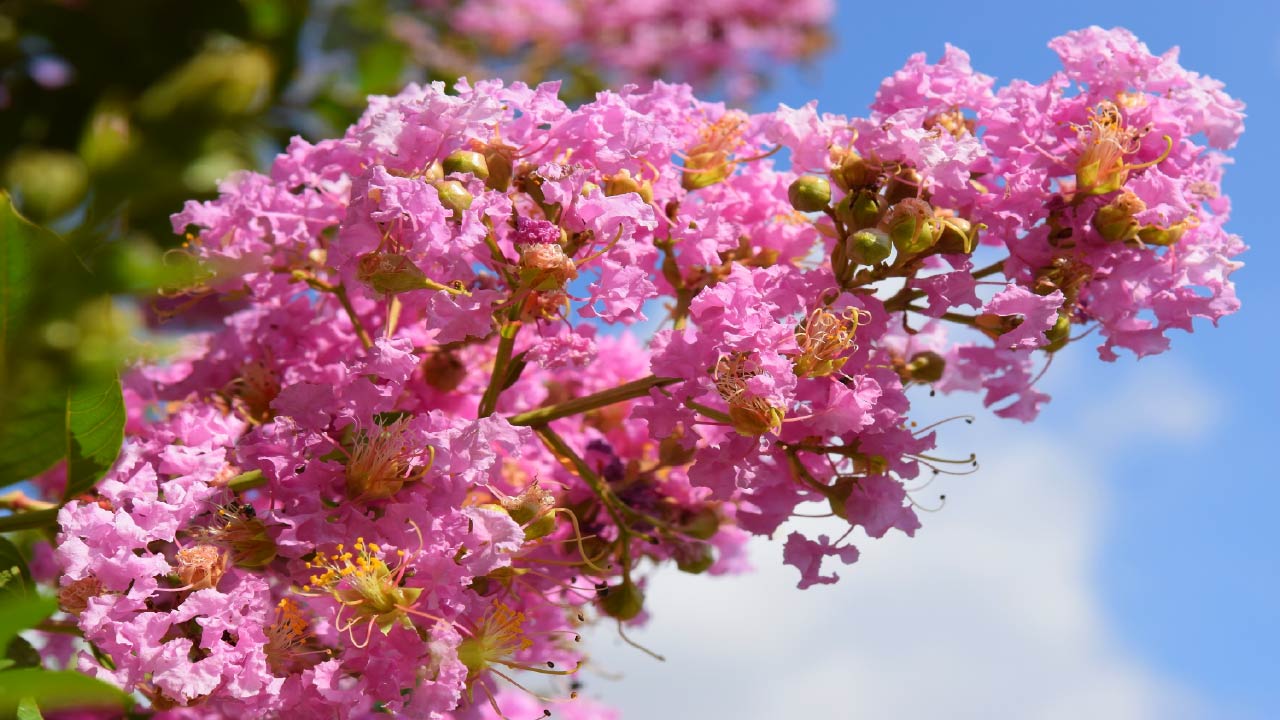
Often known as "Lilac of the South," Crape Myrtle is a flowering shrub or small tree that thrives in high temperatures and high humidity. This ornamental tree is famous for producing delicate, crinkled flower clusters during the hottest weeks of August. It has showy late-season flowers, colorful fall foliage, and smooth bark. Native to temperate and tropical regions of Asia, crape myrtle requires full sun and hot temperatures to bloom.
If you want height, structure, and season-long color in your garden, crape myrtle is one of the best shrubs for hot climates. This makes an excellent showy focal-point tree for sunny front yards. It performs especially well in intense heat, making it a Southern garden staple.
Best for: Sunny front yards, driveway borders, or patio screens.
11. Moss Rose (Portulaca)
USDA Zones: 10-11
Water Needs: Low once established
Sunlight: Full sun
Portulaca is one of the most heat-resistant annuals you can plant in full sun. Its succulent-like leaves store water, allowing it to thrive in the hottest, driest spots in the yard like gravel beds, rock gardens, and containers baking in direct sun.
This warm-season annual has small leaves and colorful rose-like flowers. Moss roses have rose-like blooms that open wide on sunny days in bright reds, pinks, yellows, and oranges in the shade. Widely distributed in subtropical and tropical regions worldwide, Portulaca grows in lean soil and prefers full sun and hot temperatures.
Best for: Containers, rock gardens, sunny borders, window boxes and dry areas.
12. Sedum
USDA Zones: 3-9
Water Needs: Very low
Sunlight: Full sun
Sedum is an annual or perennial plant that comes in forms ranging from low-growing ground covers to more upright types. Many sedums are succulents with thick leaves that store water, so they are drought and heat tolerant. The flowers attract pollinators, too.
Varieties like "Autumn Joy" produce broccoli-like flower clusters that deepen from pale pink to rust as the season progresses. It gives your garden late-season interest when other plants are winding down. After flowering, the dried seed heads can remain attractive through late fall and winter and add structure and seasonal interest to the landscape.
Best for: Rock gardens, borders, containers, slopes, drought-tolerant landscapes, and low-maintenance beds.
How to Help Full-Sun Plants Survive Peak Summer Heat
Even the toughest plants on this list will perform better with a little care. These few habits would make a noticeable difference.
- Water deeply. Light, frequent watering keeps roots near the surface, where they dry out fast. Deep, infrequent watering trains roots to grow downward, where moisture remains for longer.
- Water early in the day. Morning watering lets plants absorb moisture before temperatures peak. It can also reduce water loss to evaporation compared with watering during the hottest part of the afternoon.
- Mulch generously. A 2–3-inch layer of mulch keeps soil temperatures down and slows moisture loss, especially in garden beds that get full afternoon sun.
- Group plants by water needs. Place plants with similar moisture needs together whenever possible. Keeping drought-tolerant varieties in one area and plants that need more regular watering, such as zinnias and marigolds, in another makes irrigation easier and helps prevent unnecessary watering.
- Install a drip irrigation setup. Drip irrigation is the best option to water garden beds, containers, shrubs, and hanging baskets. It can deliver moisture directly to the root zone while maintaining more consistent soil moisture. This helps newly planted, heat-tolerant plants that still need regular watering while their root systems are established.
Make Gardening and Summer Watering Easier with the Right Garden Tools
Choosing heat-tolerant plants is only half the process. The tools you use to plant, weed, and water can make routine garden care much easier.
- A good pair of Felco and Fiskars pruners is useful for removing damaged growth and spent flowers.
- A sturdy hand trowel makes planting and transplanting easier.
- A comfortable pair of garden gloves protects your hands when you're weeding, pruning, or working in dense planting beds.
- For watering, a garden hose, timer, drip tubing, emitters, filters, pressure regulators, and other irrigation components can help create a more controlled system.
- For sunny gardens, drip irrigation can be highly effective because you can direct water toward the root zone instead of wetting the entire planting area. This is helpful during hot, windy weather when surface moisture disappears quickly.
Drip Irrigation: How Does It Help Your Plants Survive in the Summer
The Bottom Line
A resilient full-sun garden starts with a thoughtful mix of plants that offer color, structure, and dependable performance from summer into fall. Pair vibrant annuals such as zinnias, marigolds, and portulaca with long-lived perennials such as coneflower, yarrow, blanket flower, and sedum. For a balanced design, place taller plants in the back, medium-height varieties in the middle, and low-growing plants along the edges.
Make sure to choose plants based on your zone, understand the conditions in your garden and water as efficiently as possible. With the right combination of plants and gardening tools, a full-sun garden can become one of the most colorful and rewarding parts of your landscape.