
What to Consider Before Buying Micro Sprinklers for Irrigation
Mar 3rd 2026
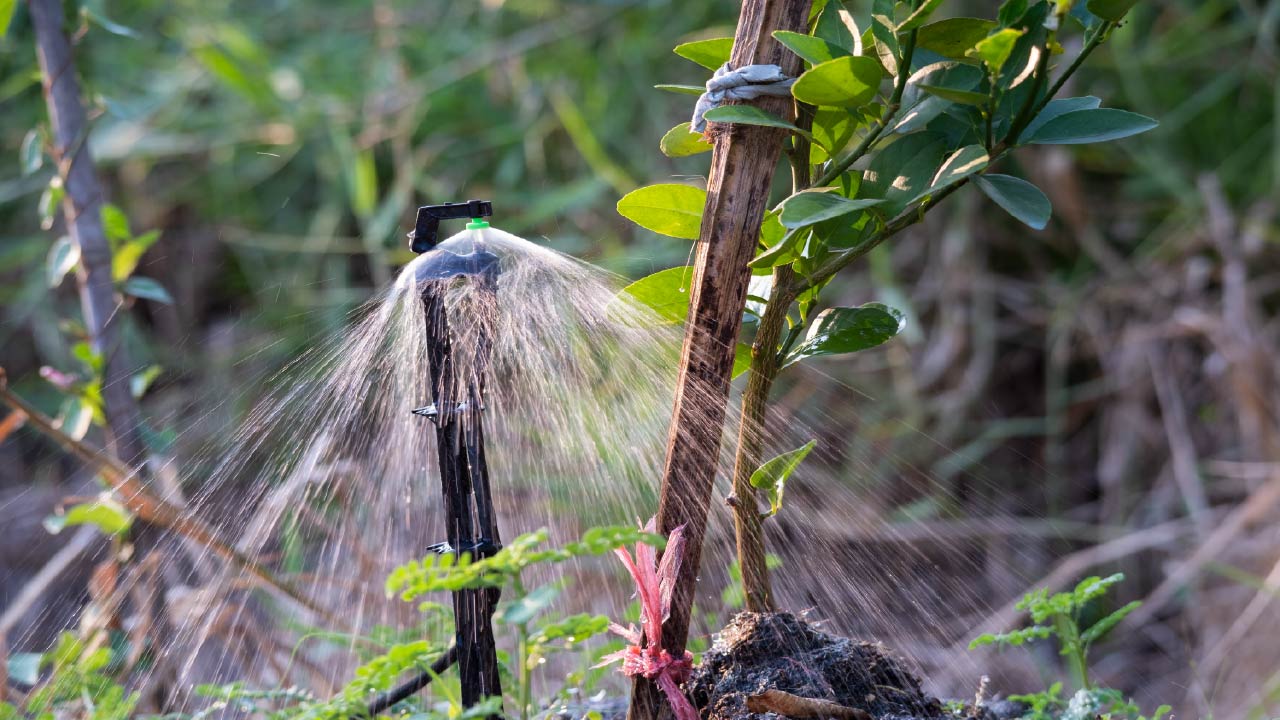
Micro sprinklers are a popular way to efficiently water your lawn, vegetables, and orchard, as they provide high uniformity, a medium wet diameter, and a medium flow rate. Using micro-sprinklers for irrigation is often perceived as wasteful or imprecise, especially compared to drip irrigation. However, if the system is designed smartly and efficiently, you can achieve high water-use efficiency with this irrigation method. They can perform two tasks at the same time: providing water to the roots and cooling the growing environment.
Micro sprinklers are commonly used to irrigate densely planted landscapes, trees, and greenhouse plants, but are also effective for frost protection. They are an excellent choice when a large amount of water is needed beyond what drip emitters can provide, but a traditional sprinkler or sprayer would be too large or incompatible with the irrigation area.
If you're considering micro sprinkler irrigation, whether as a farmer, gardener, or landscaper, this buying guide will help you choose the best ones for your irrigation job.
What is a Micro Sprinkler Irrigation System
Micro sprinklers are low-pressure irrigation devices that are designed to evenly distribute water over a small area. Unlike traditional lawn sprinklers, these mini sprinklers operate at lower pressure and deliver controlled water flow. They are used for low-volume irrigation for vegetables, in nurseries, surface irrigation in orchards, overhead irrigation in greenhouses, and frost protection. It can help gardeners and farmers use water more efficiently and increase yields.
If you have an existing drip irrigation system, you can integrate micro sprinklers directly into it, as they come in a range of connection sizes and types for attachment to risers or assemblies.
Their low-volume irrigation makes them ideal for:
- Garden beds
- Vegetable gardens
- Shrubs and hedges
- Vegetable gardens
- Orchards and fruit trees
- Greenhouses
- Flower beds
Features of Micro Sprinkler Irrigation System
- This low-volume system is suitable for seasonal and high-value crops.
- It can improve yields while reducing water, fertilizer, and labor use if managed properly.
- Micro-sprinkler irrigation is perfect for applying and uniformly distributing water to plants with little to no wastage.
- It is also ideal for irrigating sloping or irregularly shaped yards that can't be furrowed or irrigated with traditional sprinklers. Low water application rate reduces runoff.
- Its water application efficiency rate is 80-90%.
- It applies a focused spray or stream of water in a small radius.
- Some localized micro-sprinklers also make it possible to apply fertilizer to your plants through the drip irrigation system. This feature brings the highest efficiency in fertilizer applications and may help growers save on fertilizer and labor costs.
Pros of Using Micro Sprinklers for Irrigation
- Micro sprinkler irrigation can wet a larger area of soil, simplifying irrigation management.
- It allows both focused and full-surface irrigation.
- It provides low-volume irrigation and offers greater root coverage.
- It supplies water and nutrients to the roots, as well as provides humidity and cool.
- The nozzle blockages are quite visible in this irrigation system and are easy to handle.
- Micro sprinklers are best suited for orchards or high-density crops such as vegetables.
Cons of Using Micro Sprinklers for Irrigation
- Higher chances of evaporation loss and water runoff from the soil surface and during application.
- It uses more water compared to drip irrigation; in some cases, it is water waste.
- It is wind-sensitive, and its emitters can be damaged easily.
- It needs regular inspection from time to time.
Discover The 5 Best Sprinklers for Lawns and Gardens in 2025!
Factors to Consider Before Buying Micro Sprinklers for Irrigation
Here are a few things to consider before picking a micro sprinkler for your irrigation job, and make a wise, cost-effective decision.
1. Your Plant Type
Your crop or plant type should be one of your first considerations because different plants require different watering patterns.
Micro sprinklers are ideal for watering
- Flower beds
- Raised garden beds
- Fruit trees and orchards
- Shrubs and hedges
- Vegetable gardens
They are especially beneficial for shrubs and trees that require watering over a larger root zone compared to drip emitters.
Micro sprinklers are not ideal for turf grass lawns (rotor or spray heads work better), extremely windy areas, in open spaces, or in very large landscapes.
2. Water Pressure
Like drip systems, micro-sprinklers operate at low pressure, typically between 15 and 50 PSI. Therefore, it is important to check your available water pressure and the compatibility of the pressure regulator before buying micro sprinklers for irrigation.
If you install micro sprinklers without proper pressure regulation, it will lead to uneven spray distribution, system blowouts, mist formation, and reduced lifespan of the irrigation system.
3. Flow Rate
Flow rate determines how much water each sprinkler delivers. The common flow rate of micro sprinklers ranges from 5 GPH to 20+ GPH. You need to ensure the sprinkler's flow rate matches the soil's infiltration capacity.
Higher flow rates lead to faster watering and lower rates deliver slower, deeper soak. At the low-volume end, micro sprinklers can deliver 5 to 6 GPH, and at the high end, they can deliver 40 to 60 GPH, even at low pressure. For heavier soil, it is best to continue with lower flow rates.
4. Pressure Compensating and Non-PC feature
It is best to use pressure-compensated micro-sprinklers such as Netafim PC Micro Sprinklers to apply uniform water and nutrients to high-value crops. Also, if your landscape is sloped or large, you should choose a PC sprinkler to ensure a consistent diameter and flow rate. These micro-sprinklers ensure all your plants are irrigated evenly, even on steep slopes.
5. Spray Radius and Area
Micro sprinklers come in different spray patterns and coverage radius. The patterns include full circle, half circle, quarter circle, fan spray, or adjustable arc. Additionally, the coverage radius of micro sprinklers typically ranges from 2 to 20 feet. To choose the right spray patterns, consider your plant spacing, garden bed width, any obstructions such as walls, and the root zone spread.
6. Climate and Weather Conditions
Micro sprinklers are wind-sensitive because they produce a fine spray. They work best in calm conditions. If you are in a windy area, choose larger droplet models, wind-resistant spinner types, and lower the sprinkler height.
7. Installation Method
Micro sprinklers are often used with drip irrigation systems. They can be installed on support stakes, suspended from tubing, mounted on risers, or hung upside down to use in a greenhouse. Installing micro sprinklers on stakes is ideal for individual plants and garden beds, and it allows you to adjust the height.
8. Material Quality and Durability
Not all micro sprinklers are made equally. Using cheap, unreliable sprinklers can damage your investment through poor performance. They will clog easily and crack in the sun. So always buy micro-sprinklers from top-rated brands with proven success in the industry.
When choosing, look for UV-resistant plastic, clog-resistance, anti-insect features, spinner mechanisms, and replaceable parts. All these features are present in these premium Netafim Pressure Regulated Micro Sprinklers and Ein Dor Mini Sprinklers.
The Main Applications of Micro Sprinklers
Here, we look at the most common situations in which micro sprinklers are best for irrigation.
Landscape Irrigation
- Micro-sprinklers are commonly used for landscape irrigation. Ground covers, shrubs, trees, bushes, and perennials can benefit from micro-sprinkler irrigation.
- In these low-pressure systems, the water droplets produced are gentle and smaller, like a gentle rain. This makes them perfect for irrigating younger plants without worrying about damage from high pressure or large water droplets.
- The wind-resistant, insect-resistant Ein-Dor micro sprinklers are perfect for irrigating landscape plants, garden beds, and small groups of containers. They give your plants the optimal amount of water by evenly distributing droplets.
- Use the Press Fit Support Stake Assemblies with the Ein-Dor Micro Sprinklers when connecting to your mainline.
Discover Expert Lawn Watering Tips: Turf and Garden Sprinklers
Orchard Irrigation
- This is the most popular application with micro sprinklers. You need to use pressure-compensated for your trees, especially on uneven topography.
- Using them for tree irrigation has certain benefits over tree rings. They are easier to adjust as trees mature.
- Some mini sprinklers have deflectors or wedges that direct water in a specific direction, keeping the trunks of young trees dry. When the trees mature, these deflectors can be removed to increase the spray radius.
- If the trees are on a slope, it is best to position the micro-sprinkler uphill from the tree.
- Micro-sprinklers should be placed about a foot or so away from the trunk of the tree being watered. If it's positioned too close, the trunk will block most of the water. If it is too far, it won't reach areas close to the tree.
Greenhouse Irrigation
- Inverted micro-sprinklers are also a popular choice in greenhouse applications. In a greenhouse, they are used for irrigation and climate control. Inverted sprinklers are available in a variety of installation options to suit any greenhouse or nursery project.
- Inverted micro-sprinklers are ideal for more established plants due to their even coverage and distribution uniformity.
Frost Protection
- Micro-sprinklers are also used to protect plants and trees from freeze damage. They provide frost protection by releasing heat of fusion to raise the surrounding temperature.
- When water freezes, it releases heat through a process called heat of fusion. This heat can keep temperatures at or above 32° F to prevent frost damage to both young and mature trees.
- Micro sprinklers used for frost protection provide two heat sources. In addition to the heat of fusion, groundwater is commonly between 40° and 50° F, even when the above-surface temperature is below freezing. This frost protection technique prevents frost or ice accumulation on the tree's trunk and lower canopy.
- The amount of water required for frost protection depends on several factors, including soil moisture levels, wind speed, crop planting density, and wet- and dry-bulb temperatures. Make sure to consider all these factors when determining the application rate.
The Bottom Line
Micro-sprinklers are highly beneficial for gardeners and landscapers seeking a water-efficient irrigation system, as they offer excellent coverage and flexibility if installed correctly. A well-designed micro-sprinkler irrigation system is a smart, long-term investment for your plants. It will save water, improve your plant health, and reduce labor costs.
The most important thing is not to waste your money and time on poor-quality micro sprinklers. A new vegetable garden, orchard, lawn, or greenhouse is a significant investment, so you must give them all they need to deliver optimal return on investment. Visit DripWorks to buy the best-quality micro sprinklers of top brands for your landscape and improve water efficiency.