
Irrigation for Row Crops: Best Practices for Efficient Water Conservation
Jun 2nd 2026
Row-crop farming requires an efficient and consistent water supply to achieve the highest-quality yields. Proper irrigation plays a key role in meeting each crop's specific water needs and allowing plants to absorb the nutrients they require throughout the growing season. Implementing the correct irrigation method is necessary to increase crop production and ensure all your crops are grown with optimal water efficiency. Modern row crop irrigation relies on advanced irrigation systems that help farmers maintain soil moisture, reduce crop stress, improve nutrient uptake, and maximize every acre of farmland.
This irrigation guide explains how to irrigate row crops effectively, evaluates the best irrigation systems available today, and provides strategies to maximize yield while minimizing water use.
What Are Row Crops?
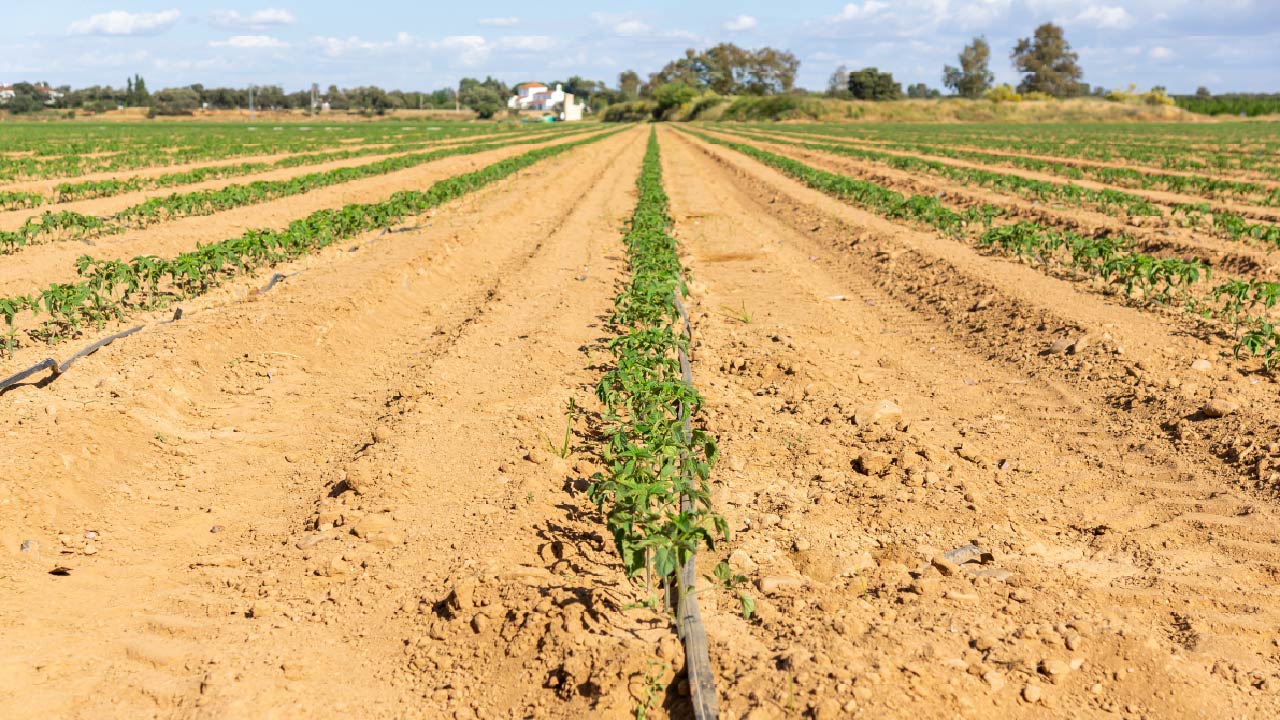
Row crops are high-value agricultural crops grown in parallel rows and spaced wide enough to allow for machinery, manual cultivation, irrigation, harvesting, and foot traffic. These crops are planted on large-acreage farms and require careful water management throughout the growing season.
Common row crops include these popular names.
- Field Crops: Corn, cotton, wheat, and soybeans.
- High-Value Vegetables: Potatoes, tomatoes, peppers, sweet corn, broccoli, and leafy greens.
- Root Crops: Carrots, onions, and garlic.
Best Irrigation Systems for Row Crops
There are several irrigation systems commonly used for row crops. We'll discuss three main ones below. Each has advantages and disadvantages depending on farm size, crop type, soil conditions, and budget. Let's explore each irrigation method.
1. Surface Irrigation or Furrow Irrigation
Furrow irrigation is one of the oldest watering methods used in agriculture. In a furrow system, small, parallel channels or furrows are dug between the crop rows. Water flows by gravity through these shallow trenches between rows, watering the soil and eventually reaching the plant roots.
How It Works
- Crops are planted in raised beds or at higher levels.
- Water is introduced at the high end of the garden or field. Water moves down the furrows using gravity.
- Water soaks into the soil and reaches the plant roots.
Advantages
- Simple operation
- Low installation cost
- Works well on flat land
- Less energy requirements
Disadvantages
- Water loss through evaporation, percolation, and runoff
- Requires proper land leveling
- Risk of spreading diseases from one row to another
- Can lead to soil erosion
Best Suited For: Flat and gently sloping lands with medium-to-heavy clay soil that hold water well.
Best Crops for Furrow Irrigation: Corn, cotton, soybeans, potatoes, and sugar beets.
2. Drip Irrigation for Row Crops
Drip irrigation is one of the most efficient irrigation methods available today for row crops. It delivers water slowly and directly to the root zone through drip tubing, drip tape, and emitters. These emitters discharge water slowly, steadily, and directly onto or below the soil surface right at the base of the plant rows. Types of drip irrigation include surface drip irrigation and subsurface drip irrigation (SDI).
Surface Drip: Drip tape or drip tubing is installed on the surface next to the crops. It is highly flexible and popular for annual vegetables.
Subsurface Drip Irrigation (SDI): Drip tubing is permanently buried at depths of 6 to 18 inches below the soil surface. This is a rapidly expanding irrigation method for crops like corn, soybeans, and alfalfa. Subsurface drip irrigation is becoming increasingly popular for large-scale corn and cotton farming because it saves significant amounts of water over time.
Advantages
- Excellent water efficiency of 90%
- Minimal to no evaporation losses
- Less weed growth
- Lowers disease risk
- Allows precise fertilizer application by fertigation
- Works well in sloped and drought-prone areas
Disadvantages
- Higher installation cost
- Emitters may clog without maintenance
Best Crops for Drip Irrigation: Cotton, onions, tomatoes, peppers, melons, strawberries, and nearly all vegetables.
Find Out:10 Reasons Why You Should Consider Drip Irrigation for Your Farm and Garden
3. Sprinkler Irrigation
Sprinkler irrigation uses pipes and sprinkler heads to spray water in the air over crops like natural rainfall. On a smaller scale or in gardens, it involves solid-impact sprinklers. In large-scale row crop cultivation, this looks like massive Center Pivots or Linear-Move irrigation Systems rolling across the landscape on motorized towers.
Center Pivot Irrigation
It is a rotating sprinkler system that moves in a circular pattern around a central pivot. Center pivots rotate to irrigate circular areas with sprinklers or drip lines. They are a suitable option for large crop fields.
Linear Move Irrigation
This is an automated, mechanized system that travels back and forth in straight lines across the field to water crops. It uses long pipes placed along the crop rows and works effectively in fields with uneven or irregular shapes. The system then delivers water accurately through sprinklers or drip emitters.
Best Suited For: Large fields, irregular terrains, and soil with high infiltration rates.
Advantages
- Covers a large acreage of crops efficiently
- Uniform water application
- Suitable for many soil types
- Reduces labor needs
Disadvantages
- High energy costs
- Water loss from wind and evaporation
- Wind may disrupt spray patterns
- Wet foliage may encourage fungal diseases like powdery mildew or blights.
Best Crops for Sprinkler Irrigation
- Wheat
- Corn
- Soybeans
- Alfalfa
- Potatoes
- Vegetables
Discover: The Top 6 Types of Sprinkler and Drip Irrigation Systems for Your Landscape
Which Is the Best Irrigation System for Row Crops
The best irrigation system depends on your specific crops and growing conditions.
Drip Irrigation Is Best for Water Efficiency
If water conservation and efficient water application are your priority, drip irrigation is the best option. Also, if your goal is maximum water productivity and growing the highest possible yield per gallon of water applied, drip irrigation is the winner.
Recent studies show that drip irrigation systems consistently perform better than sprinkler and furrow irrigation. Compared to traditional irrigation methods, subsurface drip irrigation improves crop yields, conserves water and reduces weed growth. Also, SDI allows you to efficiently apply liquid fertilizers through the dripline, which improves nutrient absorption and crop health.
How Drip Irrigation Is Revolutionizing Farming and Gardening
Targeted Delivery
Sprinkler systems water everything around them, including the spaces between rows. However, drip systems keep the inter-row spacing completely dry, which starves weed seeds of the moisture they need to germinate.
Fertigation
Just as drip systems deliver water directly to the roots, they also efficiently deliver nutrients through fertigation. It is the practice of injecting water-soluble fertilizers directly into your irrigation lines via fertilizer injectors. This allows you to feed plants the exact nutrient doses they need at the right time, eliminating fertilizer runoff.
Center Pivot Irrigation Is Best for Large Farms
For large-scale crop production, center pivot systems are the practical choice. Its benefits include a large coverage area, consistent watering, automation, and less labor.
Furrow Irrigation Is Best for Low-Cost Operations
Farmers with limited budgets and suitable land slopes may still prefer furrow irrigation because of its lower setup costs.
How to Irrigate Row Crops Properly
Even the best irrigation system will fail if it is not managed correctly. Follow these smart tips to properly irrigate your crops.
Monitor Soil Moisture
Never irrigate your crops without checking their actual moisture needs. Determine soil moisture levels using tools such as soil moisture sensors, probes, tensiometers, and smart irrigation monitors. These tools help determine when crops actually need water.
Water Deeply
Deep, infrequent watering helps roots grow downward into the soil. On the other hand, shallow, frequent irrigation can lead to weak root systems, increased drought stress, and high disease risk.
Know Your Soil Type
Your soil's type and texture determine how much water it can hold and how fast it absorbs it.
- Sandy Soils: It has large particles, low water-holding capacity, and a high infiltration rate. Sandy soil requires frequent, short watering cycles.
- Loamy Soils: It is an ideal, balanced soil with excellent water-holding capacity and regular infiltration.
- Clay Soil: It has tiny particles, high water-holding capacity, but incredibly slow infiltration. They require long, slow watering intervals to prevent pooling and runoff.
Match Irrigation to Crop Growth Stages
Some growth stages are more prone to water stress. Important plant growth stages are germination, flowering, pollination, fruit set, and grain fill. Water shortages during these periods can significantly reduce yield.
Water Early in the Morning
Morning irrigation reduces water loss from evaporation and allows foliage to dry all day. So, it is best to avoid late-evening watering whenever possible because wet leaves overnight can increase the risk of fungal diseases.
How to Improve Row Crop Irrigation Efficiency
Improving the irrigation efficiency of your row crops saves money, boosts yields, and conserves resources. Here are the best practices to enhance your irrigation system efficiency.
- Apply mulch around plants to retain soil moisture.
- Repair leaks in tubing quickly.
- Upgrade old irrigation systems.
- Install pressure regulators to maintain consistent water pressure.
- Use soil moisture monitoring tools to water your crops at the optimal time, preventing overwatering.
- Water crops during cooler parts of the day.
- Maintain pumps and filters regularly.
- Avoid runoff and standing water in your garden or fields.
The Bottom Line
Proper irrigation is key to successful row crop production. From traditional furrow systems to advanced drip irrigation technology, choosing the right system for your crops can significantly improve yields, conserve water, and increase profitability. Each growing area is unique, with different water sources, crop types, and soil conditions, all of which you must consider.
A well-designed irrigation system tailored to your specific crops will ensure the most efficient, successful system that pays for itself through minimized resource waste, lower energy costs, and exceptionally healthy, heavy yields at harvest time.