
The Top 6 Types of Sprinkler and Drip Irrigation Systems for Your Landscape
Mar 5th 2026
A healthy, vibrant landscape is the result of smart planning, proper plant selection, and most importantly, an efficient sprinkler system. Make sure your grass, flowers, bushes, and trees get adequate water if you want the greatest landscape this season. This can only be achieved by choosing the best sprinklers for your landscape needs. Different types of irrigation sprinklers provide unique features for watering each part of your landscape. However, the type of sprinkler head you use depends on the size of the terrain you're watering, the plant type, and other crucial factors, which we'll discuss at the end of our blog.
In this landscape irrigation guide, we'll explore the top 6 types of irrigation systems, their ideal applications, and benefits, as well as tell you how to select the best irrigation solution for your lawn, garden beds, and landscape.
Top Types of Landscape Sprinkler Systems
Selecting the right sprinkler system starts with understanding how each type operates and the conditions it performs best in. Each system delivers water differently, making some better suited for large open areas while others excel in smaller, irregularly shaped spaces. Here we explore each type in detail.
1. Fixed Spray Sprinkler Systems
Best for: Small lawns, flower beds, even areas, residential landscapes
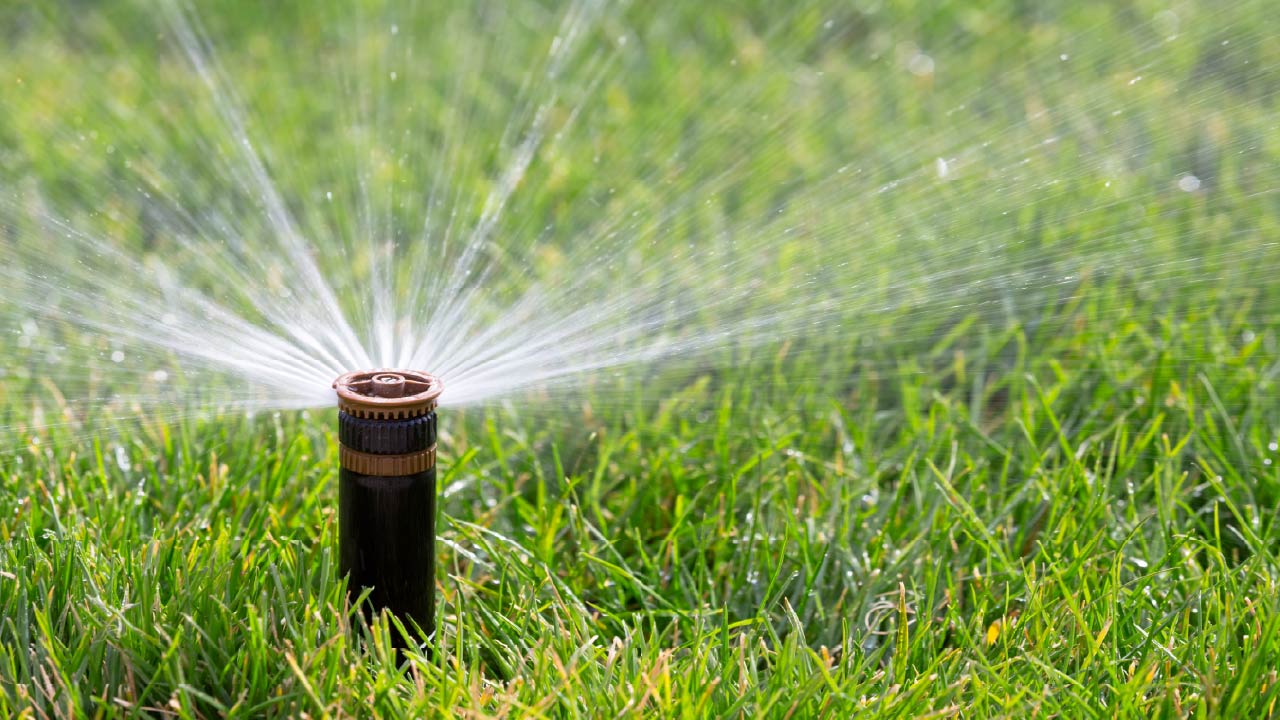
Spray systems are one of the most common and affordable landscape irrigation solutions. They use fixed spray heads that deliver water in a fan-like pattern. They're commonly used in smaller, flat areas where water coverage needs to be tight and consistent.
Key Features
- Short to medium spray radius
- Available in a variety of patterns (full-circle, half-circle, and quarter-circle)
- Suitable for smaller lawns
Pros
- Easy to install
- Affordable option
- They offer great coverage for small spaces
Cons
- Less efficient in windy conditions
- Uses more water
2. Rotor Sprinkler Systems
Best for: Medium-to-large yards, sloping areas, parks, commercial landscapes
A rotor system is one of the best landscape sprinkler systems, ideal for large lawns. It features rotating sprinkler heads that distribute water in slow, rotating streams rather than a mist. These sprinklers distribute water through two or more arms that spin around a central base in a circular motion. As a result, they reduce evaporation and provide even water distribution across larger areas. They cover more ground per head and are more efficient for larger landscapes.
Key Features
- Adjustable arc and rotation
- Lower precipitation rate than spray heads
Pros
- Reduces water waste through slower, deeper watering
- Handles wind better than spray heads
- Fewer heads needed
Cons
- Higher initial cost
- Complex to install and maintain
- Slower coverage can lead to longer run times
3. Drip Irrigation Systems
Best for: Garden beds, shrubs, trees, vegetable gardens
Drip irrigation systems are one of the most water-efficient and economical irrigation systems. It delivers water directly to the plants' root zones through a network of tubing and emitters. This smart system is ideal for plants that don't need overhead watering, such as vegetables, shrubs, trees, or gardens.
Key Features
- Low-pressure system
- Minimal evaporation
- Targeted watering
Pros
- Extremely water-efficient
- Reduces water waste by up to 50%
- Prevents weed growth between plants
- Reduces soil erosion
- Low evaporation rate
Cons
- Tubing and emitters may clog
- Not ideal for large lawn areas
- Requires regular system maintenance
4. Micro Sprinkler Systems
Best for: Vegetable gardens, small areas, irregular spaces, potted plant areas, trees
Micro sprinklers are low-pressure systems that are designed to evenly distribute water over a small area, tight garden areas, or raised beds. They're easy to install and great for DIY setups. In contrast to traditional lawn sprinklers, these mini sprinklers work at lower pressure and deliver controlled water flow.
Key Features
- Ideal for irrigating sloping or irregularly shaped yards
- Applies a focused spray or stream of water
- Improve yields while reducing water, fertilizer, and labor use
Pros
- Budget-friendly
- Simple to set up and move
- Provides low-volume irrigation for delicate plants
Cons
- Uses more water compared to drip irrigation
- Shorter lifespan
- Wind-sensitive
- Not suitable for larger lawns
DiscoverExpert Lawn Watering Tips: Turf and Garden Sprinklers
5. Oscillating Sprinklers
Best for: Small to medium lawns, newly seeded areas, and even flat turf sections
An oscillating sprinkler stays in one place and sprays water in a back-and-forth rectangular pattern using multiple small jets. They feature a tube with multiple nozzles that spray water in a fan-shaped pattern as they move back and forth. It covers a rectangular or square area. A heart-shaped cam mechanism pushes the spray arm in a sweeping motion, ensuring both ends of the pattern receive the same amount of water as the center.
Pros
- Easy to use and move manually
- Affordable lawn watering solution
- Adjustable width and range
Cons
- Must be repositioned manually
- Not ideal for irregular lawn shapes
6. Bubbler Irrigation Systems
Best for: Trees, ground covers, shrubs, ornamental plants
Bubbler irrigation is a more localized watering method than a traditional spray head. Bubbler systems distribute water directly at ground level rather than spraying it into the air. They deliver water to a targeted area or a small area of your landscape.
Bubblers perform best on level ground with an arid soil type that can withstand the high-water density. Since so much water flows into a small area, it soaks deeply and helps promote vigorous root growth. Therefore, these systems are best suited to irrigate trees.
Key Features
- Excellent for targeted ground watering
- Deliver water directly to the soil
- Reduce evaporation and runoff
- Low to moderate pressure
Pros
- Ideal for level grounds
- Deep root watering promotes stronger root systems
- Less evaporation
- Easy to integrate into existing sprinkler zones
Cons
- Not ideal for grass
- Must be properly adjusted to prevent overwatering
The 5 Best Sprinklers for Lawns and Gardens in 2026
Factors to Consider When Choosing the Sprinklers for Your Landscape
When selecting a landscape sprinkler irrigation system, consider the following factors to decide which irrigation setup is right for you.
Lawn Size and Shape
- Lawn square footage affects coverage needs, the type of sprinkler you choose, and system complexity.
- Larger areas require rotor heads or multiple irrigation zones, depending on the vegetation.
- Use spray heads for smaller lawns.
- Rectangular lawns often work best with fixed spray heads or oscillating sprinklers. On the other hand, larger, irregularly shaped areas benefit from rotor or impact sprinklers.
Soil Type
Soil composition directly affects how quickly water penetrates and how long moisture remains available to roots. For example, sandy soil drains fast and may need shorter, more frequent watering.
In clay soil, moisture holds longer, but it can lead to runoff if watered too quickly.
Plant Type
- Most lawns need broad overhead coverage.
- Trees, vegetables, and shrubs grow well with slow, targeted watering, so drip irrigation is ideal.
- Mixed-use landscapes benefit from multi-zone systems tailored to plant needs.
Water Pressure Requirements
Another crucial factor that will affect your sprinkler choice is water pressure. Most automatic sprinkler systems require between 40 and 60 PSI to work efficiently. Here's what you should do:
- In areas with high water pressure, it is best to use rotor or impact sprinklers.
- For lower water pressure, drip systems, fixed spray heads, or pop-up sprinklers are the best choice as they require less pressure.
Climate and Sun Exposure
- Areas with full sun or high winds can lead to faster evaporation, therefore, rotor heads and drip systems reduce waste in these conditions.
- Spray heads may need to be adjusted or avoided in exposed zones.
- Drip irrigation systems are best for almost all types of climates and drought-prone regions.
Learn How to Upgrade Your Sprinkler System for Spring: Homeowner's Guide
The Bottom Line
The best sprinkler system for your landscape depends on your property size, plant types, climate, and water efficiency goals. It's not enough to pick a sprinkler system for your landscape; instead, you need to find a solution that works for your land, your goals, and the weather. If you want to keep your landscape lush and beautiful, the right irrigation system from DripWorks will save you water, lower stress, improve plant health in the long run, and give you your dream landscape.