
How to Protect Trees and Shrubs: Winter Climate Tips
Jan 29th 2026
Freezing temperatures, heavy snow, icy winds, sunscald, and winter weather can damage your trees and shrubs. Harsh winter conditions can take a toll on your landscaping, making it a challenging time for it. In addition, water loss, also known as desiccation, is the biggest threat to your plants over the winter. Frozen soil prevents shrubs and trees from accessing soil moisture. Fortunately, there are a few proactive steps you can take to prevent cold-weather damage to trees and shrubs before it starts.
Here is a useful guide with all the tips and methods to protect your plants and trees and keep them alive throughout the winter months.
How Cold Weather Affects Your Shrubs and Trees
Trees and shrubs are very vulnerable to cold temperatures, which can cause desiccation, leaf browning, root injury, cold damage, and frost heaving. Heavy snow or ice loads on trees can break branches, especially if the snow is shoveled on your plants from the roof. This will also affect the overall aesthetic shape and appearance of the tree.
Moreover, cold, dry winds will dry out trees, and bright sunlight reflecting off snow can scald and blister trunks and branches. And the last threat is that those hungry critters, like rabbits and deer, will munch away on anything they can find.
The good news is that you can prevent these problems from damaging your beloved trees and shrubs.
Sunscald Injury
Sunscald injury occurs on the bark of trees. It happens when there are elongated, dried, sunken, or cracked areas of dead bark, which are usually on the southwest side of a tree. It is attributed to temperature fluctuations on cold winter days. The sun can heat up the tree's bark to the point where that area unfreezes. When the sun is shaded by clouds or a building, the temperature drops rapidly, and the active tissue refreezes and dies. Newly planted, young, and thin-barked trees (cherry, plum, maple, mountain ash, honey locust, crabapple) are susceptible to sunscald.
Winter Dieback
In the cold season, deciduous trees and shrubs may experience bud death and shoot dieback. Flower buds are more vulnerable to this injury than stem or leaf buds.
How to Protect Shrubs and Trees from Dieback?
- Put plants that are only slightly hardy in protected locations.
- Plants that are growing vigorously late in the fall are more likely to suffer winter dieback, so avoid late-season pruning, fertilizing, and overwatering.
- Fertilize the plants in spring or fall, after the leaves have dropped.
Also Read:How to Design a Winter Garden: Color, Texture, and Cold-Hardy Plants
How to Protect Trees from Snow, Wind, Sun, and Cold Damage
Here are some of our best tips on winterizing trees and shrubs and protecting them.
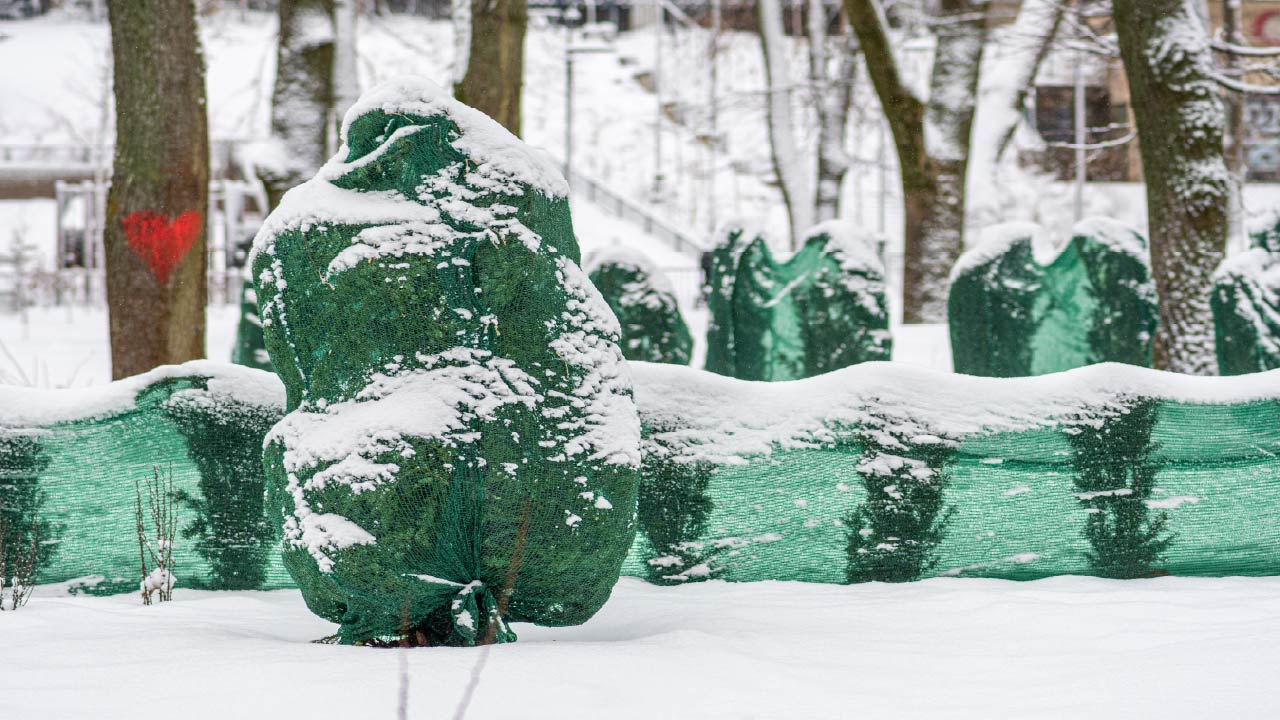
Use Burlap and Covers to Block Wind and Sun
Trees in urban and suburban areas are frequently isolated and exposed to bright sunlight. Cold winter winds and direct sun can dry out evergreens, especially broadleaf types like holly, rhododendrons, and boxwood. Also, young trees have thin bark, which can be damaged in cold conditions. The low temperatures will cause the tree to go into dormancy, but the winter sun will shine directly on the trunks throughout the day and warming them.
Wrapping or screening vulnerable plants with burlap and row covers creates a permeable barrier that helps reduce moisture loss, block wind, and prevent leaf scorch. Row covers are beneficial for newly planted evergreens and shrubs in exposed areas.
- Put burlap screens/covers on the windward sides of the plant.
- Try to keep burlap away from foliage to avoid moisture buildup.
- Secure burlaps with stakes and twine for stability during snowstorms.
Apply Anti-Desiccant Sprays
Evergreen plants continue to lose moisture all winter, even when the ground is frozen. Anti-desiccant sprays create a protective waxy layer on leaves and needles, reducing winter water loss. These products slow evaporation in dry, windy weather. They are most effective when applied on mild days before regular temperature drops and can be especially beneficial for broadleaf evergreens.
When to apply:
- Late autumn or early winter, on a dry day.
- If temperatures change, reapply the spray mid-winter.
Mulch for Insulation
Fall and winter are perfect times to apply mulch around your trees and shrubs. Mulching keeps soil temperatures stable and prevents freeze-thaw cycles that can damage roots. When a tree goes dormant, leaves fall off the branches. This annual release of organic matter strengthens the soil around plants, providing roots with nutrients and insulation.
You can use the tree's own leaves, wood chips, or compost around the roots to deliver nutrients over the winter and into spring when the material breaks down slowly.
Mulching tips:
- Apply a 2–3-inch layer of shredded bark or wood mulch,
- Keep mulch a few inches away from stems and trunks.
- Focus on newly planted shrubs and trees.
- Don't pile mulch too high around the trunk. This can prevent the trunk and roots from receiving enough oxygen, trap moisture, and create a habitat for pests and diseases.
Prune Trees
Winter is a great time to prune trees of all ages because the low temperatures prevent bacteria or fungi from growing in the pruned areas. Also, insects and pests won't be there to infect or damage the wounds. Trees should be pruned so that any weak or dead branches are removed to help your tree survive a snow or ice storm. If you continue to maintain your trees with structural pruning over the winter, you can increase the likelihood that they will withstand the additional weight from snow or ice.
Pruning Tips
- Trim trees carefully and remove no more than 25% of the canopy. Over-trimming a tree can cause it to produce very few leaves in spring.
- Remove weak, dead, or diseased branches and wood.
- Use sharp Fiskars Powergear pruners and a pruning saw to prune shrubs and trees. For taller trees, use Fiskars bypass loppers.
How to Prevent Animal Damage to Trees Over Winter
Rabbits, deer, voles, and mice can cause serious damage to your plants in the winter by feeding on twigs, leaves, stems, and bark. The best strategies for protecting your trees and shrubs from animal browsing are to use physical barriers and to reduce areas of habitat to prevent them from reaching your plants.
Put Physical Barriers
You can protect tree trunks from hungry animals by placing cylinders of mesh hardware cloth around the trunk, spaced about 6 inches apart. This can be kept year-round.
There should not be any gaps between the bottom of the mesh and the ground where animals could crawl beneath the fencing. Plastic tree guards work well for small trees.
- Keep rabbits out of your shrubs by fencing garden beds with hardware cloth.
- Enclose both the trunk and the lower branches.
Reduce Nesting Habitat
- Remove a desirable nesting environment and a protective cover for critters and deer to reduce animal damage.
- Cut grasses and other plants short within 2 feet of young trees to reduce hiding places for mice and voles that may eat trunks and stems.
- Remove brush piles, reduce cover, and fence off other hiding spots like under decks and other structures. This will deter rabbits from setting up in your yard.
Use Repellents
If you have a large number of trees or shrubs to protect in winter, you may find it expensive and time-consuming to use screens and wraps. Repellents can be the best solution in these situations.
- The tip is to spray or paint repellents on your trees and shrubs. A repellent makes plants taste or smell bad to animals.
- A single application of a repellent is enough for the entire dormant season.
Deer
During the winter, deer may eat shrubs and trees, significantly harming or destroying plants. The best defense against deer damage is exclusion. Exclusion is the most effective way to prevent deer damage. Wraps, wire fencing, tubes, and wire cylinders can be placed seasonally around trees and shrubs to physically stop deer from browsing.
Learn more in this useful article by Iowa State University Extension: Susceptibility of Plants to Deer Damage
The Bottom Line
Winter can be a challenging time for all living creatures, including your trees and shrubs. Trees and plants are a valuable part of your landscape, and you don't want the harsh winter weather to damage them. This is why it is important to give your landscape the right care and treatment before it goes dormant. That's the best way to ensure alive and healthy plants come springtime.
Taking action now limits damage, reduces stress on plants, and helps the landscape recover faster when warmer weather returns. Thoughtful winter tree and shrub care with the right tools pays off in healthy growth, improved flowering, and fewer issues in spring.