
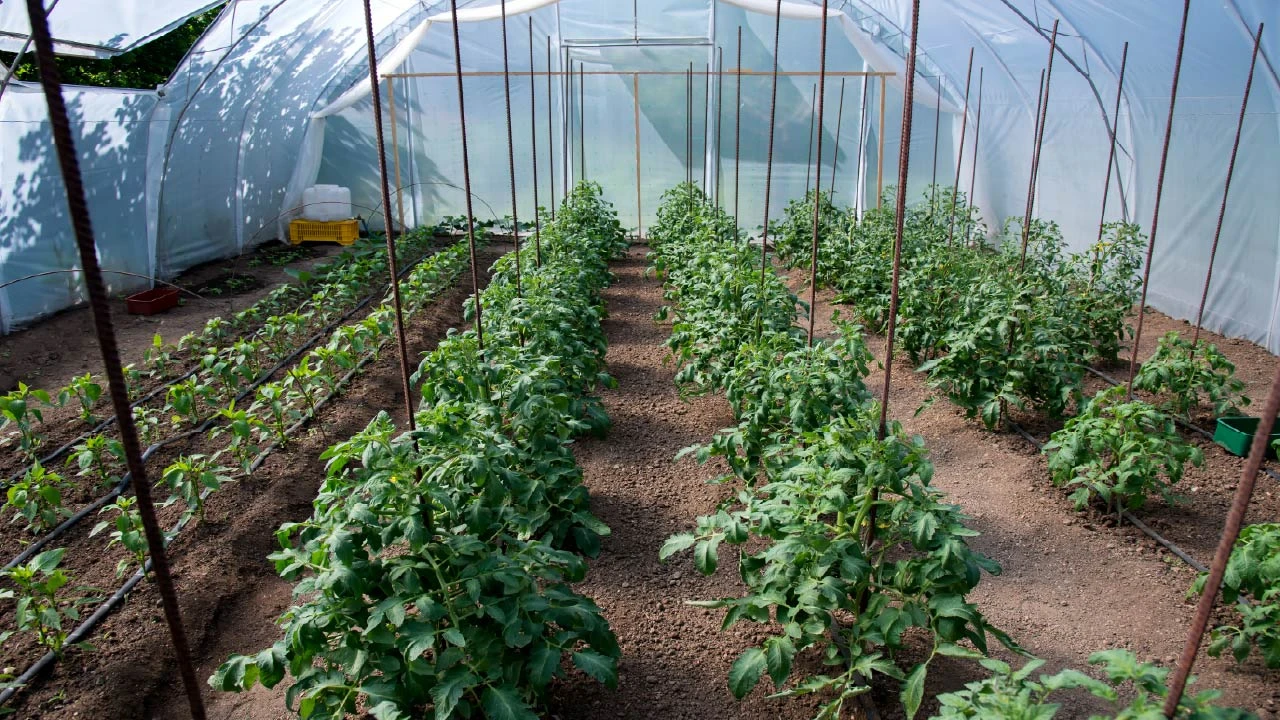
High Tunnel Irrigation: Drip vs. Overhead Watering
Nov 2nd 2026
Drip irrigation is the best choice for most vegetables, fruits, and other high-value crops grown in a high tunnel. It keeps foliage dry, uses water efficiently, reduces disease, and reduces unnecessary wetting of the tunnel floor. That does not mean overhead irrigation is useless. Overhead watering still has useful roles, like germinating seeds, cooling a hot tunnel, leaching salts, or growing crops that specifically need broad-area wetting.
So, the real question is not simply "drip or overhead watering?" What are you growing, how does the crop need to be watered, and how much control do you want over moisture and humidity inside the tunnel? Let's find out which method wins for most high-tunnel crops and why.
Why High Tunnel Crops Need a Different Irrigation Approach
Before choosing an irrigation system, it is essential to understand the microclimate inside a high tunnel. A high tunnel is an unheated, plastic-covered structure that extends your growing season. It also changes the rules of water management, because the plastic keeps out rain. Your irrigation system is the only source of water your crops get.
Zero Natural Precipitation: Your soil depends 100% on what you supply. Under-watering stunts growth quickly, and overwatering leads to rapid salt accumulation and root rot.
High Temperatures and Humidity: Plastic covers trap solar radiation and elevate temperatures. Without natural wind to move air, humidity inside a high tunnel can spike rapidly, creating ideal conditions for fungal pathogens.
Foliage stays wet longer: Airflow is limited compared to open-field crops, and that's why leaves dry slowly.
Salts accumulate: Without rainfall to flush the soil, fertilizer salts and minerals from irrigation water can build up in the root zone over the seasons.
Soil Evaporation Dynamics: High temperatures increase soil evaporation and plant transpiration. Managing moisture levels without constantly wetting crop foliage requires careful planning.
Given these environmental conditions in high tunnels, how you deliver water directly affects plant health, disease pressure, weed growth, and water efficiency.
Drip Irrigation Is the Best Choice for High Tunnels
High-tunnel climates have unique irrigation needs. Rain does not reach plants, and you are not simply supplementing natural precipitation. You are often responsible for supplying virtually all the water the crop receives. Drip irrigation fits this environment particularly well because it puts water where the plant needs it the most around the root zone rather than across the entire tunnel.
Drip irrigation delivers water slowly and directly to the soil at the base of each plant through drip tape or drip line with built-in emitters. The water soaks into the root zone while leaves, stems, and fruit stay dry.
Oklahoma State University notes that drip tape is the most common method of providing irrigation inside high tunnels because it is easy and inexpensive to install, provides good coverage, and helps limit evaporation losses. Another major advantage is that you can control how much soil gets wet.
Instead of wetting walking paths, foliage, and the entire soil surface, drip lines supply moisture around the crop rows.
Drip Also Works Well with Fertigation
One of the biggest advantages of using drip irrigation in high-tunnel production is its ability to combine irrigation with nutrient application. A properly designed drip system can deliver soluble fertilizer through an injector directly into the irrigation water. The nutrients then move into the soil around the root zone rather than spraying over leaves.
The Advantages of Drip Irrigation in High Tunnels
Lower Disease: This is the biggest reason high-tunnel grower's switch. Many tunnel diseases spread or thrive on wet leaves. Late blight, early blight, leaf mold, gray mold, powdery mildew, and bacterial spot all benefit from splashing water and prolonged leaf wetness. Drip reduces the risk of disease by supplying water to roots.
Excellent Water Efficiency: Drip systems are 90 percent or more efficient, while overhead systems lose more water to evaporation, wind drift, and uneven coverage.
Fewer Weeds: Water goes only where the crop is, so the rows and bed edges stay dry, and weed seeds don't get the moisture they need to sprout.
Fertigation: Inject soluble fertilizer through the drip lines, and you can feed crops precisely right at the root zone. This is super useful for heavy feeders like tomatoes, peppers, and cucumbers.
Lower Labor and Energy Use: Once installed, a drip system on a timer needs little manual watering. It also runs at low pressure, so it works with smaller pumps and even gravity-fed setups.
Compatible with Mulch: Drip tape can run under black or reflective plastic mulch, which further reduces evaporation and warms the soil early in the season.
The Limitations of Drip
Clogging: Drip emitters can clog with sediment, algae, or mineral deposits found in the water source. Good filtration and regular flushing are necessary to prevent this.
Rodent and Mechanical Damage: Voles, mice, and even a careless hoe can puncture tape. Cover the tape with mulch to avoid it.
Upfront Setup Time: Designing and installing a system takes some planning. But the effort is also worth it.
The Best Drip Irrigation Systems for Raised Beds, Gardens, and Row Crops
Overhead Irrigation in High Tunnel
A drip system is usually the preferred option for growing high-tunnel crops, but overhead irrigation still has uses. Overhead irrigation applies water from above, either with sprinklers, misting nozzles, or micro-sprinklers mounted on risers or hung from the tunnel frame. Water falls over the canopy like natural rainfall.
Here is when overhead watering makes sense.
Establishing Direct-Seeded Crops
Small seeds need moisture across a broad area. If you sow lettuce, carrots, radishes, spinach, or another crop directly into the soil, a newly installed drip line may not adequately moisten the entire seedbed.
Overhead irrigation can provide more uniform surface moisture during germination. Once seedlings are established, you can switch to drip irrigation.
Establishing Cover Crops
This is one situation where overhead irrigation can be useful. So, if your goal is to grow a cover crop across an entire tunnel floor, overhead watering is the better choice.
Occasional Establishment Watering
Even crops managed with drip may benefit from broader watering immediately after transplanting.
New transplants have small root systems. Depending on the soil and drip-line placement, a short period of broader irrigation may help establish the surrounding soil moisture. However, once roots are established, choose targeted irrigation.
Cooling the Environment
Spraying fine water droplets into the air cools the tunnel environment during heat spikes through evaporative cooling, protecting delicate crops from heat stress.
Problems with Overhead Watering
- Higher Disease Risk: Wet foliage and enclosed, humid air can invite fungal and bacterial problems, particularly on tomatoes, cucumbers, peppers, and squash.
- Water Waste: More water evaporates before reaching the soil, and coverage is uneven.
- Blossom and Fruit Damage: Water hitting open flowers can inhibit pollination and cause fruit blemish or cracking.
- Soil Splash: Rain like droplets kick soil onto leaves that may spread soil borne pathogens.
- Higher Humidity: Moisture builds up more easily inside the tunnel, causing condensation and slower-drying foliage, particularly during cool weather.
Best Irrigation Choice by Crop
Different crops have different needs, so the right answer depends on what's in your tunnel.
Crops That Thrive with Drip Irrigation
- Tomatoes (the popular high-tunnel crop, and highly disease-prone)
- Peppers and eggplant
- Cucumbers and melons
- Summer squash and zucchini
- Strawberries
- Cut flowers like zinnias and snapdragons
- Kale, chard, and other transplanted greens
Crops That Benefit from Overhead Irrigation
- Baby leaf salad mixes and direct-seeded lettuce
- Spinach, arugula, and radishes during germination
- Microgreens and brassica starts
What Is the Best Choice for High-Tunnel Growers?
Drip Irrigation is the best primary option for most high-tunnel growers. Because high tunnels are used to grow high-value crops such as indeterminate tomatoes, cucumbers, and peppers and extend seasons into cooler, high-humidity months. So, preventing foliage-borne fungal diseases is important. Drip irrigation offers superior water conservation, precise fertigation, drier leaves, and cleaner pathways.
Basic drip tape, fittings, filter, and a pressure regulator often cost far less than a full overhead sprinkler layout. Also, the savings continue through reduced water use, less fungicide spending, fewer lost plants, and higher-quality harvests.
A Hybrid System
Many experienced growers don't choose a single system. They build a drip-first system and keep overhead as a backup tool.
Overhead Misters: Use for bed preparation, germinating direct-seeded crops, leaching excess salts between crop rotations, and cooling the high tunnel during extreme summer heat spikes.
Drip Tape: Use once seedlings establish or transplants are set. It will serve as the main watering method throughout the crop's reproductive and harvesting stages.
How to Design an Effective Drip System for Your High Tunnel
Follow these steps to get the drip irrigation system right the first time.
Match the number of lines to the crop: Tomatoes may need one or two drip lines per bed, while closely spaced crops may require additional lines for even root-zone coverage.
Choose the right drip tape thickness: Thinner tape (4 to 8 mil) is economical for annual crops. Thicker tape (10 to 15 mil and up) can handle more wear and resists damage.
Select emitter spacing for your soil: Closer spacing, such as 8 to 12 inches, works well in sandy soil and for closely spaced crops. Heavier clay soils may perform better with wider emitter spacing.
Install a Filter and pressure regulator: Don't skip these. They're the difference between a system that runs for years and one that clogs in a month.
Use a timer: An automated system makes consistent watering easy, and consistency prevents cracking, blossom-end rot, and stress.
How to Manage Salt Buildup in a Tunnel
Soil salinity is one of the most overlooked high-tunnel problems. Since tunnels rarely get rain, salts from fertilizer and irrigation water can accumulate near the surface over time. Warning signs of salt buildup include:
- White, crusty deposits on the soil surface
- Leaf tip burn or scorched edges
- Stunted growth and poor germination
- Dark, dull-green foliage
Ways to manage it:
- Test your soil and water regularly. Electrical conductivity (EC) tests are inexpensive and informative.
- Apply overhead watering or flood irrigation during the off-season when the tunnel is empty to leach salts down below the root zone.
- Remove the plastic cover every 4 to 5 years to allow natural rainfall to cleanse the soil profile naturally.
Fall Drip Irrigation: How to Adjust Your Drip Watering System for Cooler Weather
The Bottom Line
Drip irrigation is the more efficient and controlled choice for high tunnel growers, and it fits particularly well with the protected environment of a high tunnel. It protects your crops from disease, conserves water, supports precise fertilization, and keeps weeds and humidity under control. Those benefits matter most in an enclosed, rain-free structure where problems spread quickly. Overhead watering also works best as a supporting tool for germination, occasional cooling, and salt leaching.
Efficient water management in a high tunnel with a hybrid system will save water and create the right growing environment for your crops. Keep the soil adequately moist, avoid unnecessary leaf wetting, monitor the tunnel's humidity, adjust irrigation as crops and seasons change, and inspect the system regularly. Start with a well-designed drip system, add overhead when needed, and watch your plants grow well to produce greater harvests.