
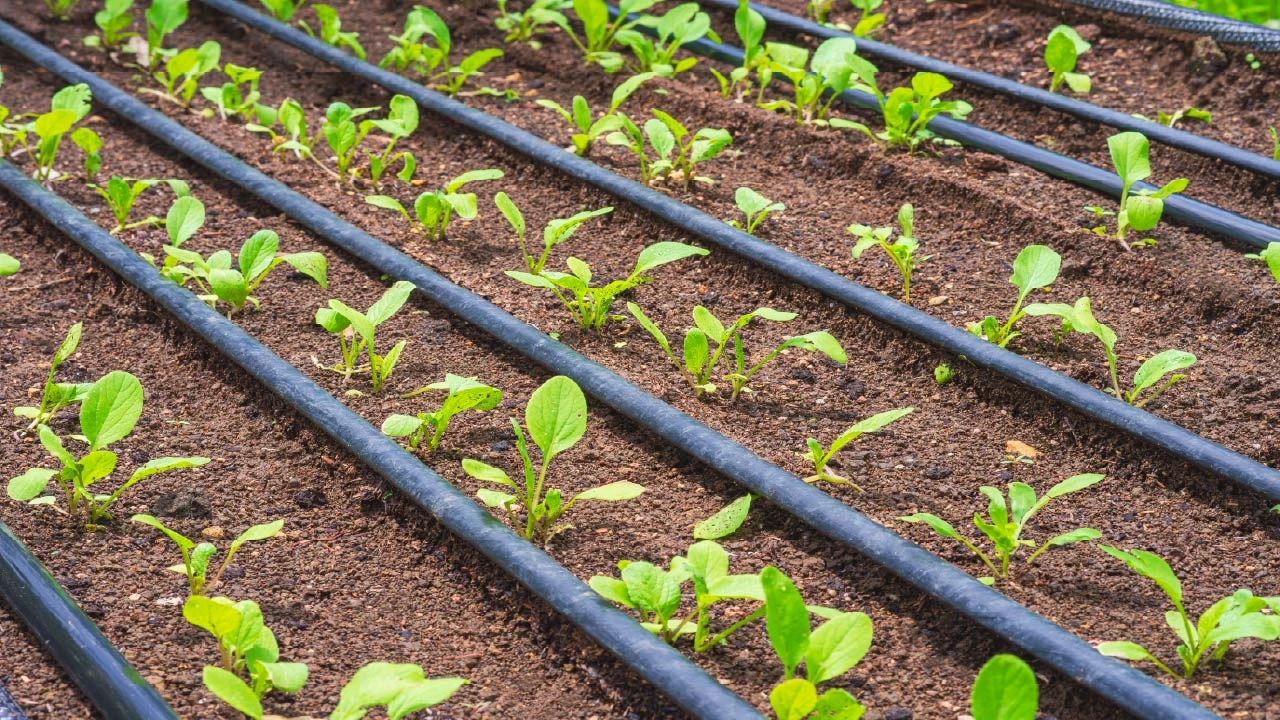
Fall Drip Irrigation: How to Adjust Your Drip Watering System for Cooler Weather
Sep 24th 2026
Summer gets all the attention when it comes to irrigation. You spend all summer fine-tuning your drip systems for peak heat, then largely forget about it once temperatures start to drop. But cooler weather doesn't mean "set it and forget it." Summer and fall have very different watering demands. As temperatures drop, days get shorter, rainfall patterns shift, and plants gradually use less water. That means your entire watering schedule needs adjusting for slower growth, less evaporation, shorter days, and the eventual threat of frost. Your plants and trees, whether they're native xeriscape species or more traditional greenery, have different watering needs in the autumn and winter.
Cutting irrigation too much can leave trees, shrubs, vegetables, and newly planted perennials short of moisture before winter. However, keeping the same summer watering schedule can keep the soil unnecessarily wet and create its own problems. The key is to find the right balance and adjust your drip irrigation as the weather changes. Don't wait until it's too late.
Here's how to adjust your drip irrigation system for cooler fall conditions while keeping your landscape healthy and well-watered.
Why Your Drip Irrigation Needs a Fall Adjustment
Your plants do not use water at the same rate throughout the growing season. Before adjusting any valves or timers, you should understand why fall demands a different approach than summer. These changes happen as the season shifts:
- Evapotranspiration Slows Down: Cooler temperatures, weaker sunlight, and shorter days mean plants lose less water through their leaves, and soil loses less moisture to evaporation. This means the same watering schedule that kept plants alive in the heat of July can easily oversaturate them in October.
- Plant Growth Slows: Many plants become less active as days shorten. Roots need less water to produce new leaves, flowers, or fruit because there's simply less growth happening.
- More Frequent Rainfall: In many regions, fall brings more regular rainfall, but the amount and timing can vary from one region to another. It reduces the need for supplemental irrigation.
- Moisture Stays in Soil Longer: Cooler air temperatures slow the rate at which soil dries out. So, a garden bed that needed frequent watering during summer may retain enough moisture for several additional days in fall.
- Frost is Coming: Fall watering adjustments won't last forever. As temperatures continue to drop and freezing weather approaches, you'll also need to prepare and protect your system from potential freeze damage.
Signs It's Time to Adjust Your Drip System
Not sure if your drip irrigation schedule needs a fall refresh? Look for these signals in your landscape:
- Soil stays moist several inches down even a full day after the last watering cycle.
- Leaves are yellowing or dropping prematurely.
- Plant growth is declining.
- Nighttime temperatures have started dipping into the 40s°F consistently
- Your local weather forecast shows increased rainfall for the coming weeks.
- Your timer is still set for summer, and you haven't adjusted it since June.
If several of these signs are showing up at the same time, take a closer look at your irrigation schedule. It's time to make some changes.
The Best Drip Irrigation Systems for Raised Beds, Gardens, and Row Crops
Step-by-Step Process to Adjust Your Drip System
Adjusting your drip irrigation system is straightforward with a little guidance. Remember, your goal is to reduce both the frequency and duration of your watering cycles to match your plants new seasonal needs.
Reduce Watering Frequency First
The easiest way to transition from summer to fall is to run the system and water less often. Instead of watering daily or every other day as you do in peak summer, switch to once every 3 to 5 days for most established plants, and adjust further as temperatures continue to drop.
For example, a system running three times per week can be changed to
- Two times per week as temperatures moderate
- Once or twice per week during cooler periods
- Occasional watering only when needed during rainy or very cool periods
These are only examples. Actual irrigation frequency depends heavily on your climate, soil type, plant variety, and rainfall.
Shorten Drip Irrigation Run Times as Weather Cools
Frequency is only one part of the adjustment. You should also evaluate how long each irrigation zone runs. Simply reducing the number of watering days while keeping the same summer run times can still deliver more water than your plants need. Even when your drip system runs, it may not need to run as long in fall as it did in summer. Because evaporation is lower, water penetrates deeper into the soil during each cycle, and the soil stays moist longer.
When adjusting your run times, consider these steps:
- Shorten each watering cycle by roughly 20-30% compared to your summer settings.
- Split long cycles into two shorter ones with a break in between. This gives the water more time to soak into the root zone without runoff, which is highly useful on slopes or compacted soil.
- Recheck soil moisture 24 hours after irrigation to confirm the new run time is appropriate.
Adjust Each Drip Zone Separately
If your irrigation system has multiple zones, don't just make one adjustment and forget about it. Different areas of the landscape have dramatically different water requirements. Not all areas cool down or dry out at the same rate. A shaded garden bed under mature trees behaves very differently than a sunny, exposed patch along a driveway. Here's what to do.
- Shaded zones need the most significant fall reduction because they already retain moisture longer.
- South- and west-facing beds still need moderate watering longer into the season due to continued sun exposure.
- Raised beds and container gardens dry out faster than in-ground beds, so they need to stay on a slightly more frequent schedule.
- Lawns and turf areas on drip or subsurface drip systems need less frequent watering as grass growth slows and goes semi-dormant in cooler weather.
Check Your Emitters
While you're making these adjustments, do this one task too. Fall is also a good time to quickly inspect your drip system components. Drip emitters can clog with mineral deposits over time, preventing water from reaching your plants. You should:
- Inspect each emitter for clogs, mineral buildup, or algae growth.
- Flush the drip lines by removing end caps and running water through until it runs clear.
- Clean or replace inline filters and screens.
- Look for emitters that have popped out of place or are watering the wrong spot due to plant growth over the summer.
Check for Leaks and Damaged Tubing
Summer heat, foot traffic, lawn equipment, and wildlife may damage your drip tubing over the growing season. Before finalizing your fall watering settings, inspect the entire system while it's running. You need to
- Look for pooling water, which indicates an underground leak or a damaged connector.
- Check for sun-damaged tubing that may crack once temperatures fluctuate.
- Confirm that stakes and connectors are still holding tubing in place.
After inspection, fix the issues now to prevent bigger headaches once the ground starts to freeze and repairs become much harder.
Adjust Irrigation When Fall Rains Arrive
Fall season brings more frequent rainfall in many zones, but it can be extremely inconsistent. One week may be dry and warm. The next may bring several inches of rain.
If your drip irrigation system runs on a standard timer with no weather input, fall is the season when this really shows. A week of rain followed by a scheduled watering cycle may lead to root rot.
- Install or activate a rain sensor that skips scheduled cycles after a rainfall.
- If you're using a smart irrigation controller, switch it to a weather-based or evapotranspiration-based watering mode if you haven't already.
- Check the forecast weekly and adjust scheduled cycles when rain is expected.
Don't Treat Every Fall Day the Same
This is a great tip. Early fall and late fall can have completely different watering requirements. September might still bring summer-like temperatures in many regions. By November, temperatures are significantly lower and plant growth may have slowed considerably.
Instead of making one major adjustment at the start of fall and leaving it untouched all season, reassess your system throughout the season.
Prepare Your Drip Irrigation System for Freezing Weather
Adjusting your drip system for cooler fall weather is one thing, and preparing for an actual freeze is another, more crucial thing. Depending on your region, this transition might happen gradually over months or arrive suddenly with an early cold snap. Prepare ahead and winterize your system based on your climate and irrigation setup. Here are practices to follow.
- Watch your local frost dates. Every region has an average first frost date. Know yours and start freeze preparation 2–3 weeks ahead of it.
- Insulate exposed components. Above-ground valves, backflow preventers, and exposed tubing near the surface are the most vulnerable to freeze damage. Cover these components with insulating material or foam covers.
- Drain the system before a hard freeze. Water left in lines over the winter can freeze, expand, and damage tubing, emitters, or fittings. This will lead to costly repairs.
- Disconnect and store pressure regulators and filters if your system isn't designed to stay outside through winter.
Essential Fall Drip Irrigation Checklist
- Reduce watering frequency based on temperature and rainfall.
- Shorten run times by 20 to 30%.
- Adjust timer settings zone by zone based on sun and shade.
- Flush lines and clean emitters and filters.
- Inspect tubing, connectors and stakes for damage.
- Check rain sensors and smart controller settings.
- Don't forget newly planted plants as they need consistent watering in fall.
- Know your region's average first frost date and plan around it.
- Winterize the drip system fully before a hard freeze.
How to Know You've Adjusted Your Drip Irrigation Correctly
The goal of adjustment isn't just to use less water. It should be to provide enough moisture to support healthy roots without keeping the soil unnecessarily wet. After adjusting your system, monitor the landscape for several weeks.
Your irrigation schedule is moving in the right direction if:
- Soil stays adequately moist between watering cycles.
- Plants show no signs of drought stress.
- There is little or no standing water.
- Soil is not constantly soggy.
- Emitters are delivering water consistently.
- Irrigation does not run unnecessarily after rainfall.
- Plants continue growing at an appropriate rate.
Note: If the soil continues to dry excessively before the next cycle, gradually increase irrigation. If the soil remains wet for too long, reduce frequency or run time.
The Bottom Line
Fall irrigation adjustments can be some of the most impactful changes you can make for the long-term health of your garden and landscape. Overwatering in autumn is a leading cause of fungal root diseases, soil compaction, nutrient leaching, and plant stress heading into winter. Also, failing to adjust or winterize your system before the first hard freeze can damage poly tubing, crack backflow preventers, and lead to expensive spring repairs.
Finally, no single schedule works for every garden. Cooler weather reduces plant water demand, so many landscapes need less frequent irrigation than during summer. A well-adjusted drip irrigation system should quietly follow the weather. Make these thoughtful changes now to conserve water, protect plants, and move into snowy winter with a healthier landscape and a better-prepared irrigation system.