
Four-Season Landscape Design for Your Home Garden
Oct 15th 2026
The landscape can look stunning in May and still feel completely forgotten by January. That happens when a yard is designed for only one season. The four-season landscape is different. It's built to hold your attention every month, not just the showy ones. A landscape should be an ever-changing canvas that provides visual interest and enjoyment all year. It should continue growing, changing, blooming, and providing interest throughout the entire year. Spring flowers may look attractive at first, but a complete landscape also needs summer color, fall foliage, winter structure, and evergreen plants.
A beautiful four-season landscape offers year-round beauty and appeal. How? It incorporates a variety of plant selections, hardscape elements, and design considerations that work together to create visual interest and variety in every season. Let's learn how to create a landscape that looks stunning and functional in every season.
What is a Four-Season Landscape?
A four-season landscape looks beautiful and interesting in every season, from blooming spring through snowy winter. It combines plants and landscape features with different bloom times, foliage, bark, berries, seed heads, evergreen structure, and hardscaping.
Here is what a four-season landscape looks.
In Spring: Bulbs, flowering trees, early perennials, and fresh foliage provide the first burst of color as the birds sing.
In Summer: Flowering perennials, annuals, shrubs, ornamental grasses, and lush green plants thrive to take center stage.
By Fall: Foliage color, berries, seed heads, ornamental grasses, and late-blooming plants extend the display to create a cozy atmosphere.
In Winter: Evergreen foliage, colorful bark, structural branches, ornamental grasses, berries, hardscaping and landscape lighting maintain beauty and bring life to the garden.
So, a four-season landscape design means you'll have something lovely to admire and enjoy all year. Whether you're entertaining guests on a summer evening, enjoying a crisp fall afternoon outdoors, or cozying up in your living room, your landscape will offer beauty and connection with nature.
Why Four-Season Landscape Design Matters
Before exploring layout ideas, you need to know why this landscaping approach is worth the extra planning.
- Curb appeal all year, not just in June. If you're selling a home or simply enjoy your outdoor space, a landscape that looks intentional in November is a huge asset.
- Better use of your space. A four-season garden gets more "return" out of every square foot instead of sitting dormant for months.
- Wildlife support. Different bloom times and seed heads left standing through winter provide food and shelter for pollinators and birds when they need it most.
- Lower long-term maintenance. A proper four-season design relies more on structure (shrubs, trees, hardscape) and less on high-maintenance annual color, which can reduce upkeep.
Here's is how to achieve a beautiful landscape design.
Start With the Landscape's Bones
Before choosing flowers, consider your yard's permanent structure, often called the bones of the landscape. These elements remain visible even when most plants are dormant. Trees, evergreen shrubs, fences, walls, paths, patios, raised beds, retaining walls, large boulders, and other hardscape features provide this underlying structure.
Consider incorporating these features in your four-season landscape
- Evergreen trees and shrubs for all year color and beauty
- Deciduous trees with beautiful branching patterns
- Stone walls and retaining walls
- Garden paths and stepping stones
- Pergolas, arbors, trellises and fences
- Decorative containers
- Raised garden beds
- Patio, benches and seating areas
- Water features
Choose Plants for Different Seasonal Roles
A strong four-season planting plan includes plants that perform different jobs. To make plant selection easier, choose plants with unique qualities that can shine through several seasons.
Spring Interest
Spring is about renewal, so early color can make the landscape feel different after winter. It's the easiest season to design because so many plants are eager to bloom after winter.
- Bulbs like daffodils, tulips, crocus, and hyacinths deliver early color. Plant them in fall for a spring payoff.
- Flowering trees such as dogwood, redbud, magnolia, and cherry create dramatic focal points.
- Early perennials like bleeding heart, columbine, and creeping phlox fill the layer.
- Fresh foliage on deciduous shrubs adds texture even before flowers appear.
Summer
Summer is when you can combine flowers, foliage, grass, shrubs, and trees to create depth. Rather than planting one long row of identical flowers, use layers.
- Plant perennials with long bloom windows like coneflower, black-eyed Susan, daylily, salvia, and coreopsis to keep color coming for months.
- Grow flowering shrubs like hydrangea, rose, and butterfly bush to add structure with continuous blooms.
- Annuals such as petunias, zinnias, and marigolds fill gaps and provide nonstop color in containers or along border edges.
- Grow foliage plants with colorful leaves that add visual interest even between bloom cycles.
Fall
Autumn deserves more credit than it usually gets in garden design. Done right, fall can be the most visually dramatic season of all, especially when you select trees and shrubs specifically for foliage color.
Fall is also prime planting season in most zones because cooler temperatures and consistent rainfall help new plants establish strong root systems before winter
These plants are the best choice for your fall landscape.
- Ornamental grasses like miscanthus, switchgrass, and fountain grass turn golden and sway beautifully well into winter.
- Fall-blooming perennials such as asters, sedum, goldenrod, and Japanese anemone extend the flowering season.
- Foliage color from trees and shrubs like maple, sumac, oakleaf hydrangea, and burning bush provides some of the most vibrant color of the entire year.
- Late-season berries on viburnum, beautyberry, and winterberry holly add pops of color as flowers fade.
Winter
This is where many beautiful landscapes fall short. The winter season separates an amateur design from a truly four-season garden. A winter landscape can still be visually compelling if you've planned for it.
Evergreens are the perfect starting point, but they're not the only option. Consider adding these plants and features to make your landscape magical and lively in gloomy winters.
- Evergreens become the visual anchor once everything else has gone dormant.
- Bark and branch interest: Red-twig dogwood, paperbark maple, and birch trees have striking bark or stem color that stands out against snow.
- Persistent berries: Winterberry holly, beautyberry, and crabapple often hold their fruit into winter, offering gorgeous color and feeding birds.
- Seed heads and grasses: Leave ornamental grasses and coneflower seed heads standing rather than cutting them back in fall. They add texture and movement, and birds also appreciate the seeds.
- Evergreen groundcovers: creeping phlox, periwinkle, and certain sedums stay green or semi-green through mild winters.
Design Around Foliage, Not Just Flowers
Flowers attract attention, but foliage carries the landscape for much longer. A plant may bloom for two weeks but display its foliage for six months. That's why leaf shape, color, texture, and density matter when designing a four-season garden.
Combine these forms:
- Large and small leaves
- Fine and rough textures
- Upright and spreading forms
- Green, blue, silver, burgundy and golden foliage
- Glossy and matte surfaces
This planting approach will help your garden stay attractive even when few plants are blooming.
Use Evergreen Plants Strategically
Evergreens are extremely useful in year-round landscape design, but that doesn't mean you should fill every bed with them. Too many evergreens can make a landscape feel boring.
Use evergreens to frame entrances, create privacy, define property boundaries, provide a backdrop for flowering plants, and maintain structure during winter.
Combine different evergreen forms rather than planting identical types everywhere. Upright, rounded, spreading, and mounding forms can create more visual variety.
Design Landscape Around Your Climate and USDA Hardiness Zone
Design a four-season landscape for local conditions. A plant that thrives in the Pacific Northwest may struggle in a hot, dry Southwestern yard. Likewise, plants that survive mild winters in the Southeast may not tolerate severe freezes farther north.
Before selecting plants, you must consider:
- Your USDA hardiness zone
- Average winter temperatures
- Summer heat
- Rainfall patterns in your area
- Your garden soil type
- Yard drainage
- Sun exposure
- Wind exposure
- Humidity
Create Layers for Depth and Interest
A beautiful four-season landscape also considers layout. Divide your beds into three layers:
- Backdrop layer: Add trees and tall evergreen shrubs to frame the space.
- Middle layer: Grow mid-height shrubs and perennials that provide lots of seasonal color.
- Front layer: Plant low groundcovers, edging plants, and bulbs that soften the transition to lawn or hardscape.
Planting in these layers, rather than in flat, single-height rows, creates depth and makes your yard feel more interesting.
Color and Texture Strategy
Another important tip is to design your landscape around various colors and textures that play off each other throughout the year.
Here's what you should do.
- Repeat colors across seasons. Pair purple spring alliums with purple fall asters.
- Combine different leaf textures, such as broad Hosta leaves with fine ornamental grasses and spiky yucca for contrast.
- Use foliage color as a design tool, not just flowers. Burgundy barberry, chartreuse spirea, and silver artemisia provide color for months without a single bloom.
- Consider your home's exterior when choosing a color palette so the outdoor space complements your indoor space.
Use Hardscaping to Add Permanent Interest
Plants don't carry the entire landscape. Hardscape features stay visible year-round, making them especially valuable in four-season design.
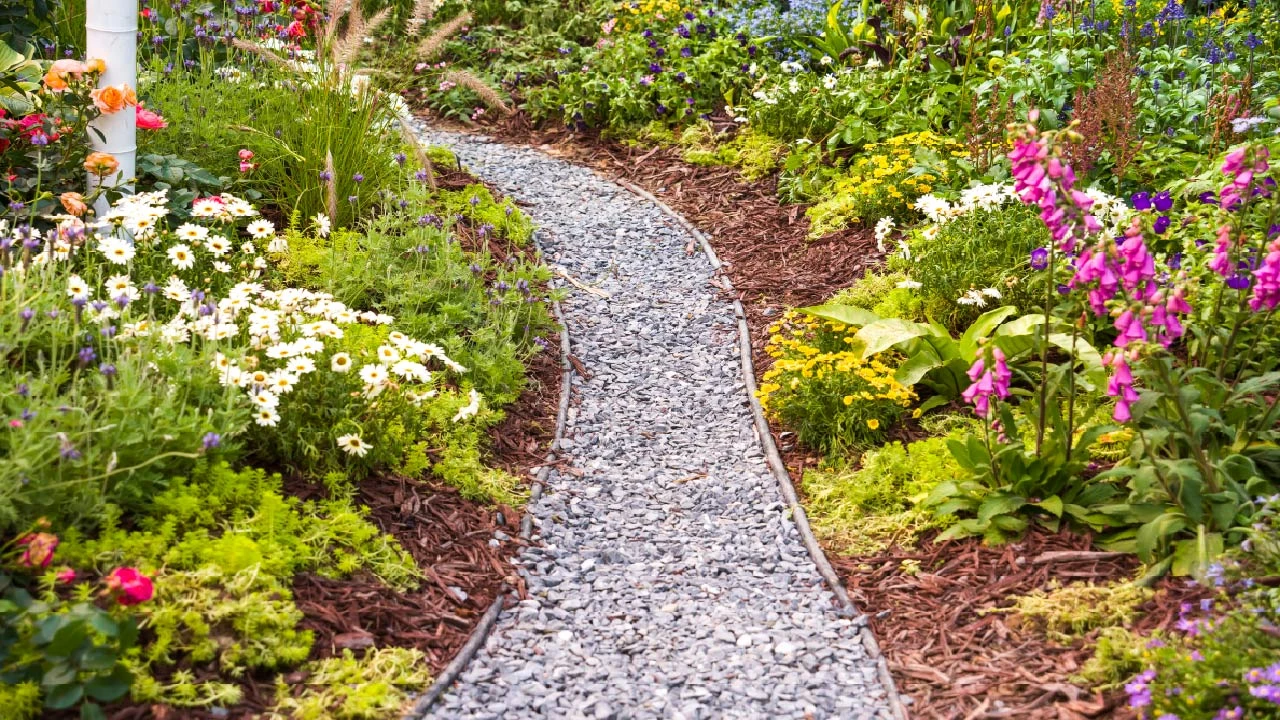
A stone pathway can look beautiful surrounded by summer flowers and just as enchanting when lightly covered with snow and brightened with path lights.
Add these hardscaping elements: patios, fire pits, walkways, pergolas, retaining walls, fences, raised beds, outdoor kitchens.
Hardscaping also defines the landscape. Without it, a large garden can sometimes become visually indistinct once plants die back.
Don't Forget Landscape Lighting
Winter darkness can arrive early. But no need to worry. Landscape lighting keeps your garden visible after sunset and can highlight features that disappear at night. Outdoor lighting will make your space feel magical after sunset in all seasons.
Use lighting to light up pathways, entryways, stairs, patios, trees, retaining walls, water features, and other garden structures. Instead of flooding the entire yard with bright light, focus on key features and pathways.
Well-placed lighting can also make winter branches, evergreen forms, stone walls, and architectural elements stand out.
10 Beautiful Lighting Ideas for Any Outdoor Pathway
Maintain the Landscape as the Seasons Change
Even the best four-season landscape needs some maintenance. Seasonal maintenance helps your plants stay healthy and keeps the overall design from becoming overgrown or visually messy. Here is a quick maintenance checklist for all seasons.
Spring
- Remove winter debris.
- Prune plants at the right time with pruners.
- It is important to inspect irrigation systems before restarting.
- Refresh mulch where necessary.
- Consider dividing overcrowded perennials.
Summer
- Monitor soil moisture regularly.
- Adjust irrigation during heat and drought.
- Water plants deeply with a drip irrigation system.
- Deadhead selected flowers.
- Control weeds before they spread.
- Monitor plants for pests and disease.
Fall
- Adjust irrigation as temperatures cool.
- It is time to plant spring-blooming bulbs.
- Remove diseased plant material with clean cutting tools.
- Clean gutters and drainage areas.
- Protect vulnerable plants where necessary.
Winter
- Monitor trees and shrubs after heavy snow or ice.
- Protect vulnerable plants from extreme conditions using row covers, cloches, tunnels, and other protective materials.
- Check evergreen branches for damage.
- Inspect hardscaping and drainage.
- Plan next year's improvements.
Landscaping Maintenance Tips: 5 Essentials for a Healthy Yard
The Bottom Line
Designing a four-season landscape involves careful plant selection, complementary hardscape elements, seasonal focal points, and thoughtful color coordination. The secret to a beautiful landscape isn't finding plants that bloom continuously. It's creating layers of interest that take turns throughout the year. A four-season landscape combines spring flowers, summer fullness, fall foliage, and winter structure into one complete design.
Ready to transform your property into a landscape that remains stunning all season? Start with strong bones, layer the best seasonal plants with overlapping bloom times, and don't neglect winter. Done well, your landscape won't just survive the year. It'll be worth looking at every month.