
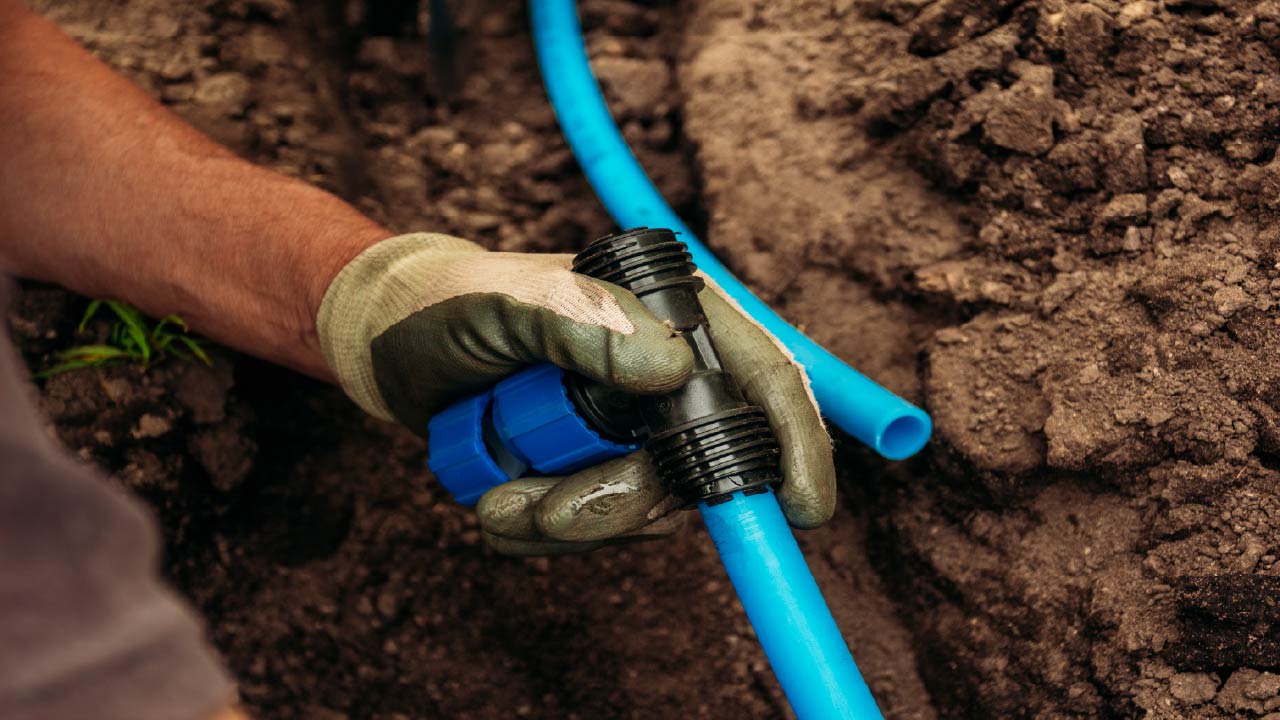
What is Best for Your Sprinkler Irrigation System: PVC or Blu-Lock Pipe
Mar 17th 2026
PVC and Blu-Lock pipes are two common irrigation pipes used in sprinkler, drip, and other irrigation systems. It is important to understand the differences between the two pipe materials to achieve the best results from your irrigation system. The right pipe material for your garden system is important as it can significantly improve system efficiency, lifespan, and performance while also reducing maintenance problems. The consequences of choosing the wrong pipe can lead to costly repairs, burst pipes during peak season, and landscaping damage that takes months to recover.
In this guide, we'll compare PVC and Blu-Lock pipe materials to help you decide which is best for your irrigation system.
PVC Pipe
PVC stands for polyvinyl chloride, which is a rigid, non-flexible pipe made of a thermoplastic polymer. It is strong, tough, and lightweight. PVC pipe is commonly used in high-pressure applications, such as garden irrigation systems, water supply lines, and swimming pool systems. In addition, PVC pipes require little maintenance.
PVC material can withstand roots and pests better than poly pipe. As a result, it is more expensive, but it lasts longer. PVC pipe uses PVC fittings that are connected with PVC glue and primer. PVC pipe is more resistant to chemicals and corrosion. It is suitable for use in agricultural applications where fertilizers and other chemicals are commonly used. The difference in the pipe's inner wall thickness corresponds to the difference in the pressure it can withstand.
PVC pipes dominate the irrigation system market for good reason. These rigid pipes come in various sizes and pressure ratings to accommodate different system requirements.
Advantages of PVC Pipe
- Excellent pressure handling abilities
- Easy to install and cut
- Resistant to corrosion and most agricultural chemicals
- Longer lifespan (such as 20+ years when properly installed)
Disadvantages of PVC Pipe
- Not ideal for above-ground applications due to UV degradation
- Becomes brittle in severe cold weather
- Less flexible than poly pipe
Blu-Lock Pipe
Poly pipe is a flexible plastic pipe made of polyethylene resin. Poly stands for high-density polyethylene, or HDPE. They offer outstanding flexibility and durability. Since they bend easily, they adapt well to the contours of the garden and are often used in typical sprinkler applications.
Blu-Lock pipe offers greater flexibility and lower weight while maintaining sufficient strength for sprinkler irrigation systems. Although it is not as strong as PVC pipe, it can still work at 100 psi. In addition, poly pipes are corrosion-resistant and suitable for use in wet environments. Unlike PVC, Blu-Lock pipes are less tolerant of chemicals and may not be appropriate to use with certain fertilizers and agrochemicals.
Advantages of Poly Pipe
- Outstanding flexibility
- Excellent impact resistance
- Superior freeze resistance
- UV-resistant (suitable for above-ground applications)
- Longer lifespan than PVC Pipe (50+ years possible)
Disadvantages of Poly Pipe
- Higher initial cost compared to PVC
- Requires special fittings for connections
When to Choose PVC Pipe
PVC pipe is more expensive than Blu-Lock pipe, particularly for larger-diameter and higher-pressure applications. However, the cost of PVC piping is offset by its longer lifespan and greater resistance to chemicals and corrosion. It is more durable and requires minimal maintenance.
Choose PVC pipe for sprinkler or irrigation systems that will be completely buried and have medium to high pressure requirements. With PVC, you will typically need a PVC fitting every 10 feet. Every time you make a turn, you will need another PVC fitting.
When to Choose Blu-Lock Pipe
Blu-Lock pipe is a cheaper and cost-effective choice for short-term use. It is also lightweight, more flexible, and easier to install and transport, making it an excellent choice for low-pressure irrigation applications where flexibility is more important than strength.
Choose poly pipe when your priority is long-term performance, and your irrigation system faces freezing conditions or difficult terrain.
With Blu-Lock pipe, you only need to use special fittings at the sprinkler locations. This will significantly reduce costs and reduce possible failure points.
Which irrigation pipe is best for areas with regular freezing and thawing?
Blu-Lock pipes offer better performance in freeze-thaw conditions because of their flexibility and resistance to cracking. Unlike PVC, which becomes brittle in freezing temperatures, poly pipe can expand slightly when water freezes without causing permanent damage.
What is the difference between white and blue irrigation system pipes?
White pipes are usually PVC and made for buried applications only because they degrade when exposed to high UV light for long-term. pipes are superior to PVC due to their lower friction losses, resulting in better efficiency. Its Heavy-Duty Construction and UV-resistant ABS, stainless steel, and EPDM seals are designed and tested to ensure toughness.
Maintenance Tips for Irrigation Piping
- Whether you choose PVC or Blu-Lock pipe, proper piping maintenance extends your irrigation system's life.
- Regularly inspect leaks, cracks, and signs of wear in the pipe to address the issue immediately before it escalates.
- Monitor pressure in the system to observe sudden changes.
Are PVC pipes suitable for potable water irrigation applications?
Yes. Some PVC pipes specifically labeled for potable water use are safe for irrigation systems that may come into contact with edible plants. Always make sure that the pipes meet NSF/ANSI Standard 61 for drinking water system components.
The Bottom Line
The choice between the PVC and Poly pipe depends on the specific application and your requirements. PVC pipe is tough, durable, and more resistant to corrosion and chemicals. It is ideal for high-pressure applications. Blu-Lock pipe is flexible and UV-resistant. It is ideal for home sprinkler system applications. Before deciding, consider all factors, including irrigation system pressure requirements, budget, garden type, and select the piping material that best meets your needs and specifications.