
10 Edible Wild Plants You Can Safely Forage This Spring
Feb 12th 2026
Spring foraging reconnects you to nature and your local landscape after a long winter indoors. It's also an excellent way to boost your harvest as you wait for your garden to produce again. There's something magical about early warm days of spring, when the snow melts, the birds sing again, and little edible green shoots start appearing from the soil. There are numerous edible wild plants to forage that are not only a feast for the eyes but make a delightful addition to seasonal wild foods. You'll be surprised at how many edible wild plants pop up in unexpected areas, such as walking trails, edges of fields, and even scattered across your yard.
In this guide, we'll look at ten edible wild plants to improve your culinary game, including how to identify these edible plants and forage safely this spring.
What are Edible Wild Plants
Edible wild plants are plant species that are safe for human consumption. Knowing which plants are edible can be a lifesaver and a wonderful way to interact with your local ecosystem and add variety to your diet. Wild edible plants grow in almost every ecosystem. Many edible plants are weeds that grow close to human habitation. Others thrive deep in the woods, along streams, in mountain meadows, or in the forest's understory. It's preferable to forage for plants that are less contaminated by nearby roads or human activities.
Essential Tips Before Spring Foraging
Here are a few spring foraging tips to make the most of your foraging experience while being safe:
Avoid Contaminants: Never forage near roadsides, industrial areas, or lawns that are treated with pesticides or herbicides. Avoid anything growing near dog-walking trails or where animals usually roam. Alternatively, you can forage in your yard if you don't use toxic yard products.
Know Before Harvesting: Know the plant before you pick or eat it. Some edible wild plants have toxic look-alikes, so take your time and check twice. You must know which plants and plant parts to eat in moderation or after heating. When in doubt, don't consume it.
Harvest Responsibly: Only take as much as you need and will use. When possible, leave the roots intact and just forage a few leaves from each plant to allow it to continue growing. Also, leave enough behind for wildlife and pollinators.
Prepare Plants Properly: Some wild edibles must be cooked, soaked, or prepared before they become safe to consume. Start slowly with new plants. Try only a small amount first to ensure it is safe.
Use the Right Tools: Bring a basket or bag, pruners, trimmers, garden gloves, and a small trowel to make your outing and foraging experience easier.
10 Wild Edible Plants to Forage in Spring
Spring is a generous season for wild edibles. Here are the common, beginner-friendly edible plants that are available for spring foraging in the US, and you can find them in open fields, wooded areas, or even your own backyard.
1. Dandelion
Dandelions (Taraxacum officinale) are one of the most easily recognizable edible wildflowers for spring foraging. This is the perfect plant for novice foragers because it is easy to find, abundant, and has many uses. These cheerful, puffy yellow flowers are commonly found in fields, yards, on trails, and along creek edges throughout the country.
When you're foraging for dandelions to eat, make sure to find plants that haven't been treated with harmful chemicals. We recommend foraging for dandelions in your own backyard or in areas far from trails, roads, and other areas likely to be treated for weeds.
Where to find Dandelions: Lawns, gardens, and sunny clearings
Edible Parts: Flowers, leaves, roots
How to Use Dandelions:
- Young dandelion leaves can be used raw in salads or can be sautéed like spinach. Harvest leaves in the early spring before they become bitter.
- Use yellow petals to make tea, jelly, or even wine.
- Dandelion roots can be dried and roasted to create a caffeine-free coffee substitute.
2. Henbit
Henbit is native to the Mediterranean but now grows worldwide and is most common in the Eastern US. It looks incredibly similar to purple dead nettle and grows at the same time in spring. However, you can easily identify it by its fused leaves, which grow in rings around the stem. The flowers are lighter purple and have a more erect growing habit. Henbit leaves have a fresh, "greens" flavor, like baby kale with added herby qualities like oregano.
Where to find Henbit: Open fields and along with native grasses and wildflowers in meadows
Edible Parts: Leaves, flowers, and stems
How to Use Henbit:
- They can be added raw to salads or processed into a wild pesto.
- They are fantastic when added as an herb to savory cooked dishes.
3. Curly Dock
Curly dock, also called yellow dock, is an edible wild plant in California you'll want to forage in the spring. Its young leaves have a pleasant sour taste, like sorrel. However, as they mature, they become bitter and almost inedible. This weed can be found in all temperate zones of North America.
The plant has elongated, curled-edged leaves that can be used like plantain leaves. When you add curly dock to soups and stir-fries, it's best to boil it first, changing the water several times. This will remove most of the toxic oxalic acid.
Where to find Curly Dock: Fields, roadsides, gardens, edges of forests, and disturbed soils.
Edible Parts: Young leaves, seeds, stems, and roots
How to Use Curly Dock:
- The leaves can be used raw in salads, but only in moderation.
- In the summer season, the seeds of curly dock can be ground into flour like buckwheat.
- The roots are rich in iron and have several medicinal uses.
4. Wood Sorrel
If you are spring foraging in Northern California, wood sorrel is one of the best edible wild plants to forage. Wood sorrels include a wide range of species, all of which are edible. However, the flavor of these plants varies by species and season. It has small heart-shaped leaves with thin stems that resemble clover.
These edible plants also form lovely edible yellow flowers. The little flowers, each with five petals, look nothing like clover flowers. These plant varieties produce flowers in a variety of colors. However, yellow wood sorrel boasts bright yellow flowers and is one of the best-tasting types you'll find this time of year.
Where to find Wood Sorrel: Yards, gardens, suburban lawns, disturbed areas, and along trails.
Edible Parts: Flowers, leaves, tubers, and immature seed pods
How to Use Wood Sorrel:
- The delicate flowers and leaves make a delightful raw addition to salads.
- They can be mixed with soups and rice dishes or used as a topping.
- Make tea from wood sorrel; however, moderation is recommended due to the presence of oxalic acid.
Also Read: Growing Edible Flowers in Your Garden
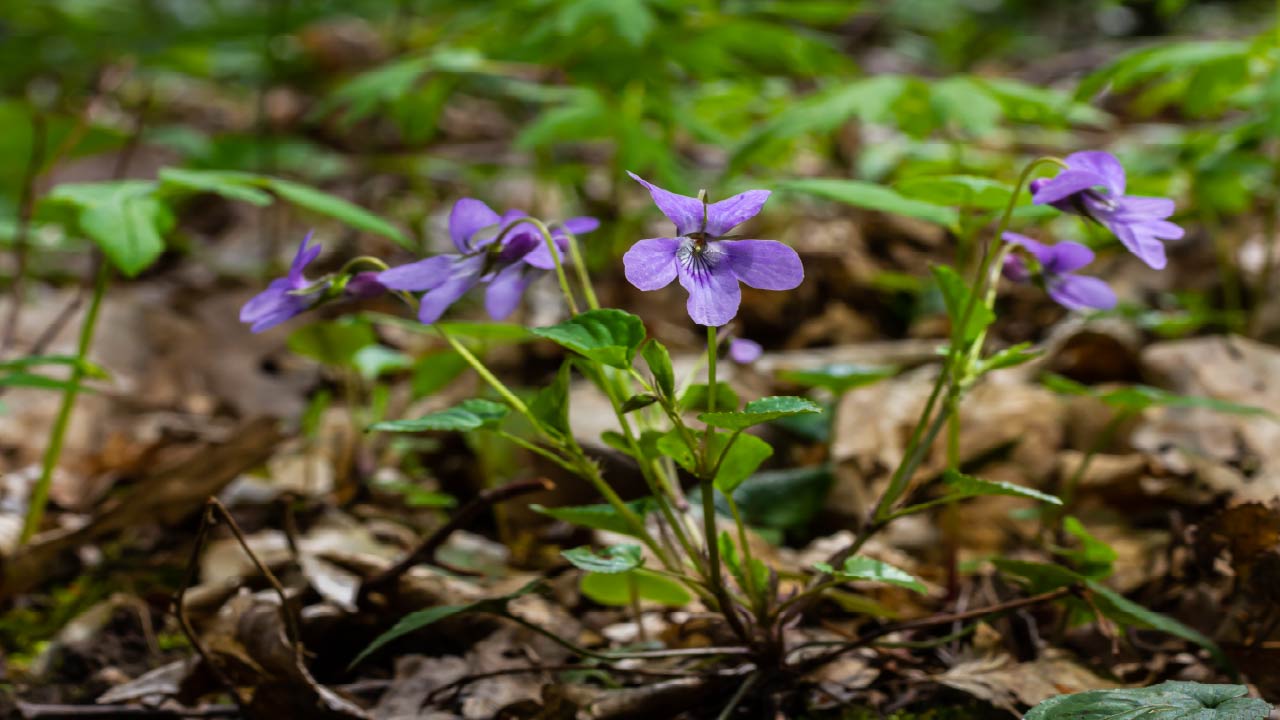
5. Wild Violets
Wild violets are often the first edible flowers of the season to pop up in the spring. In some climates, they may be available in late winter. These wildflowers love cooler temperatures and will grow during the winter in warmer locations.
Violets thrive in shaded, wooded areas with fertile soil. Its flowers are usually beautiful purple, but can also be white, blue, or yellow. Violets with deep purple flowers are the best to eat. These wild violets are closely similar to the edible violets sold in garden stores. If you're going to forage at your local garden center, make sure to choose only organic plants.
Where to find Violets: Lawns, woodlands, and shaded garden edges. Look for the purple, blue, or white flowers carpeting shady areas in spring.
Edible Parts: Leaves and flowers
How to Use:
- Its heart-shaped leaves are excellent for salads or cooked with other greens.
- The blooms make a lovely garnish and can be infused with vinegar or used to make a violet syrup.
6. Ramps
Wild Ramps, also known as wild garlic, wild leeks, or wild scallions, have long been associated with the blooming spring season. They grow abundantly in Appalachia and are believed to protect against common winter illnesses and are harvested in bulk. Ramps grow predominantly in the eastern US.
They have a rich nutritional profile and are one of the few greens available in the region at this time of year, so their connection to good health is likely well-earned. You can easily identify ramps by their elongated, glossy leaves with red color on the stems near the bulbs. Its white flowers are like those of allium species.
Where to find Ramps: Lawns, fields, and open woods. The smell of crushed leaves is strongly like garlic or onion. If it's not similar, don't use it because there are toxic look-alikes.
Edible Parts: Flowers, leaves, and bulbs
How to Use Ramps:
- They can be used like chives and scallions.
- Add to soups, eggs, or stir-fries. Wild garlic leaves make delicious pesto.
7. Fiddleheads
Ostrich fern fiddleheads (Matteuccia struthiopteris) are among the best spring foraging delicacies in the US. It grows primarily in the northeastern woodlands. They are commonly called "ostrich fern."
The young, coiled fronds are harvested while still tightly packed and can be used as a vegetable. During the early spring, the immature fronds are plentiful. Harvest fronds from plants with at least four fiddleheads and leave half of them intact to allow the plant to grow.
It's important to note that ostrich fern fiddleheads look like many other fern species, not all of which are edible. Therefore, make sure you identify the right plant before harvesting.
Where to find Fiddleheads: Forests, gardens of the Northeast, near streams.
Edible Parts: Coiled fiddlehead and tender stems
How to Use Fiddleheads:
- Fiddleheads can be fried, steamed, sautéed, or roasted after they have been prepared.
- Mix into soups or chill and use to garnish salads.
- Another way to enjoy this wild treasure is to mix it with melted butter, garlic, and a little lemon juice for a springtime treat.
8. Stinging Nettles
Stinging nettles are the best edible wild plant you can find in all states except Hawaii. This square-stemmed, serrated-leaf plant resembles mint. It can be easily identified by its irritating sting. When it is touched with bare skin, stinging "hairs" full of various compounds break off, causing a painful sting. Therefore, it needs to be collected carefully so that it doesn't sting you. Wear sturdy garden gloves when harvesting and handle with tongs before cooking.
Despite their stinging trait, these weeds are a highly versatile and nutritious ingredient in the kitchen. Boiling, steaming, and sautéing them removes the sting and makes them safe to eat.
Where to find Stinging Nettle: Disturbed grounds, woodland borders, and near swamps.
Edible Parts: Young, tender leaves prior to flowering and shoots
How to Use: Once its leaves are cooked or dried, stinging nettle loses its sting and can be used in teas, soups, or as a spinach substitute.
9. Lamb's Quarters
Lamb's quarters, commonly known as pigweed or fat-hen, is closely related to spinach and wild quinoa. This common yard green is a staple food throughout Europe and Asia. Today, this plant thrives worldwide, including most of North America. These edible wild plants taste and look like spinach.
If allowed to go to seed, lamb's quarters will produce edible grains. It has silvery-green leaves that have an earthy to neutral flavor. Use them in place of spinach in both raw and cooked dishes.
Where to find Lamb's Quarters: Disturbed soils, suburban yards, and along roadways.
Edible Parts: Young leaves, flower buds, and shoots
How to Use Lamb's Quarters:
- The leaves make a delicious and nutritious wild spring salad.
- They can be used like spinach or Swiss chard in both raw and cooked meals.
10. Chickweed
Chickweed is one of the best plants to find while spring foraging in Northern California. It is one of the first wild edible weeds to pop up in spring. This makes it an excellent choice for early-season foraging. It sprouts up when the soil is disturbed, in gardens, on farmland, or near building sites.
The plant is identifiable by its small, rich green leaves and tiny white blooms with five pairs of petals. All parts of chickweed are edible, but for propagation, it's best to pick only the leaves and flowers with pruners. The leaves have a delicate flavor like iceberg lettuce and a nice, crunchy texture.
Where to find Chickweed: Lawns, garden beds, forest edges, and moist soil
Edible Parts: Leaves, flowers, and stems
How to Use:
- It is best to eat raw in salads or lightly cooked.
- Add the edible parts to your green smoothies.
- You can lightly cook the leaves like spinach for a mild, earthy flavor.
The Bottom Line
Spring foraging is a beautiful way to connect with nature after winter, explore your surroundings, and discover the amazing edible gems growing right under your feet. From picking dandelion greens for a fresh salad to learning how to identify wood sorrel in your garden, each adventure connects you to the local land and the seasons.
Whether you have a suburban garden, live on a small homestead, or love walks in the woods, spring is a great season to start exploring wild edible plants. The more you look, the more you'll find, so take your time, enjoy the experience, and celebrate every new plant you discover.