
Low Voltage vs. Solar Lighting: Which Is Best for Your Garden?
Oct 20th 2026
Your landscape can look completely different and less appealing after sunset when there is no lighting. A well-lit garden can reveal the shape of a mature tree, make a pathway easier to navigate, highlight beautiful planting beds, and turn your ordinary patio into a welcoming evening space. A structure that disappears into the darkness during the day can become a dramatic focal point with one well-placed spotlight. Many landscapers desire outdoor spaces that shine at night as much as they do during the day without any hassle. But with so many landscape lighting options, especially low voltage vs. solar, it can be tough to decide what is right for you.
Low-voltage lighting requires a transformer, wiring, connections, and more planning. But it offers something solar lights often struggle to deliver, which is controllable illumination. Solar lighting can be excellent for simple decorative lighting and areas where running wire is impractical.
So, which one saves more money? Which lasts longer? Which is easier to maintain? And which is best for a garden and professionally designed landscape? In this blog, we'll answer these questions and tell you how both options compare in brightness, cost, reliability, and long-term value.
What Is Low-Voltage Landscape Lighting?
Low-voltage landscape lighting uses a transformer to convert your home's standard 120V power down to 12V or 24V for outdoor fixtures, making it safe, energy-efficient, and highly customizable. You usually mount a transformer on an exterior wall or in the garage. The transformer connects to a household electrical circuit, while low-voltage cable runs from the transformer to the outdoor fixtures.
Low-voltage lighting is better for larger, permanent landscape designs where brightness, consistency, control, and longevity matter. It is also designed according to specific outdoor safety standards.
Here's what that setup involves:
- A transformer: Ranges from 45W for a small front yard to 600W+ for a full property.
- Direct-burial cable: Run just a few inches underground.
- Fixtures: Path lights, spotlights, well lights, deck lights, uplights, and other lights are wired back to the transformer.
- A timer or smart controller: To automate on/off scheduling.
What Is Solar Landscape Lighting?
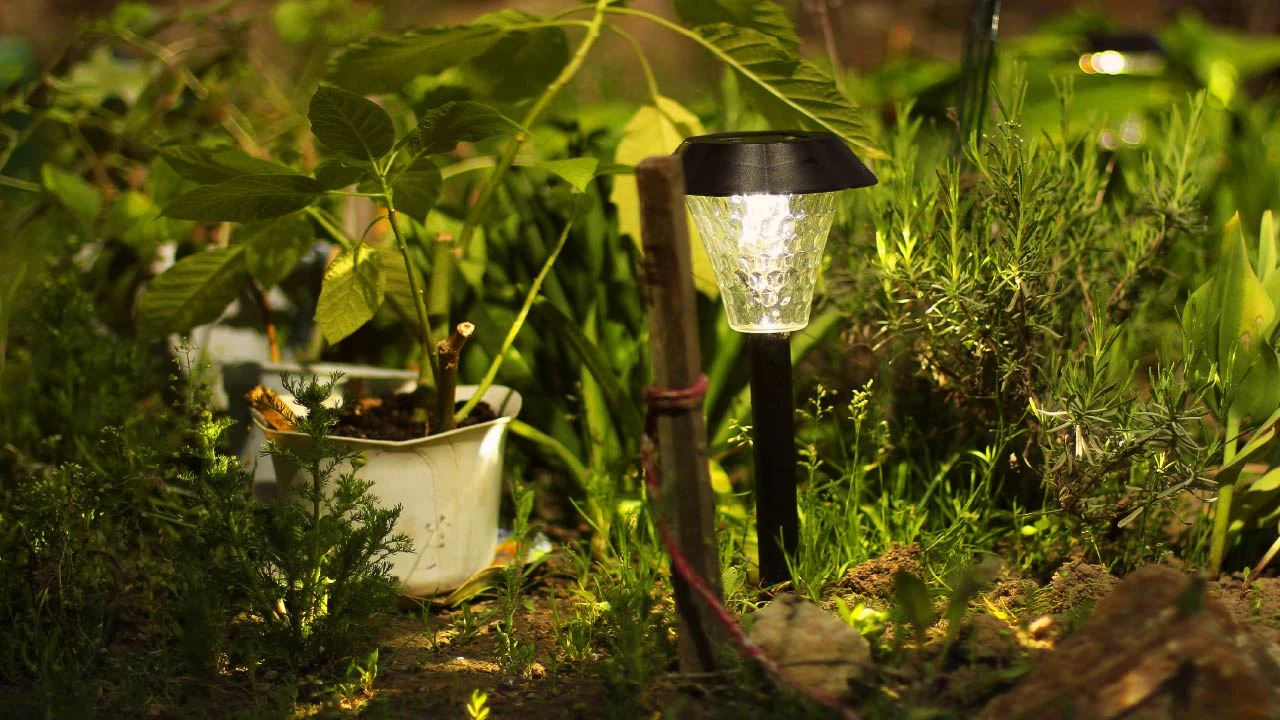
Solar landscape lighting works differently. Instead of drawing power from your home's electrical system, each solar fixture has its own small solar panel, rechargeable battery, LED bulb, light sensor, and fixture housing. During the day, the panel converts sunlight into electrical energy and stores it in the battery. When darkness arrives, the light turns on using the stored energy.
The solar lighting setup requires no wiring, no transformer, no trench. You just push a stake into the ground, and you're done. There is no landscape lighting cable stretching from one fixture to another. That is the biggest appeal of solar lighting.
Cost Comparison
Which Is Cheaper: Solar or Low-Voltage Landscape Lighting? This is where the comparison gets interesting.
If you look only at electricity consumption, solar it doesn't draw power from your home's electrical system. But electricity is only one part of the cost. A complete low-voltage lighting installation requires a transformer, connectors, outdoor-rated cable, fixtures, mounting hardware, possible trenching, and installation labor. Solar lighting eliminates most of those installation components.
Upfront Costs
- Solar lights cost less upfront. But low-voltage systems provide better value long-term. You invest more with low voltage, but you get stronger lighting, better control, and fewer replacements. Over time, it pays off.
- Solar batteries degrade. Most rechargeable batteries in solar lights lose capacity after 12-18 months and need replacing.
- Low-voltage LED fixtures commonly carry 5–20-year warranties, and quality brass fixtures can genuinely outlast the decades.
- If you're lighting a small area for a few years and don't mind occasional replacements, solar can be the cheaper option. If you're investing in a whole property lighting design meant to last decades, low voltage is the best choice.
Brightness and Performance
This is the comparison many landscapers ignore. Most solar lights are noticeably dimmer than low-voltage lights, and for good reasons.
- A solar landscape light produces somewhere around 5-50 lumens. That's soft, ambient light.
- A typical low voltage path or spotlight fixture produces 150-300+ lumens with uplights for trees or architecture.
- Solar panels need sun exposure to charge fully. Partial shade from a tree, a fence, or a cloudy week can cut runtime to just an hour or two of usable light instead of all night.
- Low-voltage lights run at consistent brightness all night, every night, rain or shine, because they're pulling power from your house, not a rechargeable battery.
If your goal is genuine curb appeal that makes your house look intentionally designed after dark, go for low-voltage lighting. Solar lights are better suited to accent touches like marking a path edge, softly highlighting a garden bed, or lighting areas where running wire simply isn't practical
Installation Process
Solar lighting installation:
- Push the stake into the ground.
- Peel the plastic tab off the battery compartment and the process is done.
Low-voltage lighting installation:
- Plan fixture layout and calculate total electrical load.
- Mount and wire the transformer near a GFCI outlet and connect it properly.
- Lay the landscape lighting cable according to local electrical codes and manufacturer instructions.
- Connect fixtures using waterproof wire connectors.
- Test voltage drops at the most distant fixture from the transformer.
- Set a timer or smart controller to automate the lighting schedule.
Maintenance and Longevity
Solar Lighting Maintenance
Solar panels need regular cleaning as dust, pollen, and grime block charging. Batteries usually need replacement every 1-2 years. Cheaper batteries often just get thrown out entirely rather than repaired. A fixture may appear broken when the real issue is an aging battery that no longer holds enough charge.
Low-Voltage Maintenance
Low-voltage systems can develop different problems such as loose connections, damaged cables, corroded connectors, fixture failures, transformer issues, or overgrown plants blocking light.
LED bulbs in quality fixtures often last 15+ years of typical use. The main maintenance is occasionally checking connections for corrosion and adjusting fixtures as landscaping grows in.
A properly designed low-voltage system can often be diagnosed and repaired section by section. One failed fixture doesn't necessarily mean replacing the entire system.
Low-voltage systems are also more flexible when you want to expand or change your lighting design. Want to add three more lights coming spring? You can extend the existing system and connect them to the current cable.
With solar, expansion just means buying more standalone units, which is easy. But over time, you may end up with a mix of different styles, brightness levels, and designs purchased in different years.
Climate Considerations
Climate can affect landscape lighting performance more than many homeowners and landscapers realize.
Solar lights often have plastic components and exposed panels that degrade in harsh weather, including heavy rain, snow, or scorching summers. Battery performance in solar lights drops significantly in freezing temperatures.
Solar thrives in the hot, sunny climates of Arizona, Texas, and Southern California. Panels charge fully, batteries perform well, and the "no wiring" convenience becomes even more appealing since there's less concern about consistent charge.
Low-voltage systems perform consistently regardless of climate because they don't depend on sunlight for power. However, choosing properly sealed, outdoor-rated fixtures remains important.
Design Flexibility
Landscape lighting isn't just about seeing where you're walking. A good lighting design can make a narrow garden appear deeper, emphasize stone texture, create shadows through tree branches, or draw attention to a beautiful entryway.
Low-voltage systems win on design flexibility because you can choose fixtures to fit the job. You can choose from sleek LED path lights, elegant deck lights, or even versatile hardscape lighting options to highlight stone walls or patios. Solar lights come in limited styles because they need built-in panels to function.
Low voltage systems offer far more versatility.
Large tree: Use an adjustable spotlight or uplight.
Pathway: Use low glare path lights.
Retaining wall: Use grazing or wall-washing techniques.
Steps: Use step fixtures.
Patio: Combine ambient and task lighting.
Garden bed: Use small accent fixtures to highlight plants.
Low-Voltage vs. Solar Lighting: Which Should You Choose?
Choosing between solar and low-voltage landscape lighting becomes much simpler when you focus less on which technology is "better" and more on what job your lighting needs to do.
Choose Solar Landscape Lighting If:
- You want a simple DIY installation.
- You are lighting a small garden.
- You don't want to run electrical wiring.
- You need lights in a remote location.
- You want to avoid household electricity use.
- You are comfortable with weather affecting performance.
Choose Low-Voltage Landscape Lighting If:
- You want professional-looking landscape illumination.
- You are lighting large trees or architectural features.
- You want multiple fixture styles.
- You want greater control over the lighting design.
- You are installing a permanent system.
- You are lighting a large yard or outdoor living area.
What is the best landscape lighting for a large yard?
A low-voltage LED system is more versatile for a large yard because it supports different fixture types and provides consistent power for trees, pathways, patios, garden beds, and architectural features.
Do solar lights work in winter?
Yes, they work, but their performance is reduced. Shorter daylight hours mean less charging time, and cold temperatures reduce battery efficiency. In snowy or cloudy regions, solar lights may produce less brightness and run for fewer hours after dark.
Can I mix solar and low-voltage lighting in the same yard?
Yes, and many landscape designers do exactly this. A hybrid system can be useful when different areas of the landscape have different lighting requirements. Use low voltage to illuminate trees, patios, pathways, and architectural features. Add solar lights for accents in smaller garden areas.
The Bottom Line
Low-voltage outdoor lighting is the stronger choice for consistent performance, design flexibility, control, and long-term durability. Solar lighting, however, remains an appealing option when simplicity, affordability, and wire-free installation matter most.
For a small garden or a few decorative accents, solar lights may be all you need. For larger properties with trees, patios, pathways, or architectural features, low-voltage lighting typically delivers better results. A hybrid approach can also work well: use each type where its strengths offer the most value.
Whether you are building a new outdoor space or upgrading an existing one, DripWorks offers modern landscape lighting, irrigation products, and garden tools to help your landscape look beautiful.