
How Do You Get Rid of Fungus Gnats on Cannabis
Jul 7th 2026
They look harmless, hovering around your cannabis plants, especially around the soil, but don't let their tiny size fool you. Every cannabis grower faces the dreaded storm of Fungus gnats in their garden. These persistent pests can quickly become one of the most frustrating problems in both indoor and outdoor cannabis gardens. Their larvae grow in wet soil, and they often appear when the topsoil remains wet for too long between watering's. If left unchecked, fungus gnat infestation can delay vegetative growth, reduce final yields, and cause root diseases like Pythium.
The good news is that fungus gnats are manageable when you understand their life cycle and use the right combination of prevention and treatment methods. Getting rid of fungus gnats on cannabis requires a proper approach that targets every stage of their life cycle.
In this article, you'll learn how to spot fungus gnats on cannabis plants, discover the damage they cause, and explore the most effective ways to get rid of them permanently.
What are Fungus Gnats?
Fungus gnats are insect pests that cause damage to greenhouse-grown cannabis during the larval stage rather than as adults. They are weak flyers that spend most of their time crawling across the top layer of your growing medium or resting on the lower foliage of your cannabis plants. The larvae thrive in growing media and feed on cannabis plants when they are young and kept moist.
If you have a fungus gnat infestation, you'll see them buzzing around on the soil. Unlike other cannabis pests, fungus gnats don't do much harm to the leaves or flowers of your cannabis, as they live in the soil. Instead, larvae eat and damage the roots.
If you have mature cannabis with strong roots, fungus gnats may be more of a problem than a catastrophe. However, they pose a serious threat to young plants and seedlings.
Fungus Gnat Life Cycle
To beat fungus gnats, you have to understand how fast they replicate. At standard grow room temperatures (65 F to 75 F), a gnat completes its entire life cycle in just 3 to 4 weeks.
Eggs Stage
A single female fungus gnat adult can lay up to 200 to 300 eggs in the moist cracks of your topsoil over her short life. They hatch in roughly 3 days.
Larvae
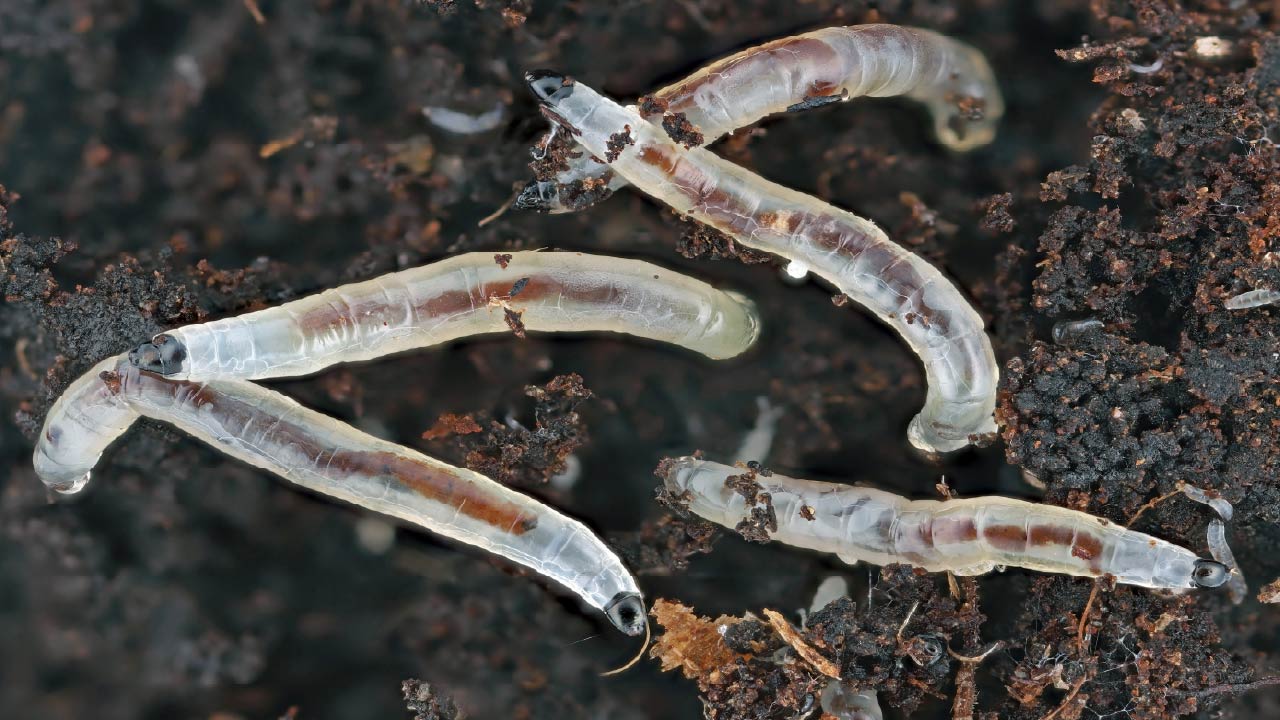
The worm-like, translucent white larvae with distinct black heads hatch and burrow down into the top 2 to 3 inches of soil. They feed on organic matter, fungi, tender root hairs, and young roots for 10 to 14 days. This is the stage responsible for nearly all plant damage.
Pupae
Once fully fed, larvae pupate near the soil surface and become adults over the next 5 to 7 days.
Adults
Emerging adults live for about a week and start mating within 24 hours. They do not bite or feed on your plants, but their only life purpose is to mate and lay hundreds of more eggs.
Why Fungus Gnats Love Your Cannabis Grow Room
Fungus gnats are attracted to certain environmental conditions. Cannabis cultivation often creates the perfect habitat for fungus gnats because growers maintain moist conditions that plants enjoy.
Fungus gnats thrive in growing setups with:
- Continuously moist soil
- High humidity levels
- Warm temperatures
- Standing water and overwatered mediums
- Poor air circulation
- Dead leaves on the soil surface
- Algae growth around containers
How Gnats Affect Your Cannabis Plants
In small numbers, fungus gnats usually don't kill mature cannabis plants. However, heavy infestations can become dangerous for young seedlings, newly rooted clones, and young vegetative plants. These plants have small root systems, making even minor feeding damage significant.
Large infestations may lead to:
- Root injuries
- Reduced nutrient uptake
- Slow vegetative growth
- Lower yields
- Increased susceptibility to root rot
- Disease in seedlings
How to Spot a Fungus Gnat Infestation
A fungus gnat infestation is easy to diagnose. These irritating invaders are small, but you can see them if you get close to your plants. Here is how to identify them on your plants:
- Tiny flies are crawling and jumping on the soil around your cannabis.
- White maggots are wiggling in the soil. They may be hidden in the soil.
- Unexplainable plant issues.
Symptoms of a Larval Infestation
- Unexplained Slow Growth: Your vegetative plants seem to completely stop putting on new growth or grow slowly despite perfect nutrient feeding.
- Drooping and Wilting: Plants may appear weak or droopy even though they are perfectly watered. This is because their compromised roots cannot uptake water efficiently.
- Nutrient Deficiencies: Root damage caused by fungus gnat larvae can interfere with nutrient uptake, leading to yellowing leaves, pale foliage, or deficiency-like symptoms that resemble calcium, magnesium, or nitrogen deficiencies.
- Seedling Death: Young cannabis seedlings with fragile root systems are vulnerable. They can be fed and killed overnight by hungry larvae.
How to Get Rid of Fungus Gnats
When fungus gnats appear, it's almost always because your plants are being overwatered. Fortunately, getting rid of them is easy. A single treatment cannot completely eliminate fungus gnats. The most effective approach is to use multiple methods to target both adults and larvae simultaneously. Here are the best ways to completely wipe out a colony of these pests.
Water less frequently
The first and most effective step is to rethink your watering routine and avoid overwatering. Larvae require moist soil to survive.
Allow the top few inches of soil to dry out fully before watering again. Most of the time, if you do that, the fungus gnat problem will go away on its own. With this approach, fewer eggs will survive, larvae struggle to develop, adult females avoid laying new eggs, and healthier roots will develop.
Additionally, avoid underwatering to the point of stressing the plants, but don't keep the soil constantly saturated.
Use a cannabis drip irrigation system to efficiently water your weed plants without overwatering or underwatering.
Use Yellow Sticky Traps
Fungus gnats are naturally drawn to the color yellow. Yellow sticky traps capture adult fungus gnats before they reproduce.
How to Apply: Get yellow sticky traps from the garden shop. Place traps flat across the top of your rim containers, beside pots, throughout the grow room, around trays, or stake them directly at the soil level.
These traps attract the irritating fungus gnats, which will stick to them. They are also a good indicator of whether you have fungus gnats and can prevent many of them from disturbing your soil.
Apply Beneficial Nematodes
Beneficial nematodes are microscopic roundworms that naturally hunt fungus gnat larvae in the soil. They enter the larvae and destroy them without harming cannabis plants, beneficial microbes, pets, or people.
How They Work: Once watered into the medium, these nematodes actively swim through the soil pores. They enter the gnat larvae through natural body openings and release a specific bacterium that breaks them down within 48 hours.
Application Tip: Nematodes are highly sensitive to UV rays and dehydration. Apply them under dim lighting or right before your grow lights cycle off and keep the soil lightly moist for a few days so they can travel.
Get a Fan to Blow Air over the Soil
A small standing fan gently blowing air across your soil can make life miserable for bugs. It will also help dry out the soil quickly, eliminating the gnats. Adjust a small fan so that it blows a steady stream of air directly across the top layer of your pots.
Why Use It: Fungus gnats are weak flyers. A strong air current creates an invisible barrier that physically prevents them from landing to lay their eggs. It also speeds up the evaporation of excess surface moisture.
Introduce Bacillus thuringiensis israelensis (BTI)
BTI is a naturally occurring soil bacterium that produces a crystalline toxin specifically targeted at the digestive tracts of fungus gnats. It is completely non-toxic to humans, cannabis plants, and beneficial animals. Growers use BTI products by soaking them in water before irrigation.
Top-Dress with Sand or Diatomaceous Earth
A dry soil surface discourages adults from laying eggs. Cover the soil with fine gravel, coarse sand, or diatomaceous earth. These materials create a barrier between the adult gnats and the moist soil below. Keep diatomaceous earth dry, as it loses much of its effectiveness when wet. These are natural ways to get rid of bugs.
How to Grow Cannabis in a Greenhouse
Avoid Overfeeding Organic Amendments
Heavy applications of compost, manure, or unfinished organic materials also encourage microbial growth that fungus gnat larvae feed on.
Use well-composted amendments in optimal amounts and avoid leaving nutrient-rich organic matter exposed on the soil surface.
Top 2026 Irrigation Products for Cannabis
Repot the Plant if the Infestation Is Severe
If the soil is heavily infested and plants are manageable in size, transplant the plant into fresh, sterile growing media to reduce the pest population. Repotting is most effective when combined with sticky traps and biological controls to prevent surviving adults from laying new eggs.
When repotting the plant, do these essential steps.
- Remove infested soil without damaging roots.
- Inspect the root ball for larvae.
- Use clean pots or containers.
- Don't reuse contaminated potting mix.
- Water the soil carefully after transplanting to prevent creating another ideal breeding environment.
How to Prevent Fungus Gnats from Returning
Prevention is always easier than dealing with an established infestation. Develop these habits to keep fungus gnats away from your plants.
- Water only when plants need it.
- Allow the top 2 inches of soil to completely dry out before watering again. If the topsoil stays dry, adult gnats cannot lay eggs.
- Use smart pots that have excellent drainage.
- Maintain good airflow throughout the grow room.
- Monitor humidity levels in the grow room.
- Remove dead plant material promptly.
- Inspect new plants before introducing them to your grow.
- Quarantine clones, brand-new soil bags, and seedlings when possible.
- Replace or sterilize contaminated growing media.
- Use yellow sticky traps as an early warning system.
- If you find your cannabis plants are frequently "bugged", consider growing them in an alternative medium like coco, perlite, or hydroponically.
- Avoid standing water in saucers and pot trays.
- Sanitize grow tools and containers between growing cycles.
Frequently Asked Questions About Growing Cannabis
The Bottom Line
Fungus gnats are one of the most common pest's cannabis growers face, but they don't have to ruin a successful harvest. The real damage occurs beneath the soil, where larvae feed on delicate roots, weakening the plant's ability to absorb water and nutrients. With these methods, you can break the fungus gnat life cycle and protect your cannabis plants from future infestations.
Keep your root zones clean, avoid overwatering your cannabis plants, let your media dry out, and watch your yields thrive.