
8 Best Companion Planting Combinations for Vegetable Gardens
May 13th 2026
Companion planting is the old and smart practice used by home gardeners and farmers to grow different plants close together to enhance growth, deter pests, and improve flavor. This planting technique involves combining plants that benefit each other to achieve mutual benefits. There are several companion planting ideas for fruit and vegetables to try, each with loads of benefits. The most obvious reason to try companion planting is that when plants have similar growing requirements, planting them next to each other makes it easy to look after both at the same time. Also, it is an easy, natural way to cultivate a thriving vegetable garden without relying on chemical fertilizers or pesticides. Planting the right combination of plants will improve each plant's health and enhance the overall beauty of your garden.
Wondering which plants grow well together and which combos you should try? This guide makes it easy to find the best pairings that will transform your 2026 growing season.
What is Companion Planting
Companion planting is the practice of growing different plants close together because they benefit each other. This practice is perfect for edible plants and vegetable gardens that may attract pests. Choosing the right companion plants also helps keep pesky insects away from your crops and allows them to ripen fully.
There are several benefits of this planting technique. It repels harmful insects, improves soil health, attracts pollinators, boosts yields, improves flavor, and provides structural support.
Now, let's look at some of the best combinations you should try this season.
1. Alliums and Root Crops
This is one of the most popular plant combinations for vegetable growers. Alliums such as onions, garlic, and leeks work well with root veggies (carrots and turnips). This pairing is ideal for raised garden beds and small backyard gardens. Learn how to grow carrots in a garden.
Why They Are the Best Plant Combo
Onions produce a strong scent that repels carrot flies, which are one of the most damaging carrot pests. At the same time, carrots help deter onion flies from attacking onion bulbs. Also, the smell of carrots will deter leek moths from leeks, while the smell of leeks will deter carrot fly from carrots. As a result, they benefit from each other. Since these crops grow differently beneath the soil, they also use space efficiently without competing for nutrients.
2. Tomatoes, Eggplants, and Basil
Tomatoes pair well with many vegetables. Tomatoes and basil are the famous companion planting pair, and for good reason. These two plants grow exceptionally well together in both garden beds and containers. Basil is well known for improving the taste of tomatoes when grown together. Tomatoes benefit from basil's ability to deter pests, enhance their flavor, and boost their health.
Why They Make a Good Pair
Basil repels common tomato pests, including aphids, mosquitoes, whiteflies, and hornworms. Its strong aroma can confuse insects, making it harder for pests to find tomato plants. In addition, basil flowers attract pollinators that can boost tomato production later in the season. Basil takes up minimal nutrients from the soil, so your tomato plants won't need to compete for the resources they need.
3. Beans, Corn, and Squash
Beans, Corn, and Squash are the "The Three Sisters" Crops because they nurture each other like a family when planted closely. The Three Sisters method is a traditional Native American planting technique that is the best example of companion planting today. They help enhance each other's yields. Beans provide nitrogen to the corn's soil, while the corn provides shade and support for the beans.
How They Work Together
Each crop serves a unique purpose. The Corn provides a shade and living trellis for the Beans to climb. The beans, being legumes, fix nitrogen into the soil and feed the nitrogen-hungry corn. Meanwhile, the large leaves of the Squash act as a living organic mulch, protecting the soil, retaining moisture, and deters weeds. Together, these three plants nourish each other and create a sustainable garden.
Planting Tips
- Plant corn first and let it grow several inches tall.
- Start beans once corn is established.
- Plant squash around the outer edges of the bed.
4. Cucumbers and Climbing Nasturtiums
Nasturtium is a beautiful flower whose leaves and flowers are edible. They are one of the most useful companion flowers for vegetable gardens. There are two types of nasturtiums: bush and climbing. The bush type won't climb, but this is a lovely plant that will look beautiful in your garden. However, planting the climbing type alongside cucumbers on a trellis is the best idea.
When paired with cucumbers, they create healthier, more productive vines. The nasturtium flowers are gorgeous and having them climb a trellis alongside an edible crop is stunning.
Why They Work Together
Nasturtium flowers act as a trap crop by luring pests away from cucumbers, including aphids, squash bugs, and cucumber beetles. In addition, nasturtiums attract pollinators that enhance cucumber production. Their bright flowers also add beauty and color to your vegetable garden. Since its flowers are edible, they make colorful additions to salads.
5. Marigolds and Vegetables
Marigolds are amazing companion plants that benefit nearly every crop. They produce a natural pesticide that can protect neighboring vegetables from pesky pests and harmful bugs.
Several vegetable plants can benefit from adding marigolds to the garden, including peppers, potatoes, tomatoes, beans, cucumbers, melons, onions, and squash. When you grow other plants with marigolds as plant companions, choose the ones that share similar growing conditions. Marigolds are drought-tolerant plants that thrive in hot weather and well-drained soil.
Why They Make a Good Pair
Marigolds act as a trap crop, attracting snails and slugs away from your vegetables. They have a unique aroma that may discourage rabbits from eating your prize veggies or munching on your favorite flowers. What's more? Marigolds bring deep summer color to your gardens while improving biodiversity.
6. Cabbage and Dill
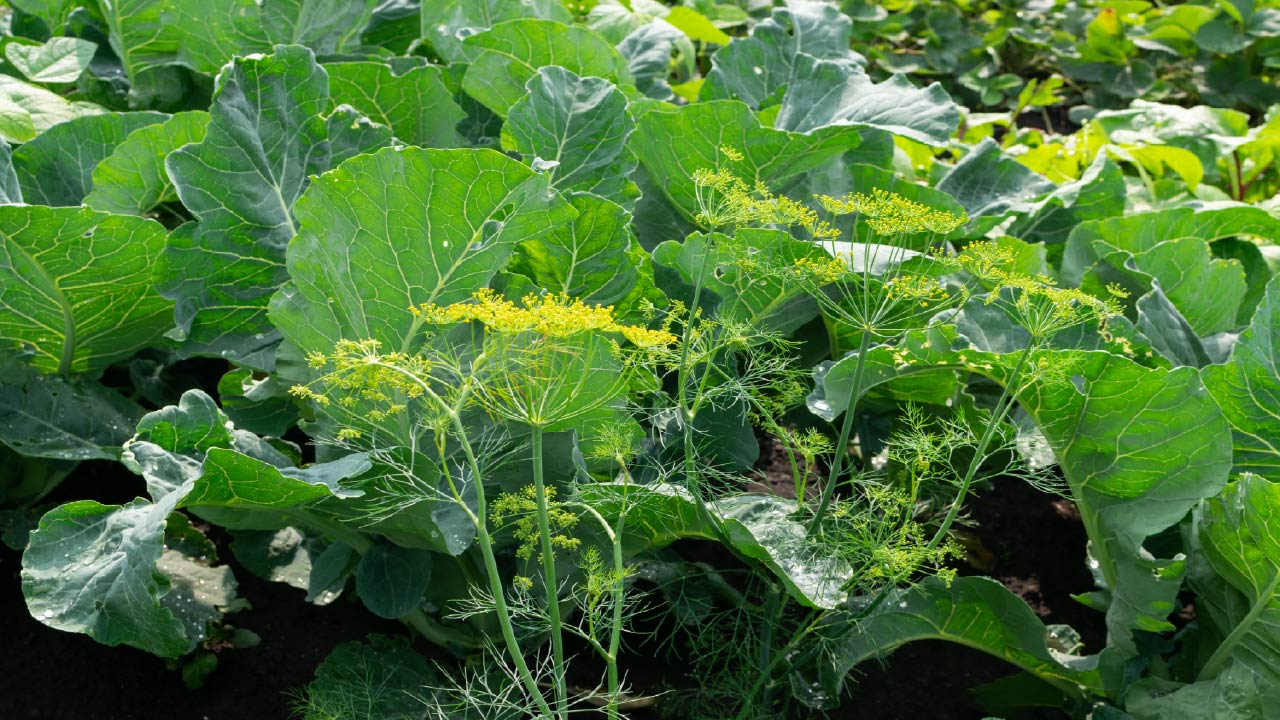
Brassica family crops, including cabbage, are often attacked by harmful pests, but dill can naturally protect them. The strong scent of dill confuses destructive insects searching for cabbage plants. So, they both make an excellent planting pair and benefit each other. Learn how to grow cabbage in the garden.
Why They Work Together
Dill produces flat, umbrella-like flower clusters that attract beneficial insects such as ladybugs, tiny parasitic wasps, and hoverflies. These wasps are the natural predators of the caterpillars that infest your cabbage. These beneficial insects prey on cabbage pests like aphids and cabbage worms.
Cabbage and Dill Planting Tips
- Plant dill near cabbage, broccoli, or cauliflower.
- Also, allow some dill plants to produce flowers to attract pollinators.
- Rotate cabbage plants every year to prevent disease buildup.
- Inspect leaves regularly for caterpillars.
Note: Keep dill away from carrots because they can cross-pollinate and hinder each other's growth.
7. Cucumbers and Sunflowers
Sunflowers and cucumbers make an aesthetically pleasing pairing. Both require support for growing, so this combination works well in gardens. Grow them up a trellis or pergola for a striking feature in the garden. Tall, beautiful sunflowers and sprawling cucumbers make a classic summer pairing.
Why Make a Good Pair
Sunflowers act as a natural trellis for cucumber vines and also attract bees and pollinators needed for cucumber production. Their height also provides light afternoon shade in hot regions.
Tip: Use sturdy sunflower varieties because mature cucumber vines can become heavy.
8. Peas and Carrots
This cool-season planting combination is very popular in spring gardens. Peas are a great companion crop for root crops like carrots and radishes. They fix nitrogen in the soil, which is a key nutrient root veggies need to grow. These two cool-season vegetables support each other both above and below the soil. Both crops thrive at similar temperatures and can be planted early in the growing season. Roots like turnips also give back by deterring aphids, which attack peas.
Why They Work Together
Peas enrich the soil with nitrogen and help carrots grow strong roots and green tops. Carrots also loosen soil around pea roots and enhance the soil structure. Carrots grow underground while peas climb upward, so both crops make efficient use of garden space.
Tip: Plant peas on trellises to maximize space and sunlight.
What Flowers Make Excellent Companion Plants
Flowers also play a major role in companion planting. Mix flowers with vegetables to create a healthier and visually appealing garden. Consider adding these flowers throughout your vegetable garden:
Marigolds: Excellent for pest control, pollinator attraction, and beauty.
Sunflowers: Provide shade and climbing structures.
Zinnias: Attract butterflies and pollinators into your garden.
Calendula: Attracts beneficial insects and adds gorgeous color to the garden.
Nasturtiums: Deter harmful insects from crops.
Companion Planting Tips for Beginners
If you are new to companion planting, start simple and follow these tips.
Start With Easy Pairing
Begin easy planting combinations like carrots and onions, tomatoes and basil, and peppers and marigolds. These are beginner-friendly and easy to manage.
Observe Your Garden Climate
Every garden environment, soil, and microclimate is different. Watch how your plants respond and then make adjustments over time.
Focus on Diversity
A diverse garden experiences fewer pest problems than a single-crop garden.
The Bottom Line
Companion planting is the best, natural, and most rewarding way to improve your garden. Home gardens benefit greatly from this planting approach because it reduces stress on plants while boosting stronger growth and healthier harvests. Different plant species support one another through nutrient exchange, shade, pollinator attraction, healthier growth, and pest management.
Before you start planting any combination in your garden soil, you must fully understand your climate and how it works. You can create a thriving, healthy garden full of diverse, beautiful plant combinations through companion planting. The best part is that this planting approach works well in gardens of every size, from large backyards to raised beds, vertical gardens, and container gardens.
So, experiment with different plant combinations each season, observe what works best in your region, and enjoy the benefits of a healthier, balanced garden naturally.