
7 Best Low-Maintenance Eco-Friendly Lawn Options for Modern Homes
Jan 16th 2026
A lush, well-kept lawn is a source of pride for many homeowners, but it requires a lot of maintenance, including fertilizers, chemicals, weed killers, and regular watering. If you live in a drought-prone area with water restrictions, want to reduce your landscape maintenance, and stop spending your weekends mowing, some sustainable lawn ideas are great alternatives to a grass lawn. You can easily create the look of a lawn with plants you prefer, such as low-growing ground covers or wildflowers that require little to no care and look interesting and beautiful year-round.
Here are seven low-maintenance and eco-friendly lawn alternatives that will instantly elevate your home's curb appeal.
7 Low-Maintenance and Eco-Friendly Lawn Alternatives
Let's explore each to find the best option for your lawn and landscaping goals.
1. Moss
Moss lawns are ideal for moist, shaded areas with acidic soil. Its low-growing nature means no mowing is needed, and the moss's texture pairs well with neighboring flowering perennials and evergreens. Depending on the variety, moss is native to most US states. Moss requires no fertilizer, no mowing, and little watering once it's established, but it doesn't tolerate high foot traffic well. If you want to stroll across it daily, consider adding a flagstone walkway to protect your lawn.
USDA Hardiness Zones: 4 to 10
Water Requirements: Moss needs frequent watering for only the first few weeks. They require minimal watering once established.
Growing Tips: Plant the moss lawn in the spring after the last frost by pressing moss chunks into the soil. Keep it consistently moist over the first three weeks. A moss lawn might take up to a year to fill in, depending on the growing conditions and plant spacing.
2. Sedge
Sedges are grass-like plants known for their solid stems and long, grass-like leaves. They grow in clumps and are popular for their adaptability to a wide range of growing conditions. Sedges vary in size and texture and grow in different soil types and across every USDA hardiness zone. It is an easy-to-care-for lawn: you can leave it not mowed for a taller, more meadow-like appearance, or mow it a few times a year to keep a grass look. In addition, sedge can handle light foot traffic and is found in nearly every state in the United States, depending on the variety.
USDA Hardiness Zones: 3 to 9
Growing Tips: You should mow your sedge lawn in the spring season to remove winter burn. Let the seeds fall after they finish flowering to allow the plant to fill in more densely. Plant the sedge in spring, autumn, or even in winter in a very warm climate.
Water Requirements: Water-loving sedge species, such as fox sedge and bottlebrush sedge, prefer moist to wet soil or even shallow water. These types are ideal for rain gardens and pond edges. On the other hand, drought-tolerant sedges like sand dune sedge, Appalachian sedge, and clustered field sedge can tolerate quite dry conditions once established.
3. White Clover
Clover, a member of the legume family, is a tough, easy-to-care-for lawn alternative that thrives in sun to partial shade and requires no fertilization. It is not a weed; rather, it is a self-feeding, wonderful plant that can tolerate poor soil, less water, and more shade compared to common turf grasses.
Known for its rich green leaves and lovely white flowers, clover is best grown alone to create a drought-tolerant lawn. Although clover is native to Europe, West Asia, and North Africa, it thrives in grassy areas throughout the United States. It can grow in a wide range of soil types and pH levels and is best suited to zones 5 through 8. It is also more tolerant of foot traffic than moss, but won't appreciate heavy running and playing, which is something to consider if you have pets and small children.
USDA Hardiness Zones: 5 to 8
Water Requirements: It requires moderate, infrequent watering due to its deep roots. Water lightly and consistently with the lawn sprinkler system for the first few weeks until the plants establish themselves.
Growing Tips: You can mow the clover regularly to mimic a lawn's appearance. Mow once in summer to remove brown flowers and encourage rebloom, or do not mow at all. Sow clover seeds in the spring when nighttime temperatures are consistently above 40 degrees. Keep the soil moist until the seed sprouts.
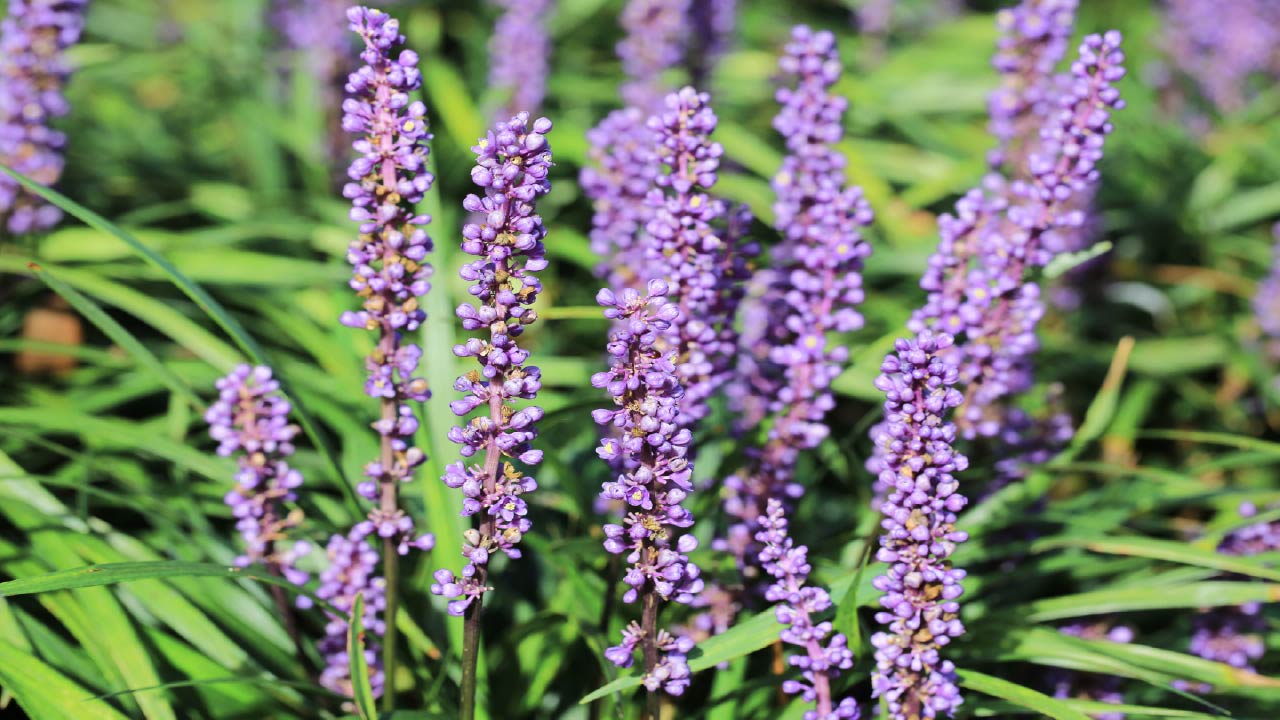
4. Lilyturf
Lilyturf, also often known as liriope, is the most grass-like evergreen ground cover that has dark green strappy leaves. Like Mondo grass, lilyturf has slightly wider leaves and grows to 8 to 16 inches tall. This plant thrives in a wide range of soil conditions and prefers full sun to light shade. It is drought-tolerant once established but performs best with consistent irrigation.
Lilyturf is native to Eastern Asia but well adapted to many parts of the US and can handle light foot traffic. It spreads less aggressively in full shade, but since it fills in quickly, this type of liriope may cover large areas at little or no cost.
USDA Hardiness Zones: 5 to 10
Water Requirements: It has low water needs once established, making it a drought-tolerant, low-maintenance grass alternative.
Growing Tips: Space plantings 1 foot apart and lightly mulch between them to deter weeds until your lawn is filled in. Avoid planting liriope in areas you walk often, as it has an irregular growth habit. Also, it does not require mowing, so you can plant it on steep banks where erosion is an issue and mowing is difficult.
Also Read: 5 Best Grass Types for California Lawns
5. Mondo Grass
This evergreen ground cover is a perfect drought-tolerant alternative to grass, ideal for creating a no-grass lawn. It provides year-round appeal due to its evergreen foliage. Mondo grass, native to Asia, has been adapted to a variety of regions across the United States and is remarkably good at dealing with foot traffic.
You can choose between regular Mondo grass, which grows to a height of up to 6 inches tall, and dwarf Mondo grass, which grows only 2 inches tall and requires no mowing. If you decide to plant regular Mondo grass, mow it once a year in late winter to keep it lush and healthy.
USDA Hardiness Zones: 6 to 10
Water Requirements: New plants require regular watering to develop roots. However, the water needs decrease once the plant establishes and can tolerate drought. Make sure not to overwater the plant to prevent root rot.
Growing Tips: Plant it at least 6 inches apart in the spring or autumn season to encourage a quick fill-in. Lightly mulch between them to discourage weeds.
6. Dwarf Myrtle
This is a low-growing evergreen shrub that can be kept pruned to one foot or allowed to grow up to two feet tall. Dwarf myrtle is native to Australia and requires full sun to grow well. Once established, it is drought tolerant. This grass alternative is an excellent option for homeowners living in milder climates and in drought-prone areas or low-desert regions.
A bonus benefit of growing this shrub is that you'll get a flush of small white flowers that appear in spring and remain throughout the summer months. Although it is a hardy plant that handles erosion well, its semi succulent leaves do not withstand foot traffic.
USDA Hardiness Zones: 8 to 9b
Water Requirements: It has low to moderate watering needs once established. Water new plants regularly during the first growing season to help them develop strong roots.
Growing Tips: It requires minimal water, once it matures, so don't overwater it. If you overwater the plant, you can expect rapid but weak lateral growth and root rot. Give a balanced, slow-release fertilizer, like Ferti-MAXX Landscape, once a year in early spring.
7. Prairie Meadows
Meadows include a variety of wildflowers, low-growing blooming perennials, and ornamental or natural native grasses. The meadow approach is one of the best low-maintenance yard options.
While most homeowners will not turn their entire lawn into a meadow, this strategy reduces mowing space by defining areas of wildflower plantings. Wildflowers are lovely options for increasing biodiversity and providing food for valuable pollinators. Many extension offices provide a list of plant combinations that will work best for your area, align with the needs of low-water landscaping, and require the lowest maintenance. Most meadows will prefer as much sunlight as possible, but some plants will also tolerate some dappled shade.
Growing Tips: Plant a mix of grasses and wildflowers that are well adapted to your climate and soil type. See your local USDA Plant Hardiness Zone and consult local University Extension or native plant nurseries for recommendations.
Established prairie grasses are hardy and drought tolerant. They can thrive in low-nutrient soils without requiring fertilizer or supplemental watering except during extended droughts.
Other Tips to Create Low-maintenance Lawns
- Even low-maintenance lawns need some maintenance, such as seasonal mowing, occasional fertilization, supplemental irrigation during drought, and periodic weeding.
- Make sure your lawn alternative is visually appealing and complements your landscape, especially if you live in a community where your neighbors are used to nothing but traditional turf.
- Invest in highly efficient sprinklers to water your lawn automatically at the right time and in the right amount. They will conserve water, save money, and make your life easier.
- Choose a native ground cover or wildflower for the least amount of maintenance. Consult your county extension office for recommendations.
- Always mow your lawn at the right height, or it can damage your grass. A general rule is to never cut more than one-third of your grass height in a single mowing and sharpen your mower blades once a year to avoid tearing.
- Dethatch your lawn to remove the thick layer of dead organic matter. Over time, dead leaves, grass, and other debris can accumulate at the base of grass Remove it to allow water and nutrients to reach deeper into your soil for healthier growth.
- Raking leaves is an essential part of lawn care, which you shouldn't neglect. Divide your yard into sections and rake all the leaves on your lawn from one area at a time. A thick mat of rotting leaves on your lawn can invite pests and diseases and make it difficult for grass to photosynthesize.
The Bottom Line
If you're tired of mowing, blowing, edging, daily watering, and fertilizing your lawn, these low-maintenance grass alternatives can help you save time, money, and hassle. These seven easy-care ground covers and low growers require less upkeep while maintaining the beauty and functionality of your yard.
From the list, choose a variety that works well in your zone and with growing conditions so you can enjoy a lush, sustainable lawn without tiring yourself.